Beyond protein structures
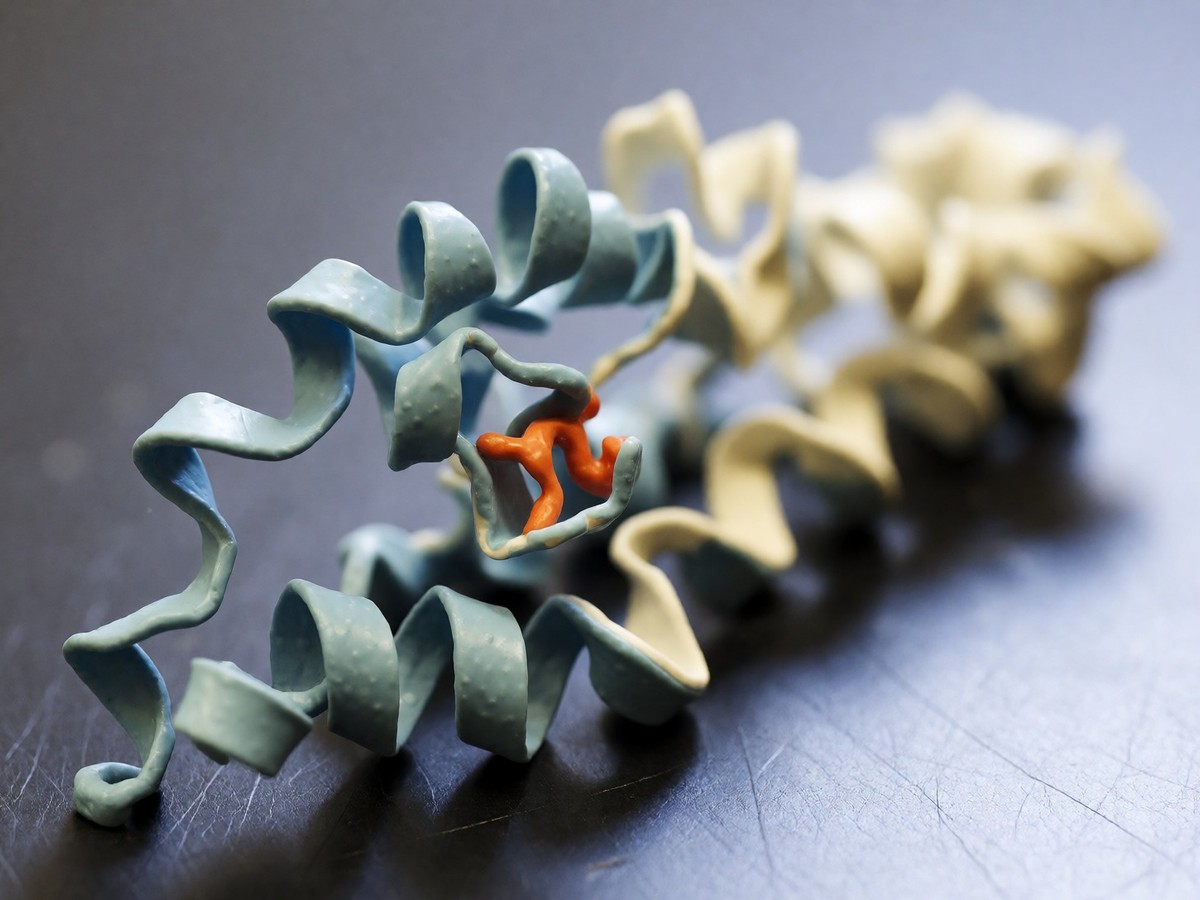
Google DeepMind and Isomorphic Labs released AlphaFold 3 to predict the structure and interactions of all of life’s molecules. This model predicts proteins, DNA, RNA, small molecule ligands, and ions. The architecture replaces the Evoformer module from AlphaFold 2 with a Pairformer module and uses a diffusion module to handle raw atom coordinates. The diffusion module operates directly on 3D coordinates instead of using torsions, translations, and rotations, which simplifies the prediction process by eliminating the need for complex rotational adjustments. This allows the model to generate joint 3D structures of input molecules. The system also accounts for post-translational modifications like glycosylation and chemical modifications of nucleic acids. While AlphaFold 2 won CASP14 by predicting structures with a median error below 1 Angstrom, AlphaFold 3 extends these capabilities to much larger biomolecular complexes. AlphaFold 2 was recognized as a solution to the 50-year-old "protein folding problem" by CASP organizers after achieving accuracy comparable to experimental methods. The AlphaFold Protein Structure Database contains over 261 million predicted models, including 40,054 isoforms. The database grew through several stages, including the initial release of 350,000 structures in 2021 and 1.7 million viral protein complexes in September 2026. More than 2 million researchers in 190 countries use the database to inform their research. The original AlphaFold 2 methodology was published in Nature and received over 40,000 citations in scientific journals. DeepMind first established its protein research team following the success of the AlphaGo program against Lee Sae Dol. In 2024, the Nobel Committee awarded Demis Hassabis and John Jumper the Nobel Prize in Chemistry for their work on AlphaFold. The AlphaFold Server provides free access to structure prediction for non-commercial research, though it limits the selection of ligands, ions, and modifications available to users.
Isomorphic Labs partnerships and funding
Isomorphic Labs uses the IsoDDE engine to drive its drug design programs. The company, which Demis Hassabis founded in 2021, raised $600 million to move therapeutic candidates toward clinical development. The financing round was led by Thrive Capital and included Alphabet, GV, MGX, Temasek, CapitalG, and the UK Sovereign AI Fund. You should evaluate these partnerships by looking at the scale of Isomorphic’s agreements with Novartis, Eli Lilly, and Johnson & Johnson. The Eli Lilly partnership focuses on discovering small molecule therapeutics and includes $45 million upfront with over $1.7 billion in milestone payments. The Novartis agreement includes $37.5 million upfront and $1.2 billion in biobucks to identify small molecules against six targets. Novartis doubled its commitment to Isomorphic in early 2025. These collaborations combine Google’s compute power with specialized biological expertise to predict protein structures and enable faster target discovery. The scientific advisory board includes Jennifer Doudna, David MacMillan, Paul Nurse, and Venki Ramakrishnan. Isomorphic Labs is staffing up for its first human clinical trials, with several lead candidates for oncology and immune-mediated disorders currently in the IND-enabling phase. The company uses this capital to integrate world-class AI, engineering, drug design, and clinical talent to address the global burden of disease. This investment aims to build the drug design engine at scale to deliver scientific breakthroughs with a level of precision previously thought impossible.
Technical constraints and accuracy limits
AlphaFold 3 is 50% more accurate than traditional methods on the PoseBusters benchmark. The model predicts binding sites and shapes for potential drug molecules. However, the algorithm fails to respect chirality in 4.4% of cases in the PoseBusters benchmark. The model also produces atom clashes in large proteins where molecules overlap. These predictions remain static and do not address the dynamical behavior of biomolecular systems. The model also shows potential for hallucinations in disordered regions. The prediction accuracy may decrease when the model encounters novel ligands due to ligand-based memorization. The pLDDT score, which scales from 0 to 100, provides a measure of local confidence based on the local distance difference test. A pLDDT above 90 indicates high accuracy for both backbone and side chains, while a score above 70 typically indicates a correct backbone prediction. The model often assigns low confidence to linkers between domains because they are naturally variable and flexible. Previous iterations like AlphaFold 2 showed an ability to predict helical structures in proteins that only adopt that shape when bound, such as 4E-BP2. At its release, AlphaFold 3 outperformed automated systems in RNA prediction, though it did not reach the accuracy of human experts. The model uses cross-distillation with AlphaFold-Multimer v2.3 and AlphaFold 2 to decrease hallucinations caused by the diffusion module.
| Metric | Value/Detail |
|---|---|
| AlphaFold 2 CASP14 error | < 1 Angstrom (RMSD_95) |
| AlphaFold 3 PoseBusters accuracy | 76.4% (on V1 set) |
| AlphaFold 3 chirality violation rate | 4.4% |
| pLDDT confidence scale | 0 to 100 |
| High confidence pLDDT | > 90 |
| Backbone prediction pLDDT | > 70 |
Will the model overcome its struggle with molecule chirality in future iterations?