Baidu trained the ERNIE 5.1 model at roughly 6% of the cost required for comparable frontier models. This Mixture-of-Experts architecture uses about one-third of the total parameters found in ERNIE 5.0. While the total parameter count dropped, the active parameters per forward pass fell by half. This reduction does not compromise performance on specific tasks; ERNIE 5.1 scored 1,223 on the Arena Search leaderboard, placing it fourth globally and first among Chinese models. It also achieved a 99.6 score on AIME26 when using tool-assisted reasoning.
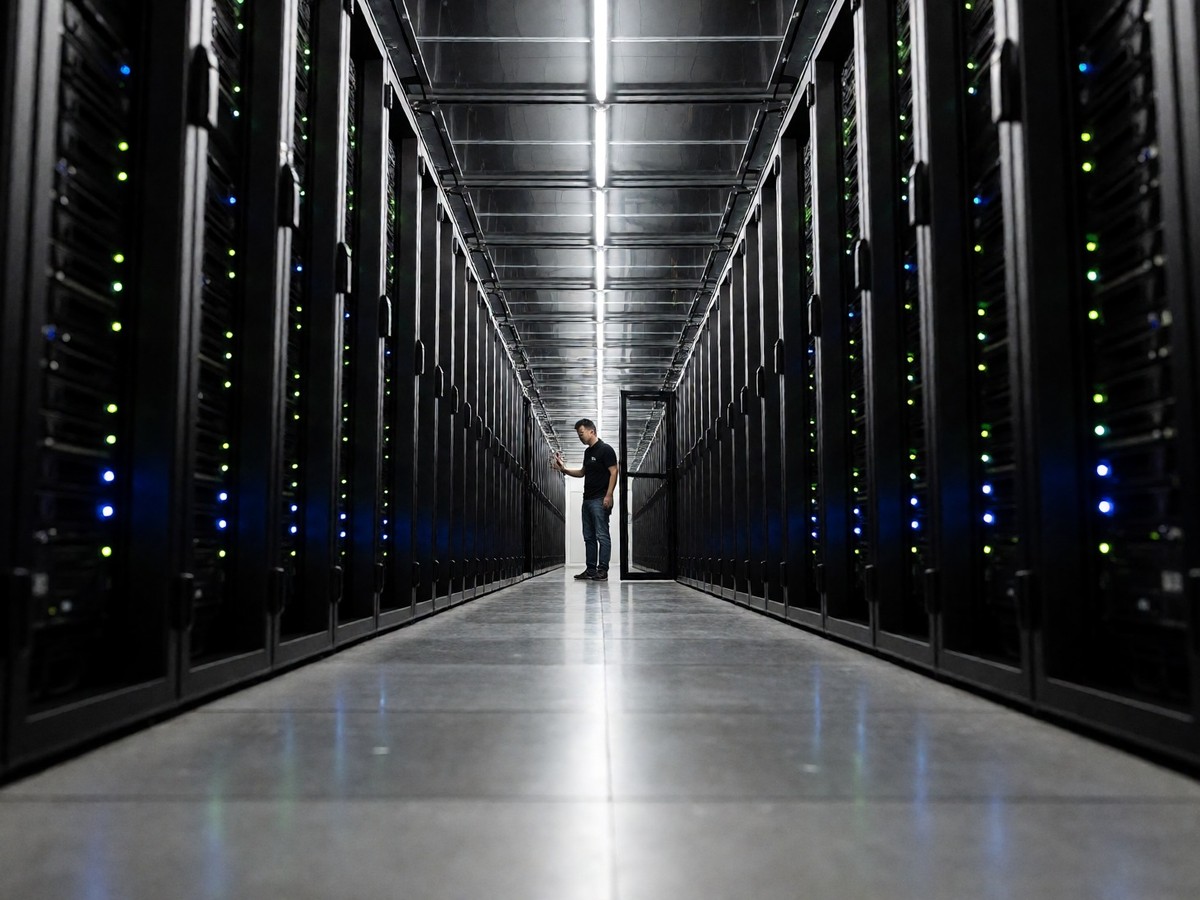
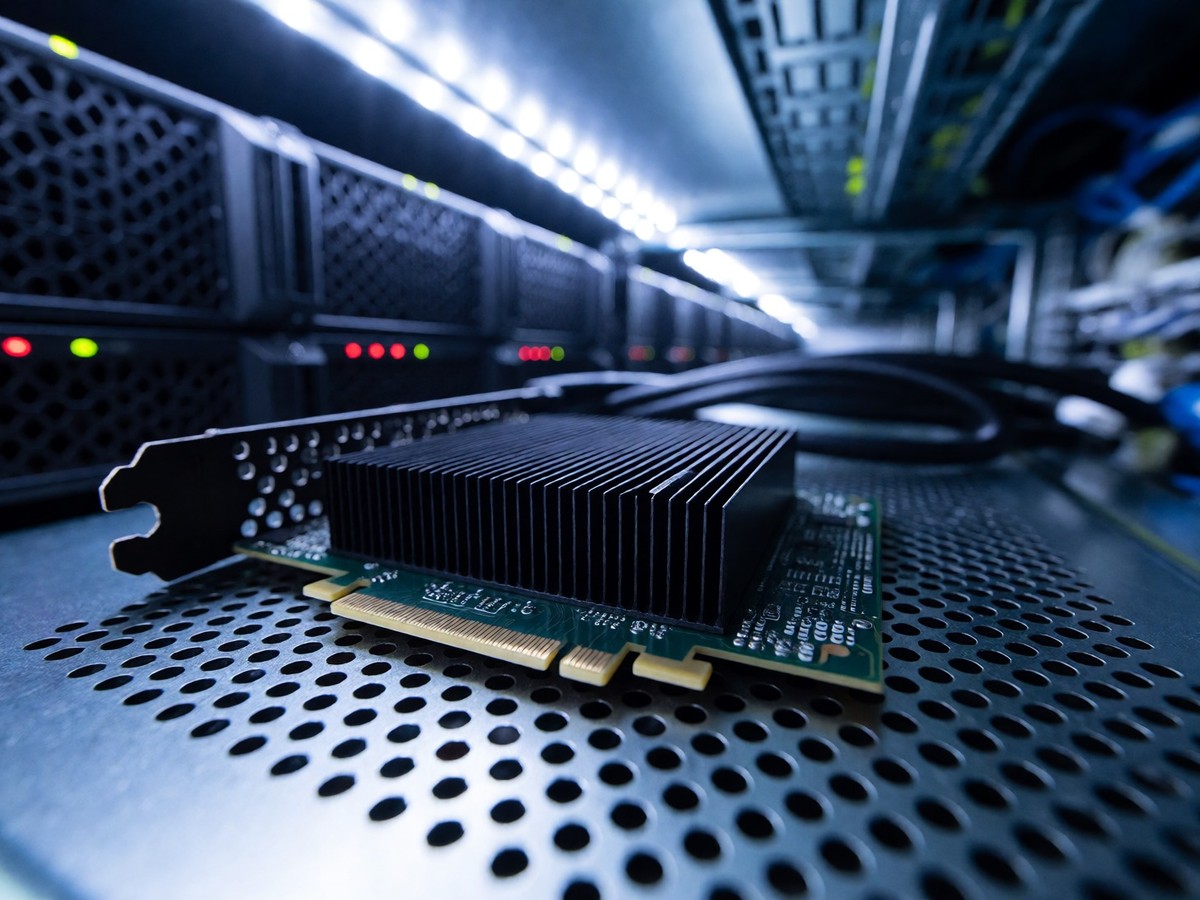
The shift toward domestic AI hardware accompanies tightening US export rules on high-end semiconductors. Beijing recently ordered Chinese companies to stop using Nvidia graphics cards, citing security concerns. This directive forces developers to rewrite code and restructure workloads to run on domestic accelerators like the Huawei Ascend 910B and 910C. Baidu has already transitioned its Baige training platform to run entirely on Chinese-made hardware and software.
| Model Feature | ERNIE 5.1 Specification |
|---|---|
| Architecture | Mixture-of-Experts (MoE) |
| Total Parameters | ~1/3 of ERNIE 5.0 |
| Active Parameters | ~1/2 of ERNIE 5.0 |
| Arena Search Score | 1,223 |
| AIME26 Score (with tools) | 99.6 |
| Modality | Text-only at launch |
The cost of intelligence in the Chinese market
Baidu targets the enterprise sector by providing models that undercut Western pricing significantly. ERNIE 4.5 costs RMB 0.004 per thousand input tokens and RMB 0.016 per thousand output tokens. This makes it roughly 99% cheaper than GPT-4.5 for certain workloads. For users needing deep reasoning, ERNIE X1 delivers performance on par with DeepSeek R1 at only half the price.
The company also provides access to various models through the Qianfan Foundation Model Platform. While ERNIE 5.1 excels at agentic tool use and search-augmented answers, it has limitations that developers must manage. The model lacks image input and audio capabilities at launch. It also has a context window of only 8K tokens. If you process large documents or need long conversations, ERNIE 5.1 will truncate your data. You should use the ERNIE 4.0 Turbo 128K model instead if you require a larger context window.
The following table compares the pricing and context limits of the ERNIE lineup for different workload needs:
| Model | Input Price (per 1k tokens) | Output Price (per 1k tokens) | Context Window |
|---|---|---|---|
| ERNIE 4.5 | RMB 0.004 | RMB 0.016 | 8K |
| ERNIE X1 | RMB 0.002 | RMB 0.008 | Not disclosed |
| ERNIE 5.1 | ~$2.05 | ~$2.05 | 8K |
| ERNIE 4.0 Turbo 128K | $0.0181 | $0.0181 | 128K |
| ERNIE Speed Pro 128K | $0.063 | $0.126 | 128K |
Enterprise applications and agentic workflows
Baidu integrates its models into a broad ecosystem including Baidu Search, Baidu Drive, and the Wenxiaoyan app. The company’s Huiboxing platform enables users to create personalized digital avatars from videos as short as two minutes. In 2025, Baidu identified AI digital humans as a major breakthrough application. The company also released Xinxiang, a general super agent that uses multiple AI agents to solve complex tasks. Xinxiang currently covers 200 task types in areas like travel planning and office work, with plans to expand to 100,000 task types.
The ERNIE 4.5 family supports multimodal reasoning through a heterogeneous mixture-of-experts architecture. This allows the model to process text and visual inputs within a single reasoning layer. Enterprises use these capabilities for document analysis, image extraction, and analyzing complex reports. For example, ERNIE 4.5 can interpret scanned documents, charts, and forms.
The ability of ERNIE 5.1 to handle multi-step tasks distinguishes it from previous iterations. It beats DeepSeek-V4-Pro on the $\tau^3$-bench and SpreadsheetBench-Verified agentic benchmarks. These tests measure how well a model performs real-world spreadsheet tasks and multi-turn tool use. Despite these gains, the model still fails to match GPT-4o in code generation. The HumanEval gap between ERNIE 5.1 and GPT-4o stands at 11.2 points. ERNIE 5.1 also trails GPT-4o by 8.7 points on the MMLU general knowledge benchmark.
Baidu provides the Model Context Protocol to connect external services with its large language models. This acts as a "universal socket" for AI, linking the Qianfan platform to e-commerce and search services. This integration reduces the friction for enterprises that already use Baidu infrastructure. Will the massive scale of the ERNIE ecosystem eventually force Western providers to slash prices even further?
For developers, the decision to use ERNIE 5.1 depends on whether they prioritize Chinese language nuance and low cost over English prose quality and coding proficiency. If a startup processes 100 million tokens per month, using ERNIE 5.1 saves $839 compared to GPT-4o. This saving provides a direct advantage for companies building Chinese NLP applications or processing Chinese documents at scale.