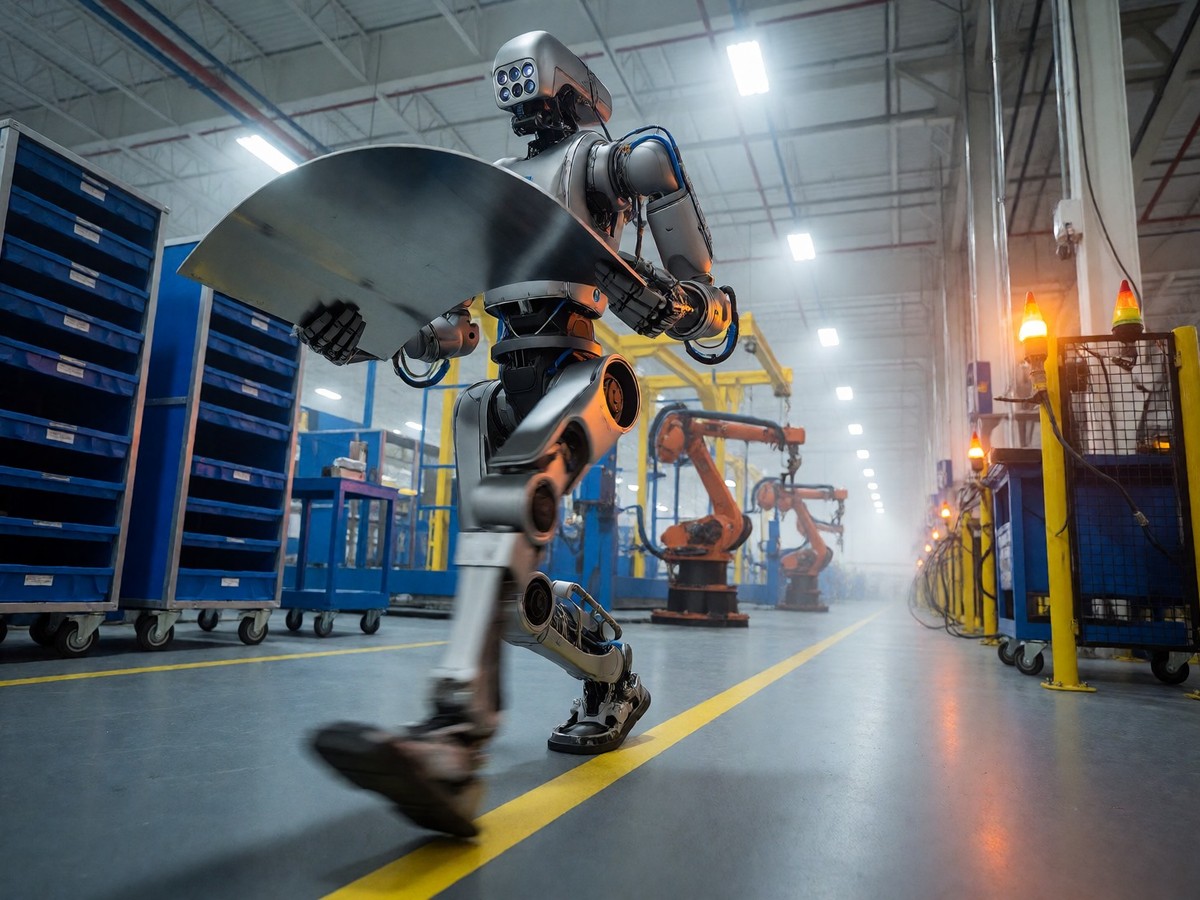
Figure 03 robots manage parts sequencing in Hall 52 at the BMW Spartanburg plant. These machines pick components from large containers and sort them into sequencing trolleys for assembly employees. This deployment follows the Figure 02 pilot in the body shop, where robots supported the assembly of more than 30,000 BMW X3 vehicles. During that eleven month period, the Figure 02 fleet logged 1,250 operational hours and moved 90,000 sheet metal parts. The Figure 02 robots placed parts into welding fixtures with 99 percent accuracy per shift while working ten hour shifts, five days a week. The Spartanburg plant produces X5, X6, X7, XM, Z4, and M8 models. The Figure 02 robots assisted with the body shop tasks to reduce human error and physical strain. BMW uses these robots to handle metal sheet panels for the chassis. Ulrich Wieland, the Vice President of Production Control and Logistics at BMW Manufacturing, says the company investigates how humanoid robots can be integrated into production. One Figure 02 robot stalled mid-task in the plant, which blocked an aisle for several hours. This incident shows that fleet management and failure recovery protocols still need development.
Hardware specifications and evolution
Figure AI develops robots through distinct iterations to meet industrial demands. The Figure 01 prototype, which arrived in 2022, demonstrated basic walking and grasping. Figure 02, released in August 2024, has six RGB cameras and 16 degrees of freedom. Figure 03, released in October 2025, has 44 degrees of freedom and tactile sensors that detect forces as small as three grams. The Figure 03 design includes soft materials and wireless inductive charging to support safer human interaction. The robot includes a next-generation vision system with twice the frame rate and one-quarter the latency of previous models.
| Robot Model | Release Year | Degrees of Freedom | Task Focus |
|---|---|---|---|
| Figure 01 | 2022 | 41 | Research |
| Figure 02 | 2024 | 16 | Sheet metal insertion |
| Figure 03 | 2025 | 44 | Logistics sequencing |
Figure 01 measured 1.68 meters in height and weighed 60 kilograms. It had a payload capacity of 20 kilograms and a runtime of five hours. The Figure 03 model improves upon this with a redesigned wrist architecture where motor controllers communicate directly with the main computer. This change improves reliability and simplifies thermal management.
The Helix Vision-Language-Action model
The Helix Vision-Language-Action model provides the intelligence for all Figure robots. This model runs on two NVIDIA GPUs located on the robot. The system processes visual input and language to generate motor commands. Figure ended its partnership with OpenAI in February 2025 to build these models in-house. The Helix VLA architecture allows the robot to interpret a command like "pick up the red component and place it in the bin to your left" and execute it without pre-programmed waypoints. This architecture removes the need for human programmers to write every motion profile. The robot observes its environment, identifies objects, and plans movements in real time. The system connects perception, movement, and reasoning across the entire robot.
Industrial economics and deployment costs
BMW reports a $25 per robot-operating-hour cost for Figure 03 at the Spartanburg facility. This specific cost provides a benchmark for the industry. Tesla targets a commercial price of $20,000 to $30,000 per unit for the Optimus robot. The Figure 02 robot achieved 99 percent placement accuracy per shift while working ten hour shifts, five days a week, which allowed BMW to meet its production targets for the X3 model without increasing human labor in the body shop. You know that replacing a human worker with a machine requires proven data, not just videos. Figure AI is currently the leader in documented industrial humanoid deployment.
The payback period for humanoid robots at ergonomic-risk stations was between 18 and 36 months in 2025. Tesla’s target price for the Optimus robot would change the economics by collapsing the payback period to 3 to 6 months for high-repetition tasks. Figure AI focuses on the manufacturing, logistics, and warehousing sectors where labor shortages exist. The company aims to expand into retail and consumer markets by 2030.
Funding and market valuation
Figure AI reached a $39 billion valuation in September 2025. This followed a Series C funding round that included $1 billion in committed capital. Investors like Parkway Venture Capital, NVIDIA, and Salesforce participated in this round. Earlier, the company raised $675 million in February 2024 at a $2.6 billion valuation. This Series B round included Microsoft, the OpenAI Startup Fund, NVIDIA, Amazon, Intel Capital, and Jeff Bezos. Total funding for the company is approximately $1.9 billion.
The company started in 2022 under Brett Adcock. He previously co-founded Vettery and Archer Aviation. Figure AI maintains a lean organizational structure that prioritizes engineering excellence. The company is scaling production with a goal of 100,000 robots in the coming years. Figure AI operates a manufacturing facility called BotQ to produce 12,000 humanoids annually.
Competitive comparison in the robotics sector
Tesla operates over 1,000 Optimus Gen 3 units in its Fremont and Gigafactory Texas plants. These robots handle battery assembly, cable routing, and connector seating. Unitree shipped 5,500 humanoid units in 2025. The Unitree G1 costs approximately $16,000. Agility Robotics uses Digit robots at Amazon and Toyota facilities to move totes.
| Platform | Primary Strength | Current Task Focus |
|---|---|---|
| Figure 03 | Scale economics | Material handling |
| Tesla Optimus | Vertical integration | Battery assembly |
| Apptronik Apollo | Integration depth | Kit movement |
| Unitree G1 | Price point | Light assembly |
Tesla targets a large volume of production, but Elon Musk stated in early 2026 that Optimus was not in usage in factories in a material way. Most Optimus units generate training data rather than pure production output. Unitree holds the highest global unit volume but faces margin pressure. Agility Robotics has accumulated more than 65,000 operating hours across nine customer facilities.
Scaling production at BotQ
Figure AI uses the BotQ facility to produce 12,000 humanoids annually. The company uses die casting, plastic injection molding, and stamping to keep costs low. This production strategy aims to support a target of 100,000 robots in the coming years. Project Go-Big provides the large-scale data collection needed to train the Helix model. In the past, Figure relied on CNC machining for mechanical parts, which was expensive. The shift to die casting and stamping requires heavy upfront investment but reduces variable costs as volume increases.
The company focuses on building hardware that can scale for mass manufacturing. Figure 03 is designed for these high-volume processes. This approach follows the logic of investing in capital expenditure to reduce the cost of each unit. The company aims to address labor shortages in manufacturing and logistics through these versatile robots.
Factory readiness and implementation phases
Manufacturers follow five phases to implement humanoid robots: assessment, simulation, pilot, compliance, and scale. Each phase has specific requirements and timelines. Assessment and simulation take up to 12 weeks. Pilot programs run for 8 to 12 weeks. Scaling happens over 3 to 6 months.
Factories must ensure floor flatness with a maximum 3mm variance for bipedal robots. Robots require Wi-Fi 6 or 5G coverage to send telemetry every 100 milliseconds. Compliance with the ANSI/A3 R15.06-2025 standard is necessary for fenceless work. This standard includes speed and separation monitoring and force-limiting end-effectors. Speed and separation monitoring requires the robot to stop within 200 milliseconds if a worker enters the zone. Force-limiting grippers must cap contact force at 150 newtons for brief contact.
Will Figure AI be able to maintain this momentum as Chinese competitors lower price points across the global market?