BMW manufacturing and Spartanburg localization
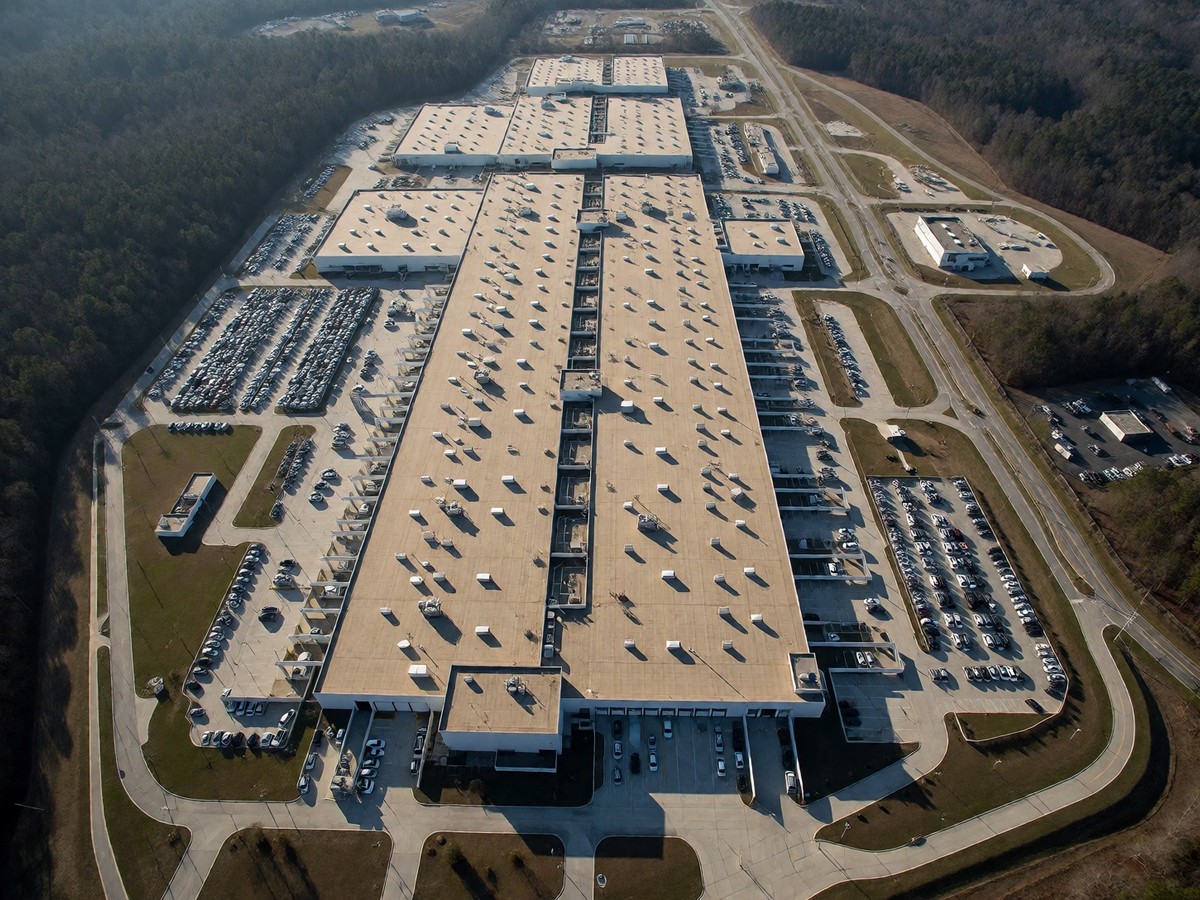
BMW produces motor vehicles in Germany, the United Kingdom, the United States, Brazil, Mexico, South Africa, India, and China. The company localizes the production of its SUVs at the Spartanburg plant in the United States to navigate trade challenges and shifting consumer patterns. In 2025, the manufacturer produced 2,463,681 cars and 202,563 motorcycles. Milan Nedeljkovic became the chairman of the board of management in May 2026 and succeeded Oliver Zipse. The company also remains a top 30 global investor in research and development. In January 2025, BMW announced a closed-loop recycling system for the reuse of raw materials from high-voltage batteries used in its range of electric vehicles. The company also developed an automated driving system with Qualcomm that will debut on the BMW iX3. The company’s strategic investment in the Spartanburg plant is a central part of its global production model.
Historical evolution and manufacturing scale
BMW traces its origins to the aircraft engine manufacturer founded by Gustav Otto in 1910. The firm reorganized as Bayerische Flugzeugwerke in 1916 and changed its name to Bayerische Motoren Werke in 1922. The name BMW first came into use when the German firm Rapp Motorenwerke changed its name in 1917. In 1922, the name and engine-production assets of Rapp Motorenwerke transferred to Bayerische Flugzeugwerke. The company’s first products were aircraft engines for the Luftstreitkrafte. After the first World War, the company produced motorcycles, agricultural equipment, household items, and railway brakes. The company introduced its first motorcycle, the BMW R32, in 1923. The company first sold the BMW 3/15, a rebadged version of the Dixi, in the 1930s.
The acquisition of Fahrzeugfabrik Eisenach in 1928 allowed BMW to become an automobile manufacturer and sell the Austin 7 under license as the Dixi. During the second World War, the company concentrated on the BMW 801 aircraft engine and used 40,000 slave laborers, including prisoners from Nazi concentration camps such as Dachau. Because factories faced heavy bombing and production restrictions after the war, the company survived by making pots, pans, and bicycles. The company restarted motorcycle production in 1948 and resumed car production in 1952 with the BMW 501. Herbert and Harald Quandt invested in the company in 1959, which saved BMW from bankruptcy. This investment allowed the company to continue as a separate entity.
Since then, the company expanded its product range. The 5 Series arrived in 1972, followed by the 3 Series in 1975, the 6 Series in 1976, and the 7 Series in 1978. The M division released the M1 in 1978, the M5 in 1984, and the M3 in 1986. The company also released the Z3 in 1995 and the X5 in 1999. The company purchased the Rover Group in 1994, but the takeover was unsuccessful. In 1998, the company acquired the rights to the Rolls-Royce brand. In 2000, BMW sold off most of the Rover brands but retained the Mini brand. The company released its first hybrid, the ActiveHybrid 7, in 2010 and its first mass-production electric car, the i3, in 2013. In 2018, Daimler and BMW merged their mobility services.
Amazon Buy with Prime and logistics
Amazon provides a service called Buy with Prime for US-based Prime members. This service allows members to shop directly from participating online stores using the shopping benefits they love. Shoppers see the Prime logo and a delivery promise on eligible products, which signals the item is available for free delivery. Users sign in to their Amazon account to complete an order using a preferred payment method stored in the account. After the purchase, Amazon sends an order confirmation email and a shipping confirmation email. This shipping email includes a link for tracking the order once it ships.
If a user needs to return an item, they view their order status through the link in the email to start the process and print a USPS return label. To receive a full refund, the customer must return the items in resellable condition within the return window. The online store where the purchase occurred handles questions or issues regarding the order. You should note that clicking the Buy with Prime button allows users to check out by signing into an Amazon account. Will the deployment of new automation technologies at these sites accelerate the production of luxury vehicles and consumer goods?