Capital expansion and the move to the Baltics
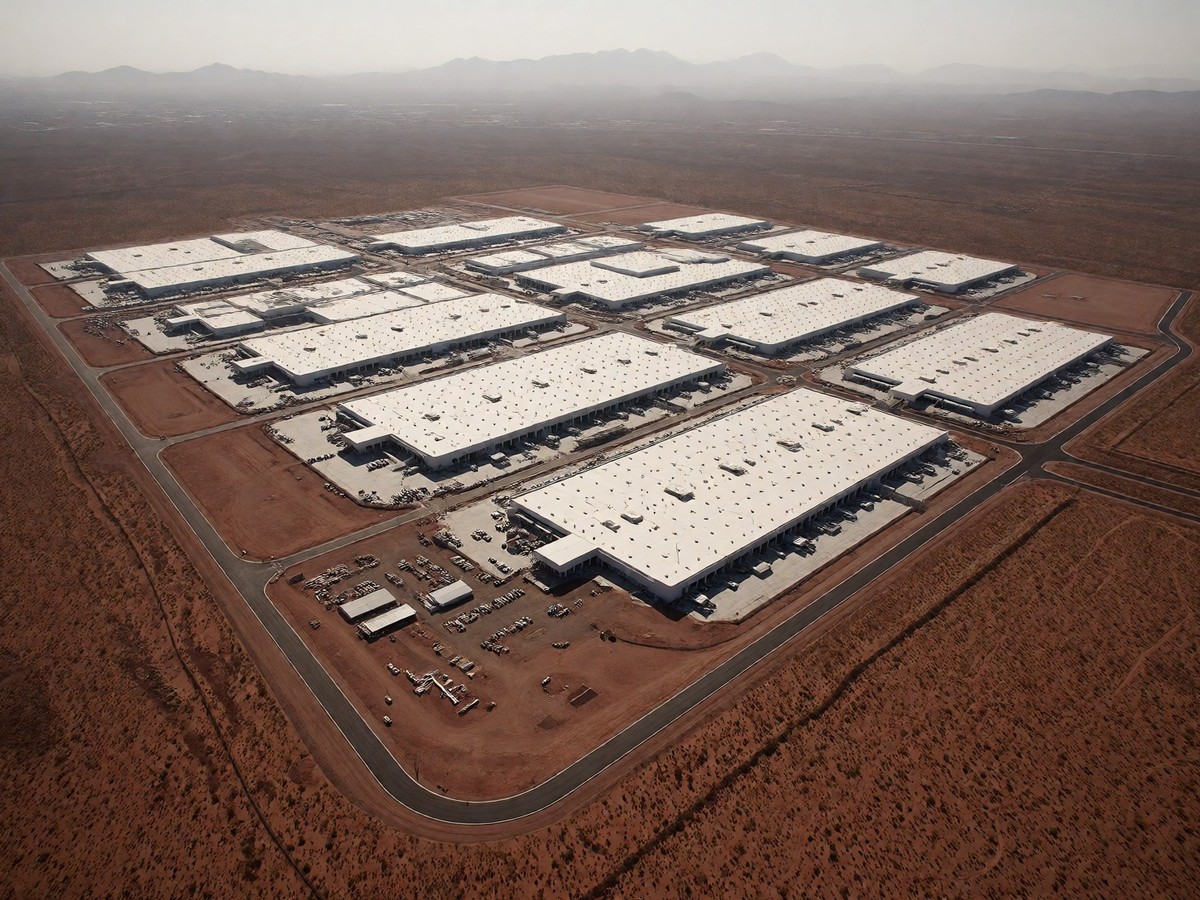
The German AI defense firm, Helsing, secured €450 – 487 million in its Series C funding round to grow its AI defense capabilities. This capital injection places the company valuation at approximately $5.4 billion. The firm plans to spend €70 million over the next three years on Baltic defense projects via its new Estonian unit. To facilitate US market access, Helsing selected West Virginia for its first US resilience factory on August 27, 2026. This facility represents a $50 million investment for the production of AI-enabled HX-2 strike drones. I see these moves as a direct response to the increased demand for deterrence on NATO’s eastern flank. While this funding is significant, Helsing still lacks the massive revenue scale of Andoril, which reported $2.2 billion in 2025 revenue. The company maintains offices in Munich, London, and Paris to support its 300 employees. Investors in this round include General Catalyst, Accel, Lightspeed, Plural, Greenoaks, Elad Gil, and Saab AB. This expansion mirrors the broader European push for defense integration, with Brave1 expanding its influence through Brave Norway, Brave Germany, and Brave Lithuania.
| Specification | Value |
|---|---|
| Helsing Series C Funding | €450 – 487 million |
| West Virginia Factory Investment | $50 million |
| Baltic Defense Investment | €70 million |
| German HX-2 Order Value | ~€268 million |
| DIU Orchestration Prize | $100 million |
The orchestration gap and German procurement
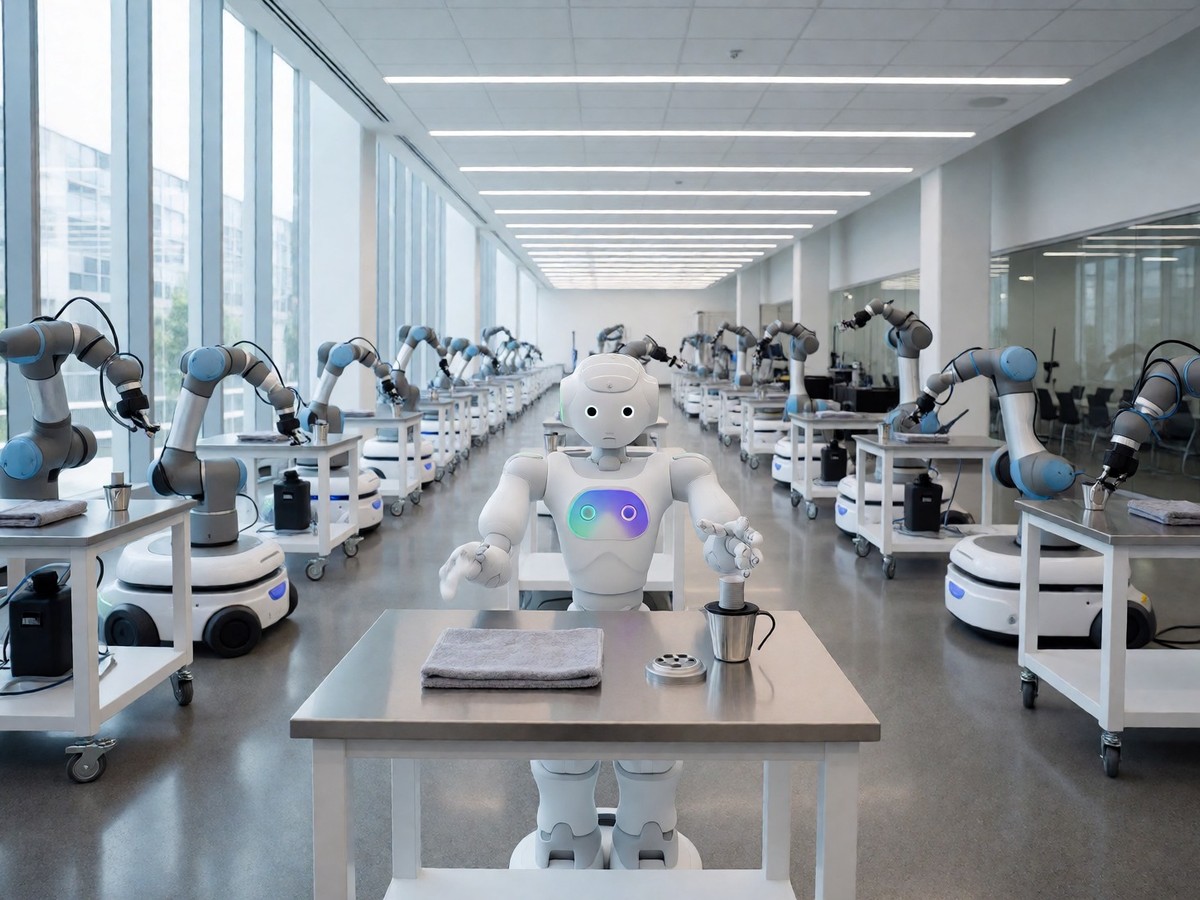
The defense industry currently struggles to coordinate autonomous platforms into coherent fighting formations. The Department of Defense identified an orchestration gap where software must convert commander intent into coordinated machine action. In January 2026, the Defense Innovation Unit launched the Autonomous Vehicle Orchestrator challenge with $100 million in prizes to address this. The requirement asks for technology that can interpret natural language, break intent into platform tasks, allocate the fleet, monitor execution, and adapt when battlefield conditions change without needing any constant human input. Current systems function in silos because they use different architectures for air, ground, and maritime domains. Lieutenant General Frank Donovan, who leads the Defense Autonomous Warfare Group, wants technologies that allow humans to work through plain language rather than clicking through menus. The requirement includes both orchestration and a domain bridge: plain-language intent turned into coordinated action across any mix of platforms and domains, under contested communications. One operator can manage one platform through existing control layers, but a commander cannot manage hundreds of drones through manual menus. This lack of a domain bridge prevents a drone from providing overwatch to a ground robot convoy.
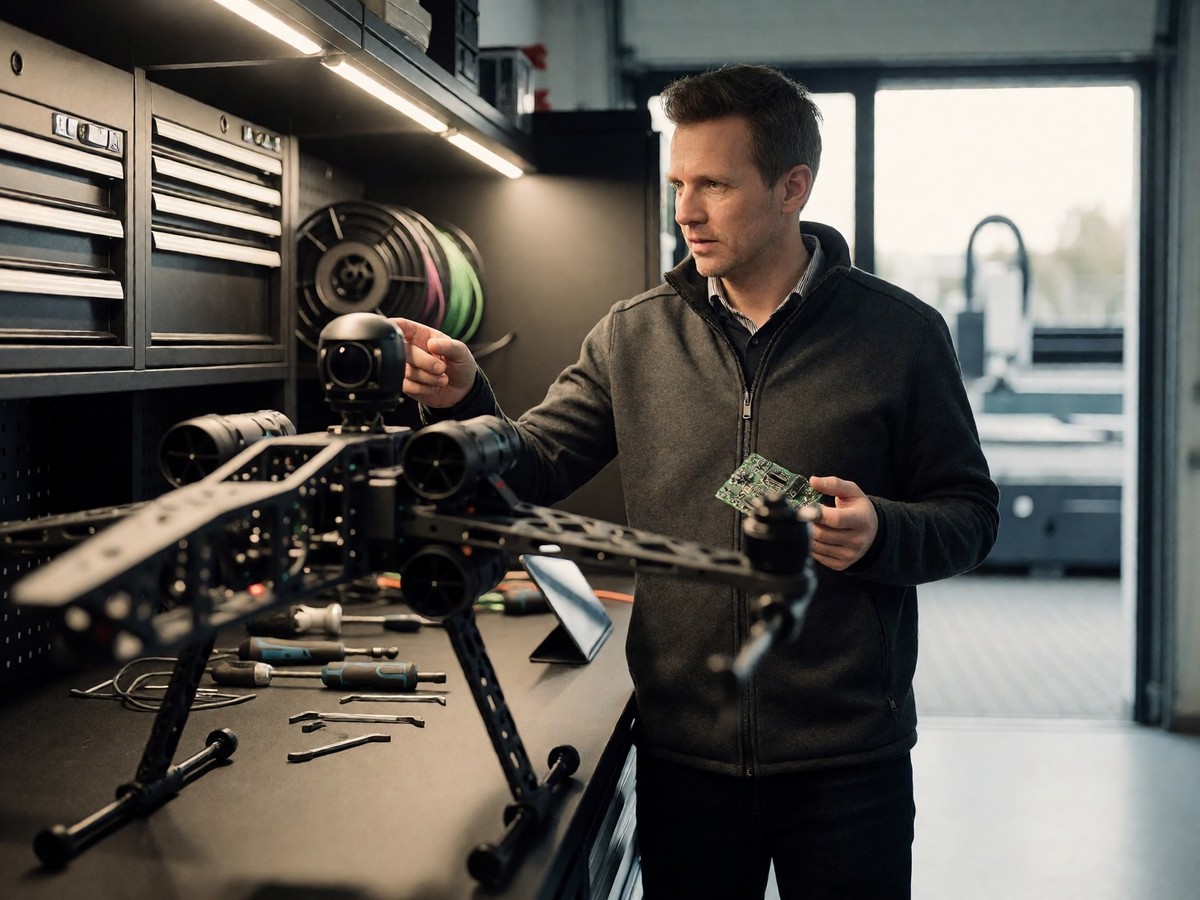
Helsing maintains one of the largest visible European weapons pipelines. The German government approved roughly €268 million for Helsing’s initial HX-2 loitering munition procurement. This contract includes options for additional purchases if the technology meets maturity requirements. I find the shift toward mass-produced, attritable systems more practical than focusing on expensive, single-use platforms. A single MQ-9 orbit requires more than 150 personnel, which makes a force of thousands of drones impossible without orchestration. Can software alone bridge the gap between isolated drone swarms and integrated joint task forces?
Production capacity and the shift to factory economics
Mass production characterizes the current shift in defense procurement. Ukraine’s defense production capacity reached $35 billion in 2025 and targets $50-55 billion this year. Companies now move from prototype development to factory-scale manufacturing to meet these rising demands. Helsing already secured deals with Airbus SE and defense ministries in Germany and Ukraine. The German Eurofighter Electronic Warfare upgrade remains one such contract.
The US Army reported $750 million in sales through its UAS Marketplace in August 2026. This marketplace allows units to buy vetted drones directly. I know you track these procurement shifts, so observe the scale of these numbers. The transition from engineering-heavy programs to high-volume production is visible in the orders for loitering munitions. Germany expects to equip operational forces, starting with a brigade in Lithuania, using these systems.
The European defense market is reorganizing around unmanned systems and AI. European defense startups raised $8.7 billion in 2025, which is a 55% increase over the previous year. Germany and the Netherlands now allocate more than 15% of their national venture capital to defense. This concentration of capital follows the patterns seen in the US, where Silicon Valley invested almost $35 billion in defense tech in 2023. The demand for loitering munitions is growing in Germany, where the Bundeswehr has also signed contracts with Stark for its Virtus systems. The Bundeswehr also signed purchase contracts with Stark in February and added Rheinmetall in April. France provides a peacetime comparison, as the DGA bought 1,000 Harmattan AI micro-drones in January and ordered 5,000 more in May. Ukraine’s procurement scale is even larger, with drone contracts reaching UAH 333.6 billion in the first half of 2026, which is twice the amount contracted during the same period a year earlier. Quantum Systems also holds significant orders, including €210 million from Germany and €30.7 million from Romania.