
Helsing raised $1.8 billion in Series E financing. This funding places the company valuation at $18 billion. Goldman Sachs Alternatives, Dragoneer Investment Group, Iconiq, the Canada Pension Plan Investment Board, and JPMorgan Chase & Co. participated in the round. Existing investors such as Lightspeed Venture Partners, General Catalyst, and Plural also contributed. This capital injection follows a June 2025 round led by Prima Materia. Helsing is a Munich-based defense technology company that develops artificial intelligence software and military equipment. The company was founded in 2021 by Torsten Reil, Gundbert Scherf, and Niklas Kohler. It maintains offices in Germany, the United Kingdom, France, and the Baltic states. This expansion supports the company’s goal to become a pan-European defense contractor.
Hardware capabilities and tactical specifications
Helsing produces several hardware systems that integrate its AI software. The company manufactures loitering munitions and autonomous unmanned combat aerial vehicles. It also develops underwater drones for maritime surveillance. These products rely on the Altra system to combine data from reconnaissance drones, spotters, and other sources. The Altra software processes information in ground stations with high computing capacity. It feeds highly precise battlefield data to indirect fire systems, weapon stations, and strike drones.
| System | Type | Technical Specifications |
|---|---|---|
| HF-1 | Loitering munition | Plywood fuselage, GPS-independent navigation |
| HX-2 | Loitering munition | 250km/h top speed, 5kg ammunition, 100km range |
| CA-1 Europa | Unmanned combat aerial vehicle | 4 tonnes, 500kg payload, 1,400-1,800km range |
| SG-1 Fathom | Underwater drone | 60kg weight, 1,000m depth, 90-day submerged |
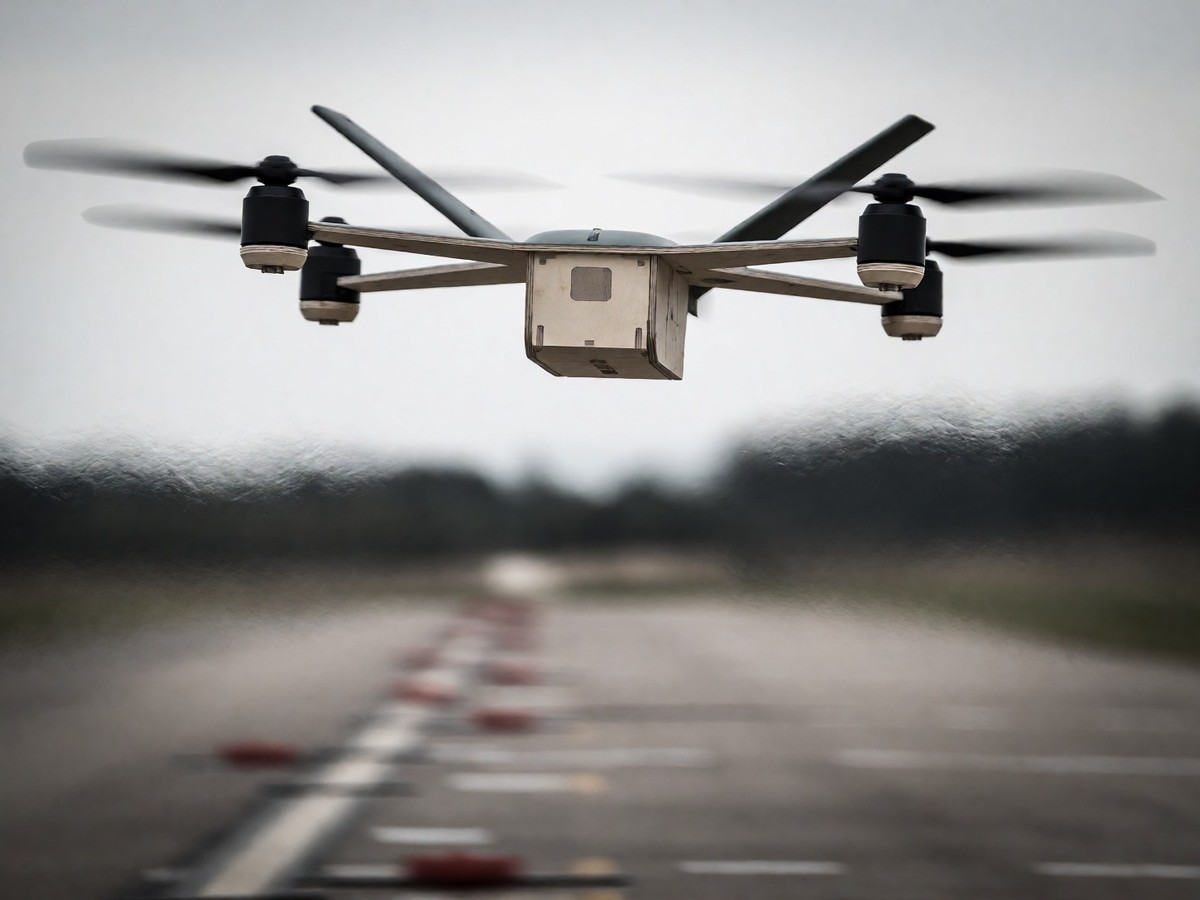
The HX-2 drone uses a quadcopter design with four wings and rotors in an X configuration. It uses AI and stored map data to navigate without GPS. The CA-1 Europa carries the Centaur AI agent, which acts as an autonomous fighter jet pilot. This aircraft can operate independently or as part of a swarm. The SG-1 Fathom drone uses the Lura AI system to process acoustic data. This allows the drone to detect and classify ships and submarines while emitting less noise than traditional sonar.
The massive gap in European defense funding
The defense technology market shows a stark difference between American and European investment. US firms like Anduril Industries achieved a $30.5 billion valuation in 2025. Anduril’s revenue in 2025 was $2.1 billion, and its projected revenue for 2026 is $4.3 billion. In contrast, the entire European defense venture capital ecosystem raised $1.5 billion in 2025. Since 2019, the US has captured 85% of all NATO defense venture capital funding. Europe holds a 6.2% share of this market.
Helsing is a major exception in the European market. It reached a $18 billion valuation in July 2026. This follows a €450 million Series C round in July 2024 that valued the company at €4.95 billion. The company is nearly 80% European-owned. However, US firms like Dragoneer and Lightspeed lead many of its funding rounds. You know the difference between a software startup and a defense contractor, but Helsing occupies a space that blurs those lines.
The struggle for European sovereignty involves more than just capital. European defense procurement is fragmented across more than 25 national systems. Each system has its own specifications, qualification processes, and contracting rules. A startup must navigate different certifications for the Bundeswehr, the DGA, and the British Ministry of Defence. This fragmentation makes it harder for European companies to scale compared to US firms that sell into a single $886 billion Pentagon budget.
Regulatory voids in the EU AI Act
The European Union approaches military AI as a normative problem. The EU AI Act, or Regulation 2024/1689, established a risk hierarchy for AI systems. Article 2(3) of this regulation excludes all systems used exclusively for military, defense, or national security purposes from its scope. This means that declaring a system’s military purpose removes it from the regulation’s reach. There is no requirement to demonstrate this purpose to regulators.
This exemption creates a difficult situation for dual-use technologies. Many defense startups develop products for both civilian and military use. A drone manufacturer that sells platforms to both an army and a border agency must follow the AI Act for its civilian sales. If the same drone is used for military purposes, the military deployment is exempt. This distinction creates a regulatory gap when technology moves between sectors.
The distinction between civilian and military AI is structurally unclear. The European Defence Agency’s May 2025 White Paper on Trustworthiness for AI in Defence notes that civilian AI innovation cycles often set the pace for defense capabilities. Because the EU AI Act does not cover military AI, there is no single supervisory body with authority over combat systems. The US uses the Pentagon’s Chief Digital and AI Office to oversee development, but the EU relies on individual member states.
Mandatory human control in EU defense research
The European Defence Fund (EDF) Regulation imposes different requirements than the AI Act. Any research project involving autonomous weapons must incorporate meaningful human control. This principle requires that a human being retains substantive influence over decisions made by AI systems. The term "meaningful human control" has no formal legal definition in any binding EU instrument. This ambiguity makes it hard to set universal standards for autonomous targeting.
The EDA’s White Paper proposes four principles for military AI trustworthiness: lawfulness, explicability, robustness, and controllability. These principles are recommendations for member states rather than binding laws. They attempt to fill the vacuum left by the AI Act. However, because each member state is sovereign in defense, they are not obligated to comply with these EDA recommendations.
The tension between different regulatory regimes creates operational uncertainty. If a system is funded through the EDF, it must meet human control requirements. If a member state buys an identical system directly without EDF involvement, no binding AI Act requirement applies. The stringency of governance depends on the funding source rather than the nature of the technology. Will the divergence between EU legal requirements and rapid AI development force a new international treaty on autonomous weapons?
Performance issues in the Ukrainian theater
Real-world combat provides a harsh test for AI-enabled systems. In late 2024, Ukraine held off on new orders for Helsing strike drones. A German military presentation noted that the HX-2 flagship drone faced problems in frontline tests. Specifically, the HX-2 had trouble taking off during tests conducted by Ukraine’s 14th Regiment. The presentation also stated that the model lacked some of the artificial intelligence tools it was supposed to include for pilotless steering.
These setbacks contrast with the performance of other NATO-compatible systems. Thales provides the TrueHunter Gimbal Sight for the German Bundeswehr. This system uses AI-driven target recognition and tracking. It remains a human-in-the-loop system, meaning a human operator keeps full authority over weapon release decisions. This architecture complies with current UK military doctrine and international norms.
Helsing has also faced scrutiny regarding its business and technical reliability. In April 2025, reports indicated that former employees and investors raised concerns about glitchy software and overpriced drones. The company also manages internal tensions. A shift from an employee stock option plan to a virtual stock option plan prompted some employees to contact lawyers for advice. These internal concerns coincide with the company’s rapid expansion into new markets and subsidiaries.
Strategic partnerships and autonomous expansion
Helsing uses partnerships to integrate its AI into existing hardware. The company has a deal with Saab to upgrade the radar system of the Saab JAS 39 Gripen. In 2025, the two companies conducted Project Beyond, a combat trial testing the Centaur AI agent in a dogfight scenario. The trial involved a Gripen E against a human-operated Gripen D. The outcome of this test was inconclusive regarding performance superiority.
The company is also expanding its reach into the maritime and space domains. Helsing partnered with Loft Orbital to deploy an AI-powered multi-sensor satellite constellation. This constellation will help with border surveillance and troop movement tracking. The company also acquired the Australian developer Blue Ocean to integrate its hardware with AI technology. In September 2025, Helsing and ARX Robotics formed a partnership to develop networked reconnaissance and strike systems using drones and unmanned ground vehicles.
Helsing’s manufacturing strategy involves localized production. The company manufactures HX-2 drones at a factory in southern Germany. It is also building a facility in Plymouth to produce the SG-1 Fathom underwater drone. This facility is part of the Trinity House Agreement between Germany and the UK. The company’s expansion into Grob Aircraft in June 2025 aims to integrate AI with aircraft manufacturing. The German government intends to award a €580 million contract for Helsing to develop a core software and test architecture for the Combat Fighter System Nucleus, which will influence how autonomous systems integrate with existing military hardware across the continent.
The verdict on European autonomous capability
Helsing’s high valuation signals a move toward European technological sovereignty, even as regulatory fragmentation and field performance issues create friction. The company has built a massive capital base and established a presence across the European continent. It has also demonstrated the ability to secure major contracts for Eurofighter upgrades and future combat air systems. These successes prove that European AI can compete with American counterparts in high-stakes domains.
The ability of such companies to succeed depends on overcoming the "bear hug" risk. This is a situation where a large prime contractor partners with a startup to absorb its technology and prevent it from becoming an independent competitor. European startups often face a market where acquisition by a prime is the only viable exit path. This is because European defense markets are fragmented and IPOs remain non-existent.
The path forward for European autonomy requires faster procurement and better integration. Ukraine’s Brave1 platform shows that a centralized marketplace can deliver 3,000 products from 700 manufacturers with 10-day delivery. This is much faster than the three to seven year procurement cycles typical in Europe. If European companies want to lead in autonomous targeting, they must match the speed of the modern battlefield.