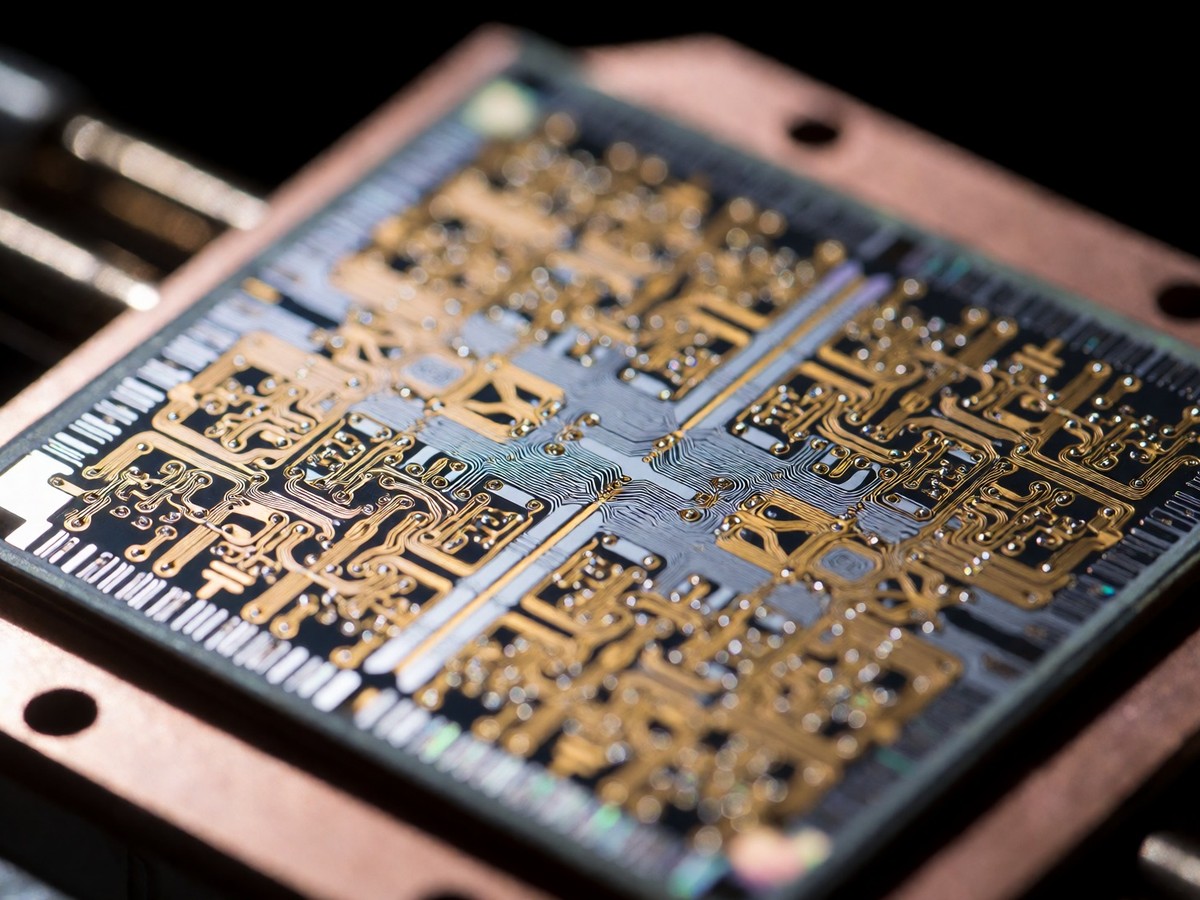
Google’s Willow chip completed a random circuit sampling benchmark in under five minutes, a task that would consume the Frontier supercomputer for ten septillion years. This speed is irrelevant to current AI safety workflows because the algorithm lacks commercial utility. However, the hardware breakthrough forces security teams to abandon static timelines for post-quantum cryptography adoption. The chip demonstrates that error rates drop exponentially as qubit counts increase, a phenomenon known as being "below threshold." This stability allows logical qubits to remain coherent for up to an hour, a metric that was previously unattainable. Consequently, the estimated time to build a cryptographically relevant quantum computer has shrunk significantly, compressing the window for organizational migration.
Accelerating the Cryptographic Transition
Security leaders now view quantum threats as immediate operational risks rather than distant theoretical concerns. Jason Baden of F5 notes that organizations across finance and defense are quietly integrating post-quantum algorithms into long-term data protection plans. This shift occurs because malicious actors already execute "store now, decrypt later" attacks, harvesting encrypted data today for future decryption. Google began experimenting with these protections in 2016, rolling out early implementations in Chrome to maintain "crypto agility." The company urges policymakers to treat post-quantum cryptography as a prerequisite for durable AI innovation, arguing that AI systems must be built with these standards from the ground up. NIST finalized the first set of post-quantum standards in 2024, creating a clear benchmark for global alignment.
The engineering gap between Willow and a machine capable of breaking 2048-bit RSA remains substantial. Willow contains only 105 physical qubits, while experts estimate that at least 13 million qubits are required to crack Bitcoin’s encryption within a single day. Hartmut Neven acknowledges that current logical error rates sit around 0.14% per cycle, which is orders of magnitude above the 10^-6 levels needed for meaningful large-scale algorithms. Winfried Hensinger of the University of Sussex confirms that Willow is still too small to perform useful calculations for industry problems. Despite this distance, the trajectory of improvement is undeniable. Each step up in code distance from 3×3 to 7×7 arrays halved the error rate, proving that scaling improves reliability rather than degrading it. This exponential reduction validates the surface code approach, which has been the central reference point for fault tolerance since the 1990s.
Reshaping Security Budgets and Governance
The rapid progress in hardware shifts the focus of AI safety research toward non-human identity governance and real-time anomaly detection. Darren Guccione of Keeper Security warns that the number of bots and service accounts has grown far beyond the human workforce, creating an expanded attack surface that few organizations can defend. As AI becomes more embedded in operations, security controls must move from static signatures to behavioral monitoring guided by machine learning models. This transition requires continuous auditing and automated credential rotation to identify misuse before it leads to compromise. Organizations that fail to address basic controls like multi-factor authentication and device visibility leave themselves exposed to AI-accelerated zero-day exploits.
IBM targets quantum advantage by the end of 2026, aiming for a system called Starling with 200 logical qubits capable of executing 100 million operations by 2029. This roadmap aligns with the expectation that business leaders will understand "quantum readiness" as a standard competency by year-end. The competitive landscape is diversifying, with DARPA selecting companies spanning five distinct qubit modalities, including trapped ions and photonic approaches. No single hardware modality has emerged as the winner, forcing enterprises to structure vendor relationships around reliability and orchestration stacks rather than raw qubit counts. Will the convergence of faster quantum hardware and autonomous AI agents create a security environment where traditional perimeter defenses become obsolete? The answer remains unclear, but the pressure to adapt is no longer optional.