Black Forest Labs raised $450 million in total funding after its December 2025 Series B round. The company reached a $3.25 billion valuation following $300 million in funding from investors including NVIDIA, Andreessen Horowitz, and Salesforce Ventures. Other participants in the Series B included Anjney Midha, BroadLight Capital, Creandum, Earlybird VC, Northzone, Temasek, Bain Capital Ventures, Canva, and Figma Ventures. This capital follows a $31 million seed round in August 2024 led by Andreessen Horowitz with participation from General Catalyst and Nvidia. While Stability AI maintains a large user base, it faces a troubled commercial model. In contrast, Black Forest Labs signed a $140 million contract with Meta in September 2025 for use in Meta’s creative products. Adobe also integrated FLUX.1 Kontext into Photoshop Beta, Project Concept, and Adobe Express in October 2025.
The researchers behind Black Forest Labs created the FLUX.1 model family, which includes the API-only FLUX.1 [pro], the non-commercial open-weight FLUX.1 [dev], and the Apache 2.0 licensed FLUX.1 [schnell]. The 12 billion parameter model uses a Flow-matching Transformer architecture with text understanding from Mistral-3. The team includes the researchers who created Stable Diffusion. Robin Rombach serves as CEO and led the Latent Diffusion Models paper. Patrick Esser and Andreas Blattmann also contributed to the original Stable Diffusion works. The company employs 85 full-time open-source contributors. This workforce size is comparable to the Stable Diffusion team at Stability AI. The 20-person founding team includes researchers; 70% hold PhDs.
Technical performance of Flux models
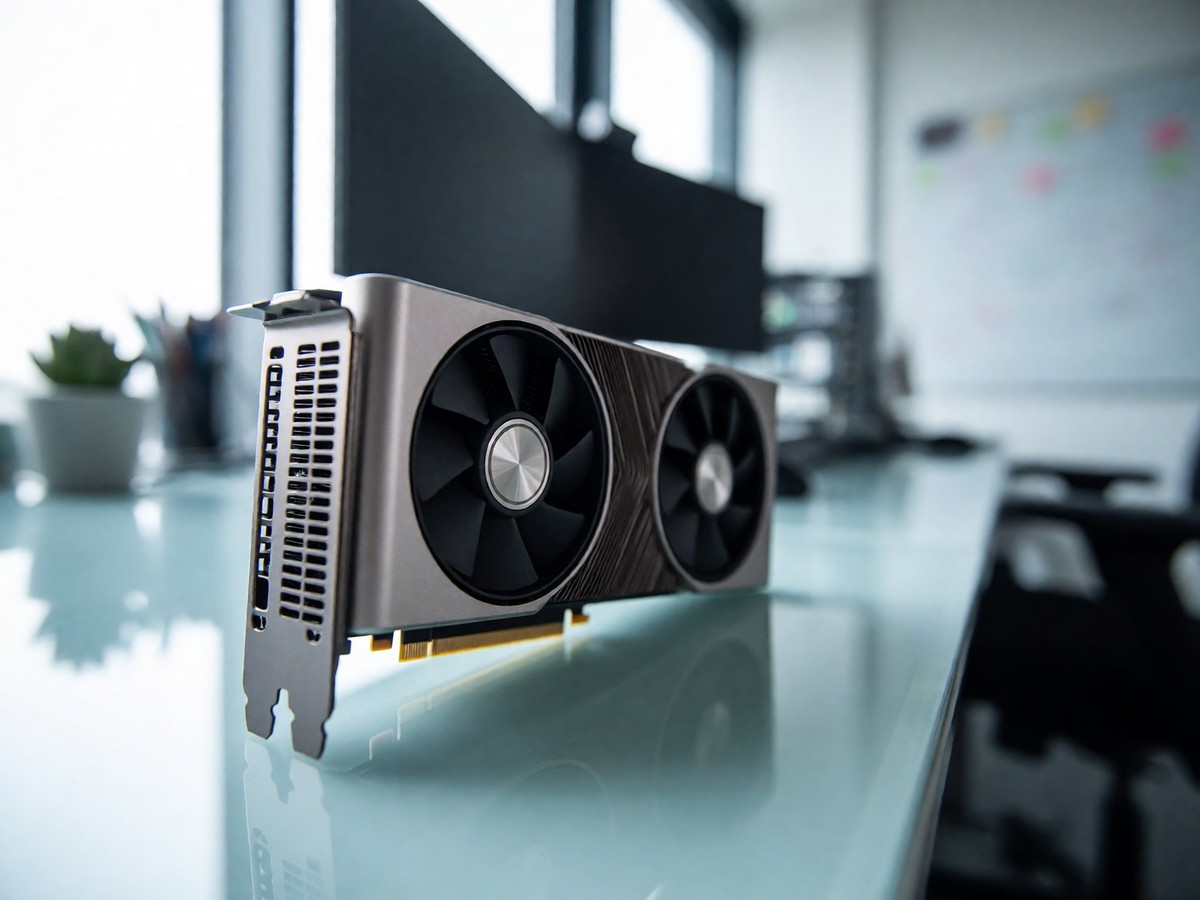
The Flux.2 [klein] model produces 4K resolution images in less than one second while using 60% less VRAM on equivalent NVIDIA GPUs than the standard Stable Diffusion models used by competitors. This speed improvement of 300% to 500% helps in batch processing and video generation workflows. The Self-Flow technique improves multimodal model training efficiency by 2.8x. This technique dynamically adjusts attention mechanisms during the learning process.
| Capability | Black Forest Labs Flux.2 | Stable Diffusion |
|---|---|---|
| Image Generation | Under 1 second | 2 to 5 seconds |
| Training Efficiency | 2.8x faster | Static architecture |
| VRAM Consumption | 60% lower | Higher |
| Memory Reduction | 40% lower | Higher |
Flux.2 [klein] uses a cascaded quantum diffusion technique. This architecture reduces memory requirements by 40% compared to traditional diffusion models. An NVIDIA RTX 3060 with 8GB VRAM runs Flux for 4K generation, whereas Stable Diffusion typically needs an RTX 3080 with 10GB VRAM. Advertising agencies report 70% reductions in campaign asset production time when using Flux. Game development studios report 50% reductions in asset rework when generating NPC variations. Flux remains less turnkey than consumer apps like Midjourney.
The visual consistency of Flux attracted Martin Scorsese to join as an AI advisor for a Leonardo DiCaprio film project. This collaboration marks one of the first major Hollywood adoptions of Flux technology. In the gaming industry, the technology shows promise for open-world games requiring unique character models. Black Forest Labs optimized Flux for integration with Unity and Unreal. Companies like Snap, VSCO, ElevenLabs, Vercel, and Picsart also integrate Flux into their products. The company reports 300% growth in third-party integrations since the January 2026 Flux.2 release.
Multimodal expansion and robotics
You probably know that image models are moving toward video and robotics. Black Forest Labs positions Flux 3 as a visual intelligence system. It unifies image, video, audio, and action tasks. The company is rolling out Flux 3 in phases. Flux 3 Video and Flux 3 Action are in early access as of July 28, 2026. Flux 3 Image follows next. Flux 3 Dev arrives later in 2026.
Flux 3 Video provides clips up to 20 seconds with synchronized audio. The model supports text-to-video, image-to-video, and video-to-video workflows. It uses agentic chaining to connect clips into multi-shot sequences. This method maintains characters and materials from shot to shot. Flux 3 Image provides high-accuracy image synthesis, typography, and multilingual rendering. The model handles visuals where text inside the image stays readable and correct.
The Flux-mimic variant predicts motion for robotics. Audi’s Production Lab tested this system on assembly lines for soft-body manipulation tasks like fitting flexible door seals. The system learns a new task from 30 minutes of demonstration data. Prior approaches required 30+ hours of data. The system responds in roughly 101 milliseconds. Will the unified bet on physical AI succeed?