New model architectures and credit costs
Runway released Gen-4 and Gen-4.5 to address character drift and jittery camera motion. Gen-4.5 is the current starting point for text-to-video and image-to-video workflows. This model earned 1,247 Elo points on the Artificial Analysis leaderboard. It produces 720p resolution at 24 or 25 fps. Users can select durations between 2 and 10 seconds. Gen-4 is the fourth major generation of Runway’s proprietary video diffusion model and is an older image-to-video model that requires an input image and a text motion prompt. Gen-4 Turbo is a faster variant that provides lower-cost iterations. It costs 5 credits per second compared to the 12 credits per second for Gen-4 or Gen-4.5. Gen-3 Alpha previously produced smoother motion and better prompt adherence than Gen-2, but users faced challenges with character drift. In Gen-3, skin tone, clothing, and facial structure could shift between generations. Gen-4 solves this through its multimodal conditioning stack. This stack processes reference images and text prompts with comparable weight during the denoising process to ensure character consistency.
| Model | Role | Input | Duration | Cost |
|---|---|---|---|---|
| Gen-4 | Older image-to-video model | Image + motion prompt | 5 or 10 seconds | 12 credits/sec |
| Gen-4 Turbo | Low-cost iteration | Image + motion prompt | 5 or 10 seconds | 5 credits/sec |
| Gen-4.5 | Current standard | Text or Text + Image | 2 to 10 seconds | 12 credits/sec |
Character consistency and motion control
The Gen-4 architecture uses a reference conditioning system to maintain visual identity. You should use Gen4 Turbo for testing compositions before committing to a final generation. This system uses a reference photo to anchor subjects across multiple generations. It works for people, animals, and objects. The Gen-4 model provides users with specific camera motion controls such as orbit, dolly, crane, handheld simulation, and static locked shots. These controls allow for deliberate cinematography instead of reliance on keyword interpretations. Gen-4 pushes the motion ceiling to 10 or more seconds of coherent motion. The model handles multiple aspect ratios including 16:9, 9:16, 1:1, 4:3, 3:4, and 21:9. The Gen-4 model allows creators to specify the camera setup, subject position, and scene state at a shot level, which helps to build multi-clip sequences that look like a single shoot.
Effective prompting in Gen-4 requires clear descriptions of subject motion, camera motion, scene response, and motion style. A user might provide a prompt such as: "The character runs toward the camera, turning her head to the left. Leaves swirl around." This structure avoids complex syntax that confuses the model. The model responds better to one clear camera action per clip. For example, a bad prompt like "The character slowly runs, looking back, while the camera moves in the opposite direction, showing her face as leaves swirl around" fails because it is too complex. The model also handles lighting transitions well when the user names a direction, like "morning light from the left," rather than "soft lighting." However, the model fails at causal reasoning when an effect precedes the cause, such as a door opening before the handle is pressed. Faces also shift when characters turn.
The Lionsgate partnership and industry impacts
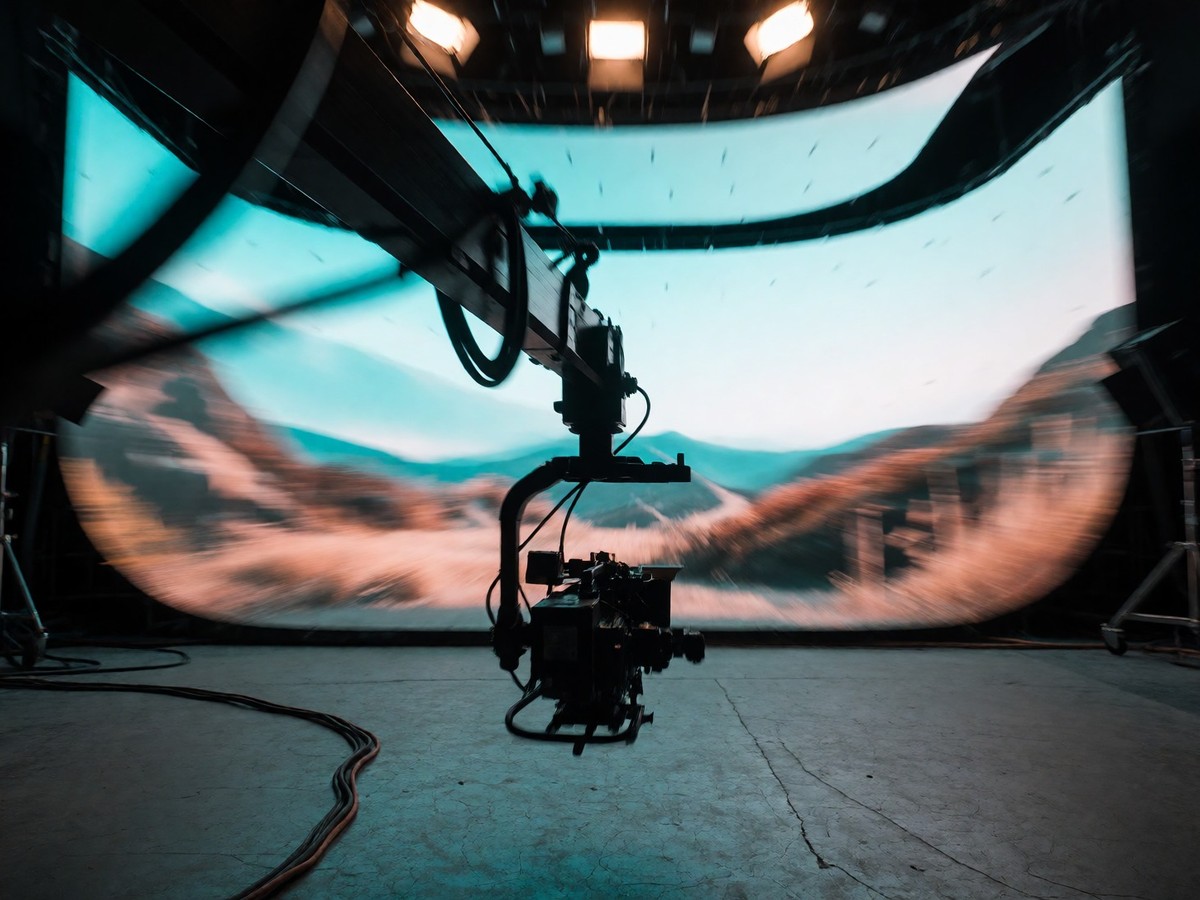
Lionsgate is the first major Hollywood studio to partner with Runway. The studio intends to train a custom AI model on its library of over 20,000 films and TV shows. Michael Burns, the Vice Chair of Lionsgate, expects the technology to save millions and millions of dollars, especially for action films that require many explosions. Kathleen Grace is the Chief AI Officer responsible for AI strategy. Runway has raised 237 million dollars from investors including Google, Nvidia, and Salesforce Ventures. The collaboration targets preproduction and postproduction tasks. Filmmakers use the technology to create storyboards and background elements. The partnership allows for future licensing opportunities where the custom model could be offered to other entertainment companies. Labor relations remain a challenge as recent industry strikes highlighted concerns about job stability. The studio faces ongoing litigation in a California class action lawsuit regarding copyright infringement and the use of performers’ likenesses, a case that involves visual artists who allege that generative AI companies misuse their work. Will these custom models eventually replace traditional production workflows?