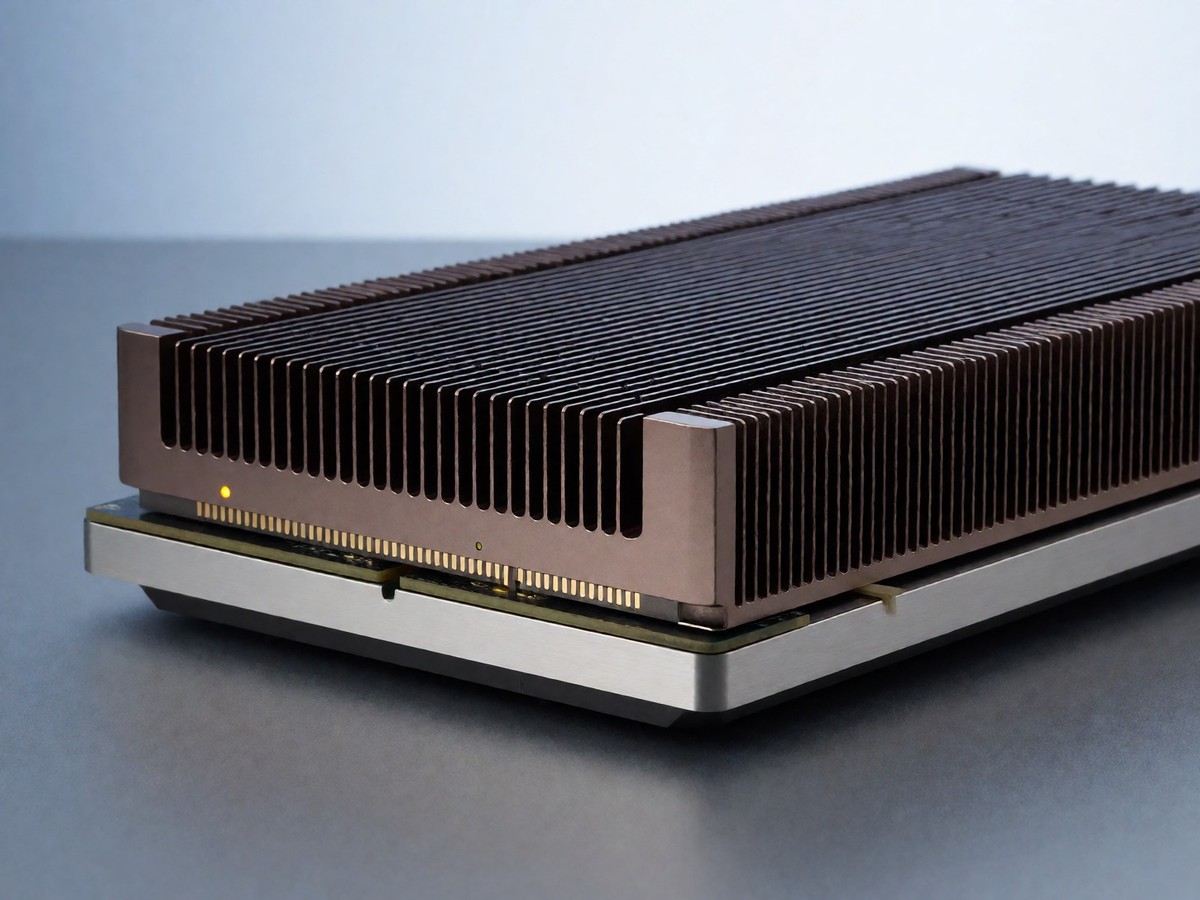
NVIDIA holds a 92% share of the discrete desktop and laptop GPU market, a dominance that extends into enterprise data centers where the H100 remains the standard for AI workloads. For organizations planning to fine-tune large language models, the choice between established hardware and emerging alternatives like SambaNova’s SN40L RDU is a calculation of capital expenditure versus software ecosystem maturity. I view this comparison through the lens of total cost of ownership, specifically how hardware pricing interacts with the operational friction of deploying specialized accelerators in an environment already saturated with CUDA-based tools.
Hardware Pricing and Supply Dynamics
The baseline for any economic analysis starts with the sticker price. In January 2024, Raymond James Financial analysts estimated that NVIDIA was selling the H100 GPU in the price range of $25,000 to $30,000 each. However, secondary markets tell a different story; on eBay, individual H100s cost over $40,000. This discrepancy highlights the severe supply constraints that have plagued the chip since its release. Larry Ellison of Oracle Corporation described the situation in September 2023, noting that he and Elon Musk were "begging" for H100s during a dinner with Jensen Huang. That scarcity has not fully dissipated, forcing enterprises to commit to billions of dollars in capital expenditures just to secure allocation.
SambaNova positions the SN40L as a direct competitor for these high-throughput tasks, but the sources provided do not list a specific unit price for the SN40L RDU. This absence is significant. Without a clear per-unit cost, it is difficult to perform a simple line-item comparison against the $25,000 to $30,000 NVIDIA figure. What we can infer from the broader market context is that NVIDIA’s pricing power is reinforced by its massive scale and integration with TSMC. For instance, NVIDIA ordered 300,000 H20 AI chips from TSMC in July 2025 due to strong demand from Chinese tech firms. This volume leverage likely keeps NVIDIA’s manufacturing costs lower than those of smaller competitors. If the SN40L cannot undercut the H100 significantly, its value proposition rests entirely on performance-per-watt or architectural advantages that reduce the number of units needed for a given fine-tuning job.
| Metric | NVIDIA H100 | SambaNova SN40L RDU |
|---|---|---|
| Estimated Unit Price | $25,000 – $30,000 | Not specified in sources |
| Secondary Market Price | Over $40,000 | N/A |
| Primary Manufacturer | TSMC | Not specified in sources |
| Market Share Context | 92% discrete GPU market | Competitor status |
Software Ecosystem and Operational Friction
Hardware cost is only one side of the ledger; the other is the labor required to make the hardware useful. NVIDIA’s CUDA ecosystem is the de facto standard for AI development, meaning most existing codebases run natively on H100s without modification. The company’s full-stack approach includes open-source models like Nemotron and libraries such as CUDA-X, which are deeply integrated into industrial workflows. Enterprises deploying agents with NVIDIA AI Enterprise benefit from a unified platform that spans from infrastructure to applications. This reduces the engineering hours spent on porting code or debugging compatibility issues.
In contrast, adopting SambaNova’s SN40L likely requires a migration effort. While the sources do not detail the specific software stack for the SN40L, the general trend in the industry shows that non-NVIDIA architectures often face steeper learning curves. The average enterprise runs 45 cybersecurity-related tools, and adding a new accelerator complicates this landscape further. If an organization must rewrite its fine-tuning pipelines to accommodate the SN40L, the hidden cost in developer time can easily offset any savings on the hardware itself. I would skip the SN40L unless the organization has already invested heavily in SambaNova’s software ecosystem. The risk of vendor lock-in to a less mature platform is real, especially when NVIDIA continues to expand its reach into adjacent areas like automotive and robotics with platforms like DRIVE and Isaac.
The question of whether the SN40L’s architectural efficiency can overcome the inertia of the CUDA ecosystem remains unanswered. Until SambaNova provides transparent pricing and demonstrates parity in software support, the H100 remains the safer economic bet for most enterprises.