Stability AI withdrew API support for Stable Video Diffusion on July 24, 2026. This move toward a more controlled ecosystem follows a broader revision of how the company manages access to its recent model releases. The company introduced a new Community License that governs models like Stable Diffusion 3 Medium and the Stable Diffusion 3.5 series. This new structure aims to provide free access to a wider group of users while securing revenue from larger entities. Because the new Community License allows for free use if annual revenues do not exceed one million dollars, many small businesses and individual creators now find themselves using Stability AI models without any direct payment to the company.
The updated licensing framework changes how individuals and small organizations interact with the technology. Non-commercial users, such as researchers, students, and hobbyists, continue to use models for free when they run them on their own devices. For commercial users, the threshold remains set at one million dollars in annual revenue. This revenue cap applies to the total annual revenue of the organization, regardless of whether that money comes from Stability AI models or derivative products. Once a company exceeds this one million dollar limit, it must contact Stability AI to secure a separate Enterprise license. Users whose revenue falls below this mark do not need to pay, though the company asks that these users fill out a brief form to indicate which models interest them most.
New rules for commercial users
The Community License simplifies how small-scale users handle their generated content. Stability AI stated that it will not ask users to delete images, fine-tunes, or other derived products if the user follows the acceptable use policy. There are no restrictions on the number of media files a person can create under this agreement. This change addresses previous concerns about the ability to build long-term workflows without constant licensing renegotiations.
| Service | Price (credits) |
|---|---|
| Stable Image Ultra | 8 |
| Stable Diffusion 3.5 Large | 6.5 |
| Stable Diffusion 3.5 Large Turbo | 4 |
| Stable Diffusion 3.5 Medium | 3.5 |
| Stable Diffusion 3.5 Flash | 2.5 |
| Stable Image Core | 3 |
Small businesses that integrate these models into their own products or services can do so for free under the current terms. However, the transition from a Community License to an Enterprise license remains a point of contention for some professional developers. Kent Keirsey, the CEO of Invoke, noted that the new license remains a significant step forward for smaller developers. He still expressed concerns regarding how businesses move from the free tier to the paid enterprise tier. Can Stability AI satisfy the needs of high-volume commercial developers while maintaining its connection to the open-source community?
The SD3 controversy and CivitAI
The rollout of Stable Diffusion 3 caused significant friction within the generative AI community. Many users felt the original commercial license was too restrictive, which led to a major backlash. This controversy prompted CivitAI, a large repository for Stable Diffusion resources, to implement a temporary ban on all resources related to SD3. The platform banned all SD3-based models, as well as any models or LoRAs trained on content created with outputs from SD3-based models. CivitAI took this action to avoid potential legal issues regarding the license terms.
A major point of dispute involves how the company defines derivative works. The license states that derivative products include any output derived from foundational models, such as fine-tuned models, LoRAs, or adapters. This definition means that any model trained on images produced by SD3 is subject to Stability AI’s licensing terms. One developer pointed out that this grants Stability AI significant power over any model that includes SD3 images in its training datasets. This specific term caused apprehension among creators who rely on building new models from existing outputs.
Conflict over training and ownership
The definition of derivative works creates a divide between the company and independent researchers. Stability AI confirmed that users can create custom SD3 models and improve upon the base model. The company also stated that users own the derivative works they create, provided they respect the ownership of Stability AI materials. However, the company maintains a strict prohibition against training new foundational AI models using SD3 outputs as training data. This rule prevents users from creating a direct competitor to Stability AI using material generated by its own models.
This distinction between fine-tuning and foundational training remains central to the debate. Fine-tuning allows a user to teach a model a specific face, art style, or brand identity using a small set of images. The company allows this practice under the Community License. In contrast, training a foundational model involves using large datasets to build a new architecture. The company’s policy aims to protect its intellectual property from being used to build rival foundational technologies.
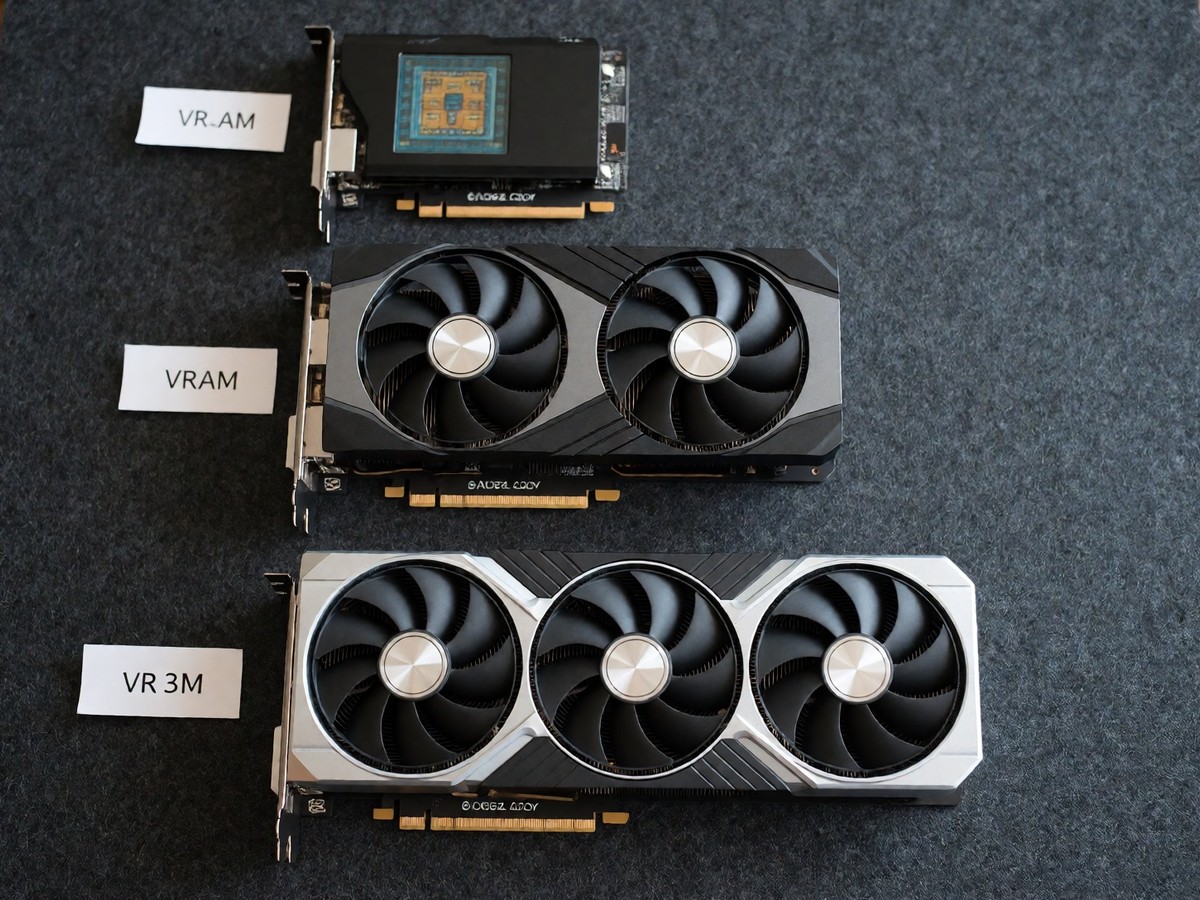
You likely know that managing local VRAM remains a struggle for many users. As models grow in complexity, the hardware requirements for local deployment become more demanding. The Stable Diffusion 3.5 series addresses this by providing different weight classes for different hardware budgets.
Hardware requirements for local models
Stability AI provides several versions of its models to accommodate various GPU capabilities. The 3.5 Medium variant uses a 2.5 billion parameter architecture designed for smaller devices like laptops and smartphones. This model requires approximately 9.9 GB of VRAM, excluding the memory needed for text encoders. The 3.5 Large variant contains 8.1 billion parameters and requires more significant resources. A user with a 24GB card, such as an RTX 4090, can run the Large version at full precision. For those with less memory, an FP8 build of the Large model reduces the requirement to 11 GB of VRAM.
The 3.5 Large Turbo variant uses a distilled architecture to allow for four-step generation. This allows for faster previews when users iterate on prompts. The requirements for these models vary significantly based on the specific version and the optimization used.
| Model Version | Parameters | Recommended VRAM |
|---|---|---|
| SD 1.5 | N/A | 4 GB |
| SDXL 1.0 | N/A | 8 GB |
| SD 3.5 Medium | 2.5 Billion | 9.9 GB |
| SD 3.5 Large | 8.1 Billion | 11 GB (FP8) to 19 GB (BF16) |
The older SD 1.5 and SDXL models remain available for local use. SD 1.5 runs on GPUs with as little as 4GB of VRAM. SDXL requires at least 8GB of VRAM for reliable performance. These older models do not have the same revenue restrictions as the SD3 and SD3.5 series. They use the CreativeML Open RAIL licenses, which do not impose a one million dollar revenue cap.
Competition in the video and image market
Stability AI faces intense competition from companies like OpenAI, Google, and Runway. In the video space, Google offers Veo 3, which uses physics priors to make video look like real footage rather than a synthetic render. OpenAI provides Sora 2, which focuses on narrative coherence and maintaining character identity across long clips. Runway provides Gen-3 Alpha Turbo, which optimizes for speed and API reliability.
Luma Dream Machine offers a way to turn product photographs into animated scenes, while HeyGen focuses on the niche of AI avatars and talking-head content. Adobe Firefly competes by integrating directly into the Creative Cloud suite and offering commercially licensed outputs by default. This commercial safety makes Firefly a preferred choice for agencies that need to ensure their training data is legally defensible.
In the image market, DALL-E 3 provides high prompt accuracy through its integration with ChatGPT. It excels at rendering text and following complex spatial instructions. Stable Diffusion remains the preferred choice for users who want full creative control through tools like ControlNet and LoRA. While DALL-E 3 removes technical barriers, Stable Diffusion transfers the technical work to the user, allowing for much higher levels of customization.
Legal battles and copyright rulings
The legal landscape for generative AI remains unsettled. In a recent case in the United Kingdom, Getty Images sued Stability AI for trademark infringement and copyright infringement. Getty claimed that Stability AI scraped 12 million images from its site without permission. The judge ruled that Stability AI did not infringe on copyright because the model does not store or reproduce copyright works. However, the judge did find that instances of trademark infringement occurred because the Getty watermark appeared on some generated images.
This ruling provides some clarity but leaves the broader issue of AI training in legal limbo. The copyright claims in the UK case were narrow, and the court did not make a definitive ruling on the lawfulness of the AI model learning process. Stability AI continues to face similar lawsuits in the United States. These cases involve various creators and studios that argue the use of their works for training violates intellectual property laws.
The company also faces challenges regarding the training data itself. Most Stable Diffusion models were trained on the LAION-5B dataset, which contains images scraped from the web. Some artists have successfully requested the removal of their content from these datasets. This opt-out process serves as a way to address ethical concerns, but it does not resolve the ongoing legal disputes regarding fair use.
Future directions for Stability AI
Stability AI is currently focusing on model improvements and the development of new tools. The company is working on an SD4-Video extension for open video generation, which should arrive in the second half of 2026. This release will likely follow the same Community License structure that governs the current image models. The company also continues to work on inference optimizations, such as the collaboration with NVIDIA to provide TensorRT and FP8 support for the 3.5 line.
The Brand Studio platform, launched in April 2026, marks a shift toward enterprise revenue. This managed creative production platform provides tools for marketing teams, including curated model routing and a Brand Central hub for storing assets. This service moves Stability AI away from being solely a provider of model weights and toward being a full-service creative partner.
The company must balance these enterprise ambitions with its roots in the open-source community. As it scales its commercial offerings, the tension between revenue needs and community expectations remains a primary concern for developers. Stability AI continues to release updates to its models and its licensing terms as it attempts to find a stable position in the market.