Demis Hassabis, Shane Legg, and Mustafa Suleyman founded the London based startup DeepMind in November 2010. The founders aimed to create a general purpose AI. Hassabis and Legg first met at the Gatsby Computational Neuroscience Unit at University College London. The company started by teaching AI to play Atari video games like Breakout and Space Invaders. The researchers used reinforcement learning to train models, which allowed the AI to learn from experience using only raw pixels as data input. In 2013, DeepMind published research on an AI system that surpassed human abilities in games like Pong and Enduro. This early work on reinforcement learning led to Google’s interest in the company.
The company required significant capital to pay employees and provide compute resources. Major venture capital firms including Founders Fund and Horizons Ventures invested in the startup. Entrepreneurs like Peter Thiel and Elon Musk also provided funding. Jaan Tallinn acted as an early investor and adviser. Google confirmed its acquisition of DeepMind on 26 January 2014. The price for the deal ranged between $400 million and $650 million. Google CEO Larry Page reportedly led the acquisition. While Facebook also entered talks to buy the startup in late 2012, DeepMind chose Google.
| Metric | Detail |
|---|---|
| Founding Date | November 2010 |
| Acquisition Date | 26 January 2014 |
| Reported Acquisition Price | $400 million to $650 million |
| Original Founders | Demis Hassabis, Shane Legg, Mustafa Suleyman |
DeepMind creates ethics units and safety teams
Google established an artificial intelligence ethics board following the acquisition to ensure the technology avoids abuse. Both Google and DeepMind declined to reveal the identities of the board members. DeepMind opened the DeepMind Ethics and Society unit to study the societal questions raised by AI. This unit featured philosopher Nick Bostrom as an advisor. In October 2017, DeepMind launched a new research team to investigate AI ethics. Mustafa Suleyman, who served as the head of applied AI, established the DeepMind Ethics and Society unit. He later left Google in 2022 to co-found Inflection AI and joined Microsoft AI in March 2024.
Shane Legg leads the technical AGI safety teams at Google DeepMind. He works to ensure AI development remains safe and controlled. Legg has discussed the risks of AI, telling a 2011 interview that human extinction could occur through technology. He estimated the probability of such an event at anywhere between 5 percent and 50 percent. He also noted that he does not think researchers will deliberately design super intelligent machines to maximize human suffering. Legg currently serves on the nominating committee for the AI Safety Foundation. He also works on talent acquisition and long term AGI roadmaps.
DeepMind also provides financial support to external researchers through the Google DeepMind AI Safety Research Fund. The fund maintains an annual budget between five million and fifteen million dollars. It supports work on alignment, interpretability, and the safe deployment of advanced AI systems. The program provides grants and access to research infrastructure to academic researchers, independent safety researchers, and nonprofit organizations. This funding follows the company’s focus on addressing the risks of advanced AI.
Divergent paths of the founding trio
The original founders now occupy three distinct roles in the industry. Demis Hassabis serves as the CEO and Chair of Google DeepMind. He also runs Isomorphic Labs, an Alphabet backed AI drug discovery spinout. Hassabis received the Nobel Prize in chemistry in 2024 for his work on the AlphaFold2 model. Mustafa Suleyman leads Microsoft AI, where he focuses on AI safety frameworks and humanist superintelligence. He authored the draft AI Code of Conduct for Microsoft. Shane Legg remains the Chief AGI Scientist at Google DeepMind. He focuses on technical AGI safety and talent acquisition.
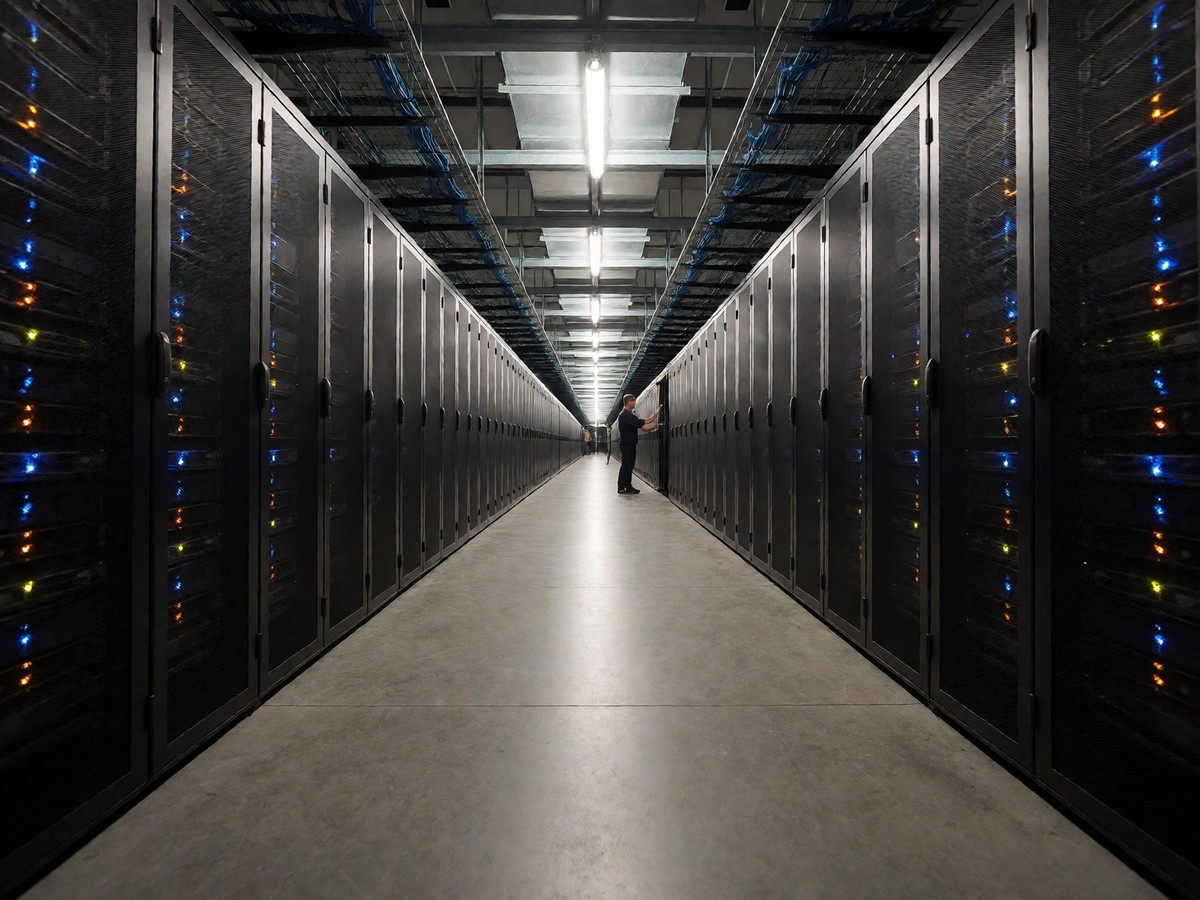
The development of specialized AI models defines the company’s technical history. The AlphaGo program defeated the Go world champion Lee Sedol in 2016. In 2017, AlphaZero gained abilities in chess and shogi by playing against itself. The MuZero model mastered Go, chess, shogi, and Atari 2600 games in 2019 without human data or known rules. In 2020, AlphaFold achieved state of the art records in protein folding prediction. Google uses DeepMind technology to manage cooling in its data centers, where the AI makes cooling units 40 percent more efficient. This efficiency reduces overall electricity consumption in those centers by 15 percent.
The company merged with Google Brain in April 2023 to form Google DeepMind. This merger followed a struggle by DeepMind executives to secure autonomy from Google. The move responded to the release of ChatGPT by OpenAI. Since the acquisition, the company has released the Gemini and Gemma model families. It also developed generative models like Imagen, Veo, and Lyria. While the company continues to expand into new territories like robotics and biology, the tension between commercial scaling and safety remains. Does the massive scale of Alphabet’s resources fundamentally change how safety research is prioritized?