Economics studies human behavior as a relationship between ends and scarce means with alternative uses. Historically, the discipline was called political economy, which described the way to manage a state. Adam Smith defined the subject as an inquiry into the nature and causes of the wealth of nations. Jean-Baptiste Say described it as the science of production, distribution, and consumption of wealth. Lionel Robbins defined economics as the science which studies human behavior as a relationship between ends and scarce means which have alternative uses. In the context of defense, war uses resources like human life and equipment to reach a sought-after end. If the expected costs outweigh the benefits, rational actors may explore alternatives. Helsing, a Munich-based company founded in 2021, operates within this framework by providing autonomous systems for military use. The firm reached an $18 billion valuation in May 2026 after a $1.2 billion funding round. This valuation follows a June 2025 round that set the company value at €12 billion. The firm focuses on European sovereignty and NATO interoperability. Germany’s Bundestag approved an initial €269 million HX-2 contract in February 2026, which remains within a framework worth up to €1.46 billion.
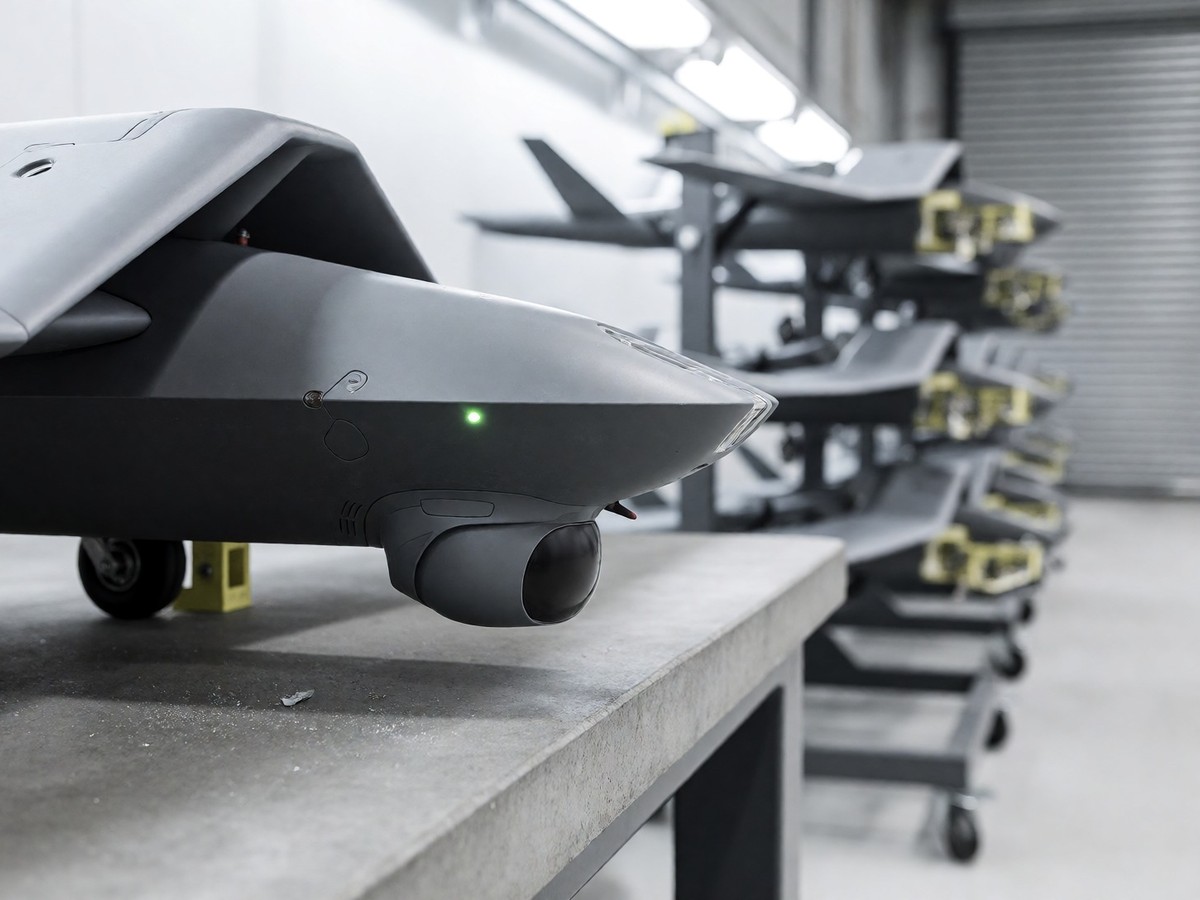
The HX-2 strike drone weighs 12 kilograms and reaches a range of 100 km. It uses onboard AI to operate in environments where GPS is unavailable. This drone provides a way to conduct strike missions without external communications. The Centaur AI agent piloted a Gripen E fighter in a beyond-visual-range trial, which was one of the first publicly known instances of AI flying an operational fighter jet in such a manner. The company also works on the CA-1 Europa unmanned combat aircraft, which targets a first flight in 2027.
| HX-2 Drone Specification | Value |
|---|---|
| Weight | 12 kilograms |
| Operational Range | 100 km |
| AI Mode | GPS-denied |
| Europa Flight Date | 2027 |
Helsing operates at both the software and hardware layers of the defense stack. The software layer fuses sensor and intelligence data into decisions. The autonomy layer allows uncrewed systems to operate without human operators. The hardware layer involves autonomous drones, aircraft, and ships. Helsing builds software that turns raw sensor data into battlefield pictures for electronic warfare. It also manufactures the physical drones that act in the world. This vertical integration allows the firm to control the autonomy layer. The Centaur AI agent provides the intelligence needed to fly or operate a platform without a human in the cockpit. You can see how this differs from companies that only sell software. The HX-2 uses onboard AI to function when communication links are lost. This capability allows for autonomous reconnaissance and strike operations in contested zones.
NATO and allied forces rely on a variety of autonomous technologies. Companies like Harmattan AI develop mission software for airborne operations and electronic-warfare systems. Quantum Systems produces an interoperable family of unmanned platforms for air, land, and sea. Delian Alliance Industries combines AI with commercial hardware to meet the needs of NATO partners. Tonbo Imaging provides targeting and surveillance systems to NATO forces. Arcyn Defense develops kinetic energy air-defense systems to counter unmanned aerial systems. Orbotix Technologies develops technological solutions through the use of engineering software and artificial intelligence. Alta Ares uses drone-captured images to process data in real-time using artificial intelligence. Unmanned Defense Systems specializes in the design and manufacturing of advanced UAV systems, focusing on loitering munitions and autonomous swarm technologies. Dzyne Technologies specializes in the rapid design, development, and production of advanced unmanned aircraft and analytic systems. Allen Control Systems specializes in the development and production of advanced defense technologies, including autonomous gun turrets and drone swarms. These companies prioritize mass-produced, low-cost systems over traditional custom programs. Most of these firms raise private capital to build products speculatively. This model allows for continuous software iteration. The defense-AI stack consists of software, autonomy, and hardware. Palantir leads the data layer, while Shield AI focuses on the autonomy layer. While Helsing integrates both, other firms focus on specific layers. The strategic frontier involves the convergence of hardware, software, and autonomy. Does the move toward software-defined, mass-manufacturable hardware signal a permanent change in how NATO plans for large-scale conflict?