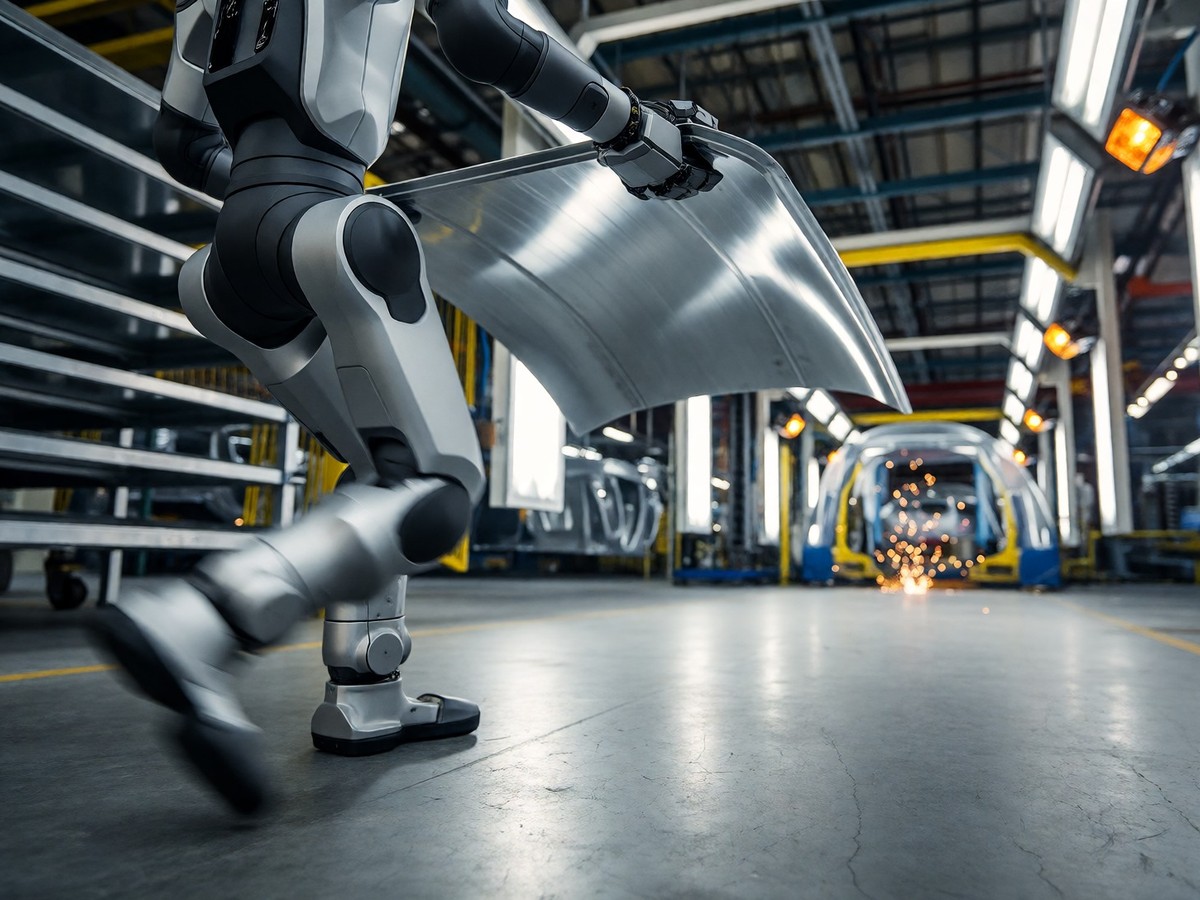
Figure AI’s Figure 02 robots contributed to the assembly of over 30,000 vehicles at the BMW Group plant in Spartanburg, South Carolina, within an 11 month period. This deployment utilized the robots for sheet metal panel loading in the body shop, a task where the robots achieved a 98.7% success rate. While Figure AI demonstrates functional deployment at scale, Tesla faces a different set of hurdles as it attempts to ramp up its Optimus program. Tesla reported in its Q2 2026 shareholder update that it is installing first-generation lines for Optimus at the Fremont facility and expects production to begin soon.
Figure 03 hardware advantages at BMW
Figure AI transitioned its Spartanburg deployment from Figure 02 to the Figure 03 platform to access better dexterity and payload capabilities. The Figure 03 platform provides 16 degrees of freedom per hand, compared to the 12 degrees of freedom found in the Figure 02 model. This upgrade also includes a 25% increase in payload capacity and faster on-board AI inference. The Figure 03 robot uses tactile sensors and palm cameras to increase precision during manipulation tasks.
The Figure 03 robot handles sheet metal panels by picking them from racks and loading them into body shop fixtures. This process requires the robot to maintain a cycle time of approximately 60 to 90 seconds per unit. Figure AI also uses the Figure 03 to move sub-assemblies between workstations within defined paths. The robot uses a 7B parameter vision-language-action model trained on 10,000 hours of teleoperation data to manage these movements.
| Metric | Figure 03 Specification |
|---|---|
| Height | 1.68 m |
| Total Mass | 70 kg |
| Payload Capacity | 20 kg |
| Degrees of Freedom (Hand) | 16 |
| Battery Capacity | 2.25 kWh |
| Operating Cost (BMW) | $25 per hour |
The Figure 03 utilizes custom cycloidal reduction drives mated with brushless DC motors for its hip and knee joints. These cycloidal gears withstand 500% momentary shock loads without stripping teeth, which prevents the failures seen in earlier harmonic drive systems. The robot also routes motor stators against aluminum housing members to use the limbs as heat sinks for thermal dissipation.
Tesla Optimus manufacturing bottlenecks
Tesla faces significant hardware and labor constraints as it targets 1,000 Optimus units per week by the end of 2026. Current production scales to hundreds of units weekly as of mid-2026, making the 1,000 unit target a 3 to 5x acceleration. The Optimus V3 hand assembly requires over 100 precision components for manual assembly, which creates a labor intensive manufacturing process. Tesla engineers also had to design a replaceable glove-layer sensor system because the integrated touch sensors proved unreliable.
Worker resistance at the Texas and California factories creates a bottleneck for data collection. Employees have resisted participating in motion-capture training programs because they recognize these programs feed imitation learning datasets for robots intended to replace them. Tesla responded by moving data collection to dedicated teams and establishing training hubs, which added overhead to the iteration cycle.
The Optimus program relies heavily on AI training that requires vast amounts of visual data. Tesla’s reliance on imitation learning highlights a dependency on generating sufficient data for diverse manual tasks. Elon Musk noted that the initial portion of the production S-curve will be flat and long because the parts and the robot are new. He also stated that the company faces constraints in scaling Optimus production without the semiconductor project known as Terafab.
Comparative dexterity and AI architectures
Figure AI and Tesla use different approaches to solve the problem of robotic manipulation. Figure AI uses a proprietary Helix vision-language-action model that translates visual tokens into movement vectors. This allows the robot to adjust its grip if a part sits skewed on a rack. Figure AI also uses a dual System-on-Chip configuration to run a real-time Linux kernel, which prevents latency spikes during movement.
Tesla utilizes an AI stack that includes the Digital Optimus initiative, which adapts the self-driving stack to operate computer interfaces through high-frame-rate visual input. This initiative uses Grok from SpaceXAI to assist with the software development. Tesla’s Optimus Gen-3 uses a 70B multimodal transformer trained on internal manufacturing footage.
| Platform | AI Model Parameter Scale | Real-world Deployment |
|---|---|---|
| Figure 03 | 7B parameter | BMW Spartanburg |
| Optimus Gen-3 | 70B parameter | Tesla Fremont/Texas |
| Unitree G1 | ~1B parameter | Asia-Pacific Manufacturing |
| Digit | Task-specific | GXO Distribution |
The Figure 03 achieves sub-5ms latency for inverse kinematics, while the Optimus Gen-3 averages 8ms. In contrast, the Unitree G1 and Agility Robotics’ Digit hover between 12ms and 15ms due to lighter compute budgets. I find that Figure AI’s focus on high-end, proprietary data accumulation creates a more immediate advantage in specialized industrial tasks.
Scaling challenges in automotive assembly
The transition from pilot programs to mass production reveals deep supply chain issues. Bending steel, machining roller screws, and curing tactile-sensor pads limit production speed because there is no Moore’s Law for physical manufacturing. While AI models for manipulation have roughly doubled in capability every year since 2023, production volumes for humanoid robots lag behind.
Tesla aims to produce 1,000 units per week by the end of 2026, which implies a massive scale for a product that is more complex than a car. A factory producing 100,000 robots per year would need to finish one robot every five and a half minutes. No current manufacturer reaches that level of throughput. Unitree currently leads in volume, having shipped 5,500 units in 2025.
The BMW Spartanburg deployment shows that robots can work alongside logistics tuggers and automated guided vehicles. Figure 03 handles sheet metal parts from transport dollies and inserts them into manufacturing fixtures. This task requires the robot to maintain a steady footing on concrete floors while swinging heavy steel parts.
The economics of robotic labor
The financial viability of humanoids depends on the cost per hour of operation compared to human labor. In North American automotive plants, fully burdened human labor costs range from $38 to $52 per hour. Figure AI targets lease pricing of $14 to $20 per hour under a Robot-as-a-Service model. At BMW, the reported operating cost for Figure 03 is $25 per hour.
Tesla’s commercial target for external Optimus sales is between $20,000 and $30,000 per unit. This price would reduce the payback period for high-repetition tasks to 3 to 6 months. Currently, many humanoid robots cost between $150,000 and $250,000 per unit.
| Economic Factor | Figure 03 (BMW) | Optimus (Target) | Digit (GXO) |
|---|---|---|---|
| Purchase/Lease Price | $60,000 – $90,000 | $20,000 – $30,000 | $480,000 (60mo) |
| Operating Cost/Hour | $25 | Not disclosed | Not disclosed |
| Payback Period | Variable | 3 – 6 months | 18 – 36 months |
The maintenance of these machines adds significant cost, as operators budget 15% to 25% of the acquisition cost annually for software and hardware updates. Battery life also impacts the business case, as most robots only provide 2 to 4 hours of continuous work under industrial loads.
Hardware stability and failure modes
Reliability remains a significant barrier to widespread adoption. In 2026, documented incidents of robots stalling mid-task and blocking aisles show that fleet management protocols still struggle to keep pace with hardware ambition. A 1.3% failure rate at the BMW plant means a robot fails approximately once every 77 cycles. BMW manages these failures with human intervention protocols where a person recovers the robot after it stops.
Figure 02 hardware experienced issues with exposed wiring harnesses and off-the-shelf actuators that reached thermal saturation. The Figure 02 design addresses this by using sealed hollow-shaft joint assemblies for all high-voltage DC conductors and Ethernet lines. This prevents the friction and dust issues that degrade exterior conduits in factory environments.
Tesla’s Optimus also faces hardware-specific constraints. The company must manage the difficulty of scaling manufacturing for parts that are entirely new to the industry. The reliance on complex hand assembly and the need for immediate rework on new units suggest that yield rates are below the levels required for mass production economics.
Competitive landscape and market waves
The humanoid market is moving through three distinct adoption waves. The first wave covers industrial applications from 2025 to 2030, focusing on automotive and logistics at prices between $80,000 and $250,000. The second wave targets consumer and developer markets from 2027 to 2033 at prices between $5,000 and $25,000. The third wave targets medical and elder care applications starting in 2030.
| Market Wave | Target Sector | Price Range | Timeline |
|---|---|---|---|
| Wave 1 | Industrial/Logistics | $80,000 – $250,000 | 2025 – 2030 |
| Wave 2 | Consumer/Developer | $5,000 – $25,000 | 2027 – 2033 |
| Wave 3 | Medical/Elder Care | Variable | 2030 – 2036 |
In the industrial segment, BYD-UBTECH has deployed 100 to 200 units, which represents the largest commercial deployment. Agility Robotics has 100 units contracted through 2026 for GXO. Apptronik is running pilots with Mercedes-Benz for material handling.
Unitree dominates the volume market with the G1 starting at $16,000. This low price point is achieved through Chinese supply chain integration. While Unitree leads in volume, its software polish and quality lag behind Western competitors like Figure AI and Boston Dynamics.
Strategic implications for Tesla
Tesla has made an irreversible commitment to robotics by permanently shuttering Model S and Model X production at the Fremont facility in May 2026. This redirection of engineering and line capacity toward Optimus eliminates a revenue hedge if deployment timelines extend. Tesla’s strategy relies on the assumption that humanoid form-factors unlock use cases that robotic arms cannot address.
Tesla’s internal testing at Fremont and Gigafactory Texas involves the Optimus fleet performing battery assembly, EV pack loading, and cable routing. However, a portion of this fleet currently generates training data rather than pure production output. The company’s move to use the term "Optimus Academy" for initial builds suggests a focus on data collection over immediate utility.
I believe Tesla remains the best positioned to overcome supply chain bottlenecks because it owns much of its bill of materials. By verticalizing the production of actuators and AI chips, Tesla can theoretically bypass the scarcity of high-performance components that affects smaller startups. Can Tesla successfully bridge the gap between the "Optimus Academy" and true high-volume industrial production?