Helsing secured $1.8 billion in a Series E round on July 13, 2026, which sets its valuation at $18 billion. The investor group includes Dragoneer, Lightspeed, Goldman Sachs Alternatives, JPMorganChase, and CPP Investments. This valuation reaches 32 times the €441 million ($502 million) revenue the company expects for 2026. I find this figure extreme when I compare it to U.S. competitors. For instance, Anduril carries a valuation multiple of 13, while Shield AI sits at 21. Even the European rival Quantum Systems holds a multiple of 8.5. This massive capital injection follows a €600 million Series D in June 2025 led by Daniel Ek’s Prima Materia. The company also raised €450 million in a Series C round led by General Catalyst, with participation from Saab, Accel, and others. This brings total disclosed equity funding to approximately $1.51 billion. Founded in 2021 by Torsten Reil, Gundbert Scherf, and Niklas Kohler, the company operates in Munich, Germany. Daniel Ek and Tom Enders chair its board. While the company remains predominantly European-owned, the influx of global capital suggests a push for status as a next-generation prime contractor.
Hardware production and reliability
Helsing operates in Munich and builds AI software for weapons systems. Its software works with sensors to provide battlefield insights for the British, German, French, Estonian, and Ukrainian governments. The company signed a partnership in February 2026 to equip the CA-1 Europa uncrewed jet with Hensoldt radar and optronics. The CA-1 Europa weighs approximately 4 tonnes, carries 500 kg of weapons, and targets a first flight in 2027. It measures 11 meters in length with a 10 meter wingspan.
| System | Weight | Max Speed | Range |
|---|---|---|---|
| HX-2 Drone | 12 kg | 220 km/h | 100 km |
| CA-1 Europa | 4 tonnes | High subsonic | 1,400 – 1,800 km |
| SG-1 Fathom | 60 kg | 2 knots | 1,000 m depth |
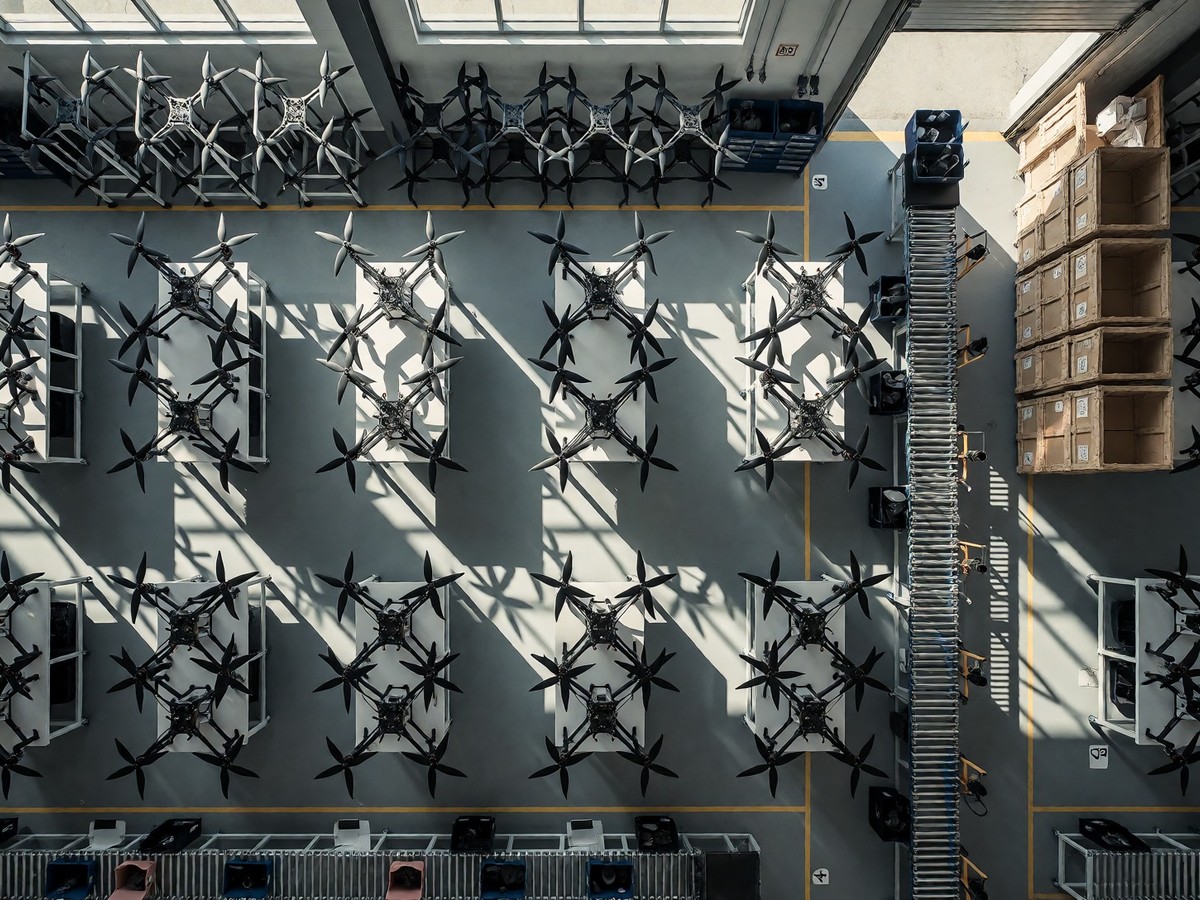
The company faces scrutiny regarding hardware reliability. A January 2026 Bloomberg report cited a November 2025 German army presentation where HX-2 drones failed to take off and lacked the promised AI guidance. While Helsing rejected these findings, the discrepancy between the software promise and the hardware performance remains a problem. The HX-2 quadcopter uses a design with four wings and rotors in an X configuration, carries up to 5 kg of ammunition, and reaches top speeds of 250 km/h while operating at a range of 100 km. This drone uses Altra software to coordinate with other sensors and artillery. The company aims to build 6,000 HX-2s for Ukraine. In July 2026, West Virginia announced a $50 million investment for a plant in Martinsburg to build these drones. The company’s acquisition of Grob Aircraft in June 2025 allows it to integrate AI software with composite manufacturing to develop reconnaissance and combat aircraft. In May and June 2025, the company conducted "Project Beyond," where it tested the Centaur AI pilot in a real-world dogfight using a Saab Gripen E.
Scaling for NATO demand
NATO Allies announced a $40 billion investment in counter-drone capabilities on July 7, 2026. This follows the US Pentagon’s Replicator initiative, which aims to spend $1 billion on autonomous systems to counter military buildups. Helsing positions itself to capture these funds through its focus on sovereign European defense. The HX-2 drones fly using AI and stored map data, which allows them to navigate without GPS. This makes the drones immune to conventional jamming. The SG-1 Fathom underwater glider also uses the Lura acoustic AI to track submarines. It can operate submerged for 90 days and reaches depths of 1,000 m. The company established an 18,000 sq ft factory in Plymouth in November 2025 to build these gliders.
The company also manages the Centaur AI pilot and Cirra electronic warfare software. In February 2026, the Bundestag budget committee approved a €540 million loitering-munition package split between Helsing and Stark. The Bundeswehr signed purchase contracts the next day, with the brigade in Lithuania set to receive drones starting in 2027. The company previously saw Germany finance 4,000 of its earlier HF-1 munitions for Ukraine. You should watch how the company manages its production throughput as it scales to meet the needs of NATO’s eastern flank. Does the company’s reliance on high-growth tech multiples mask the risks of its thin hardware record? The company maintains its software-first approach as it expands into the maritime domain with autonomous underwater vehicles.