Rapid growth in capital and valuation
Helsing secured $1.8 billion in its Series E round in July 2026. This capital brought the company valuation to $18 billion. Dragoneer Investment Group and Lightspeed Venture Partners led the round. Other participants included JPMorgan Chase, Iconiq, Goldman Sachs Alternatives, CPP Investments, General Catalyst, Plural, and Stepstone. This follows a €600 million Series D in June 2025, which set the valuation at €12 billion. Before that, the company raised €450 million in July 2024 at a €4.95 billion valuation. This Series C round included investors such as Accel, Lightspeed Venture Partners, Plural, Saab, Elad Gil, and Greenoaks Capital. The company total raised to date reaches approximately $3.3 billion in disclosed primary funding. The rapid growth in valuation from €12 billion in 2025 to $18 billion in 2026 shows the scale of investor interest. Torsten Reil, Gundbert Scherf, and Niklas Kohler founded the Munich-based company in 2021. They built the business on the idea that software can protect democratic values. The company began with a €102.5 million Series A in November 2021, led by Prima Materia.
Helsing operates in several domains including air, sea, and land. The company develops the HX-2 strike drone for land-based missions. It also produces the SG-1 Fathom for underwater surveillance. For air dominance, the company builds the CA-1 Europa. The software platform Altra coordinates data across these various systems. The company has expanded its workforce from 300 employees to 900 staff members as of 2025.
Combat specifications for autonomous systems
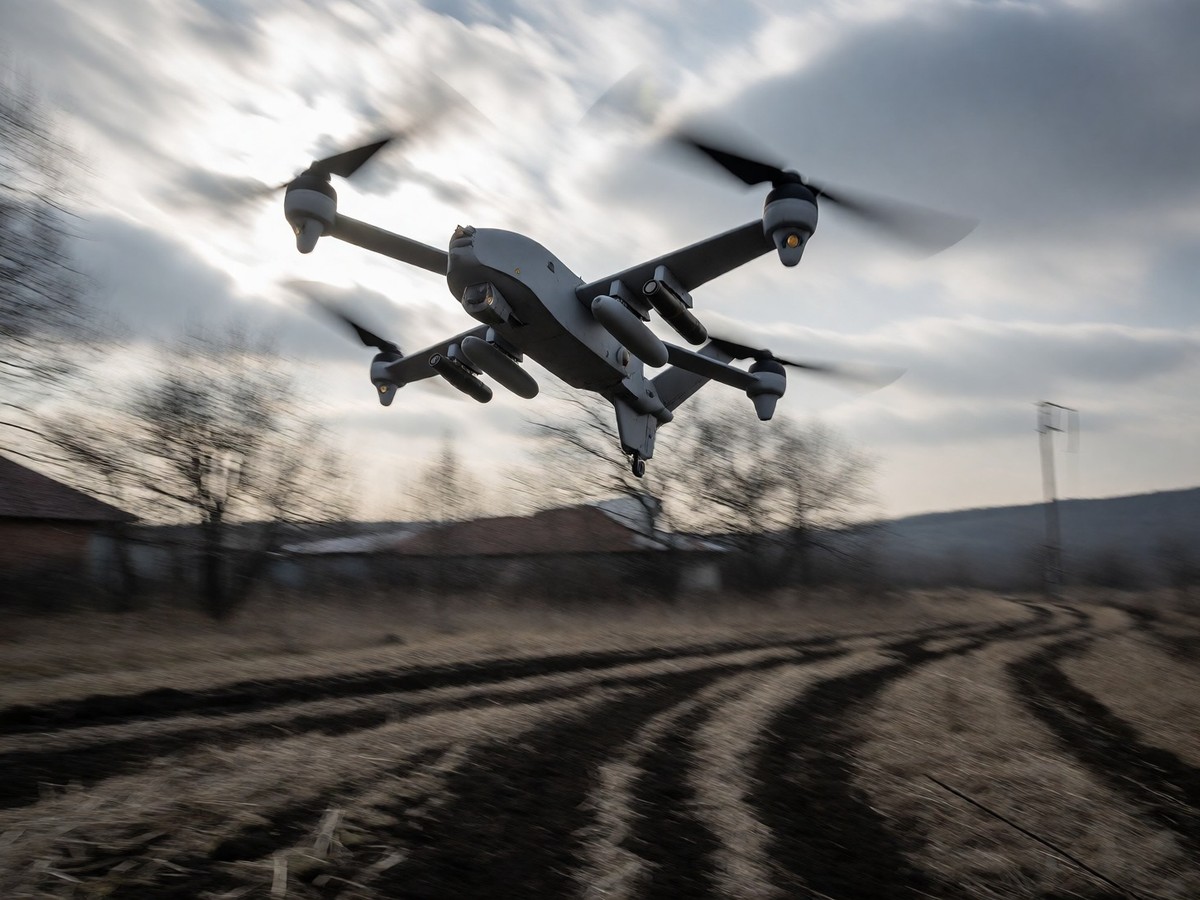
The company produces hardware alongside its AI software. The HX-2 strike drone uses a quadcopter design with four rotors in an X configuration. It reaches speeds of 250 km/h and carries up to 5 kg of ammunition. The HX-2 operates at a range of 100 km. The earlier HF-1 model used a plywood fuselage. The CA-1 Europa, an autonomous unmanned combat aerial vehicle, weighs 4 tonnes. It has a wingspan of 10 meters and a length of 11 meters. This aircraft carries 500 kg of weapons and travels between 1,400 and 1,800 kilometers. The SG-1 Fathom underwater drone weighs 60 kg and reaches speeds of 2 knots. It can operate submerged for 90 days at depths of 1,000 meters.
| System | Type | Max Speed/Depth | Payload/Range |
|---|---|---|---|
| HX-2 | Strike Drone | 250 km/h | 5 kg / 100 km |
| CA-1 Europa | UCAV | High subsonic | 500 kg / 1,400 – 1,800 km |
| SG-1 Fathom | Underwater Drone | 2 knots | 1,000 m depth / 90 days |
Deployment of drones in Ukraine
Helsing supplies the Ukrainian military with AI-equipped combat kits. The company delivered 4,000 HF-1 reconnaissance drones following early agreements. In early 2025, the company announced the delivery of 6,000 additional HX-2 models. The HX-2 uses a quadcopter design with four rotors in an X configuration. This design provides better maneuverability than the Russian Lancet, which uses a pusher motor and rear wings. The engagement range of the HX-2 reaches 100 km. This exceeds the 40 – 60 km range of the Lancet. The HF-1 and HX-2 systems use AI for target acquisition. Once the pilot confirms the target selected by the artificial intelligence, the drone continues its flight autonomously. Ukrainian manufacturers, including Terminal Autonomy, build some of these systems. The HX-2 uses AI to identify targets independently. Pilots control these drones using specialized laptops.
The HX-2 drone was used by a crew near Pokrovsk in the eastern Donbas region. The mission objectives involved destroying logistics routes. The crew used a detector mounted on a tree to track Russian drones. The pilot, using the call sign Black, noted that the HX-2 provides a major advantage in the air. The system is designed to be harder for the enemy to shoot down.
Technical failures in the field
Field deployments in 2025 showed technical difficulties with the HX-2. Ukrainian soldiers told Die Welt that many drones were not flight-ready or crashed shortly after takeoff. In one instance, a motor failed to start during a catapult launch. Another crew faced problems connecting to a ground station. The company says the HX-2 is currently being adapted to changing electronic warfare measures. The low hit rate reported by some soldiers remains a point of contention. In the Pokrovsk area, the HF-1 model hit more than 50% of targets. Will the HX-2 maintain its operational advantage as electronic warfare evolves on the front lines?
The HX-2 relies on AI and stored map data to navigate and target without GPS. This makes the system less vulnerable to signal disruption. However, the drone remains susceptible to electronic warfare. A commander noted that the HX-2 can independently identify targets, but it cannot detect if a target has already been destroyed.
Tactical space-based ISR and the KIRK program
The KIRK joint venture focuses on tactical space-based surveillance and reconnaissance. Helsing and OHB lead this consortium to develop AI-enabled military space architecture. This program aims to deliver near-real-time targeting data to armed forces. The consortium includes HENSOLDT, Kongsberg Defence & Aerospace, and OHB. HENSOLDT provides sensors for all-weather surveillance and precision Earth observation. Kongsberg delivers small satellites and secure communications infrastructure. This collaboration expands a partnership formed in December 2025. The program uses a software-centric approach to reduce latency between data collection and target engagement. The system uses software-defined satellites that adapt to emerging threats in orbit.
This initiative seeks to reduce European dependence on foreign military space infrastructure. The program combines expertise in AI, satellite manufacturing, and ISR payloads. It works to strengthen indigenous defense-industrial cooperation. The consortium also intends to involve European small and medium enterprises and space startups in the program.
Autonomous air combat and the CA-1 Europa
Helsing works on the CA-1 Europa, an autonomous unmanned combat aerial vehicle. This aircraft uses the Centaur AI agent to function as an autonomous fighter jet pilot. In June 2025, the company tested Centaur in a real-world dogfight scenario against a human-operated Gripen D. This test, known as "Project Beyond," involved a Gripen E. The results of the dogfight remained inconclusive. The company also partners with Airbus to develop the Wingman AI system. Their AI integrates into the Eurofighter Typhoon EK onboard system.
The Centaur AI agent uses reinforcement learning to train for air combat. The CA-1 Europa weighs 4 tonnes and has a wingspan of 10 meters. It has a length of 11 meters. The aircraft carries 500 kg of weapons and travels between 1,400 and 1,800 kilometers. The CA-1 is designed to operate either independently or as part of a swarm. The company targets 2027 for the first flight and 2029 for entry into service.
Maritime surveillance and the SG-1 Fathom
The SG-1 Fathom provides maritime surveillance and protection for subsea infrastructure. This autonomous underwater drone weighs 60 kg and is 2 meters long. It can stay submerged for up to 90 days. The Lura AI system processes acoustic data to detect and classify ships and submarines. This system emits less noise than traditional sonar. The drones use internal weight redistribution to glide instead of using propellers. Helsing manufactures these drones at a facility in Plymouth. This production is part of the Trinity House Agreement between Germany and the UK.
The SG-1 Fathom reaches speeds of up to 2 knots and can operate at depths of 1,000 meters. The Lura AI system allows for long-term maritime surveillance. This capability helps with troop movement tracking and infrastructure protection. The drones function as part of a larger effort to provide maritime security for democratic nations.
Expansion into the Baltic region
Helsing plans to expand its presence in nations bordering Russia. The company created a new entity in Estonia to manage these operations. It intends to spend €70 million on Baltic defense projects over three years. This expansion responds to the need for deterrence on the eastern flank. The company employs 900 staff members as of 2025. Torsten Reil noted that Russia increased its defense budget to 7% of GDP. This budget increase suggests a goal beyond Ukraine. Kaja Kallas, the Prime Minister of Estonia, stated that the entrance is welcome.
The company also maintains offices in Munich, London, and Paris. The expansion follows the company’s commitment to defending European interests. Helsing works with various partners to provide capability in the Baltic region. The company uses its AI capability to help protect European democracies. The new entity in Estonia serves as a starting point for these operations.