
Scale AI faces a 2026 revenue guidance of $1 billion, a sharp decline from the $2 billion revenue in 2025. This drop occurs even as the company maintains a $29 billion valuation. I see a gap between the money Scale AI brings in and the price Meta set for its 49% stake in June 2025. The company had a valuation of $13.8 billion in May 2024. Most companies that try AI do not make any money from it, according to a report from the Massachusetts Institute of Technology from August 2025. Jason Droege, the CEO of Scale AI, says companies thought implementing AI was easier than it actually is. He believes there is value when companies get it right.
The Meta investment and the loss of neutrality
Meta paid $14.3 billion for a 49% non-voting stake in Scale AI in June 2025. This deal moved founder Alexandr Wang to Meta to lead a superintelligence research lab. The investment implies a total company valuation of $29 billion. Because of this deal, OpenAI, Google, and xAI all cut or significantly reduced their contracts with Scale AI. These companies do not want to route proprietary training data and evaluation pipelines through a vendor that Meta now owns. This shift moved much of that business to rivals like Mercor and Surge AI.
The deal was built to look like a minority investment to address antitrust concerns. Meta holds no board votes and Scale AI continues to operate with its own leadership. However, the non-voting structure did not change the judgment of frontier-lab customers. You know that Scale AI built its name on data labeling, but the current revenue shift tells a different story. After Meta closed its $14.3 billion investment for a 49% non-voting stake in June 2025, companies like OpenAI, Google, and xAI all cut or significantly reduced their contracts with Scale AI to avoid routing proprietary training data and evaluation pipelines through a vendor now half-owned by a direct competitor.
The Department of Defense contract is the most successful part of the business
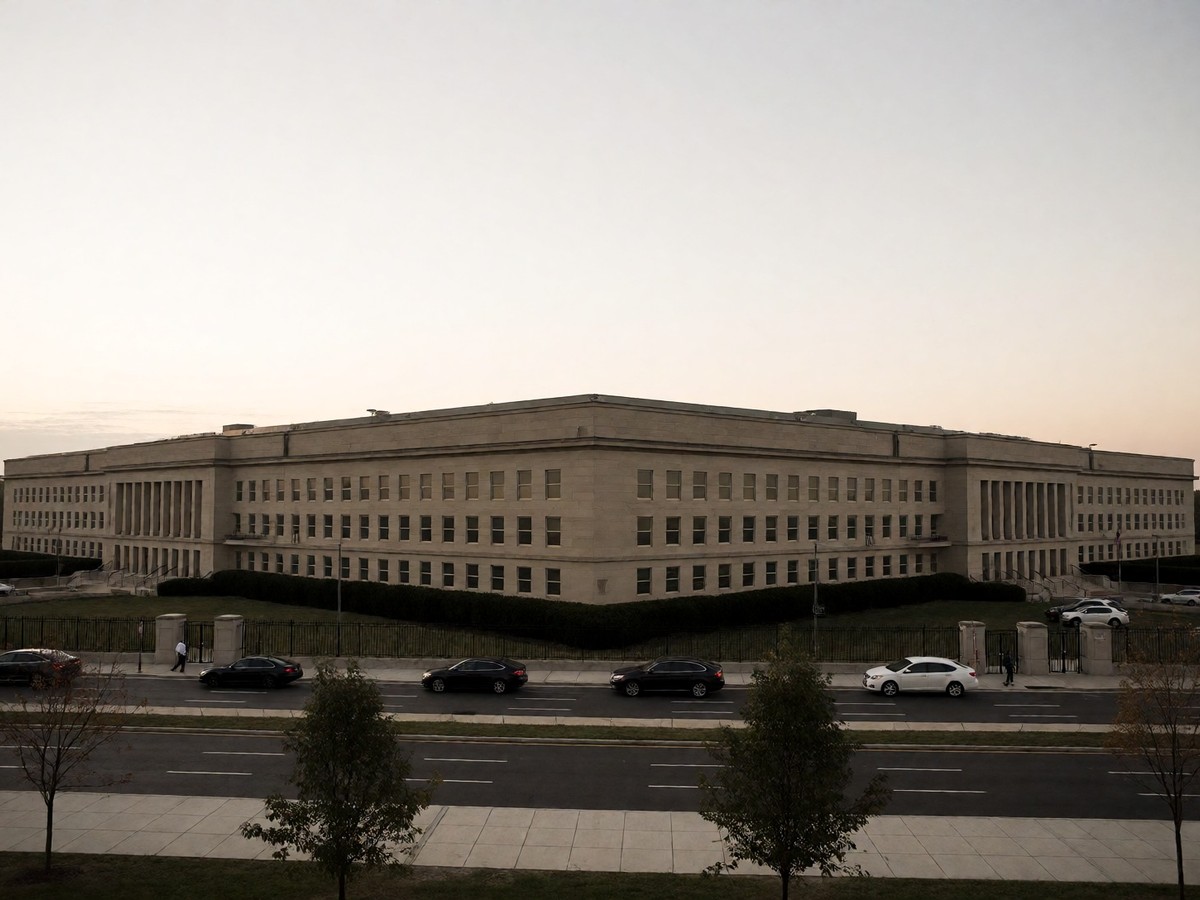
The Department of Defense contract is the most successful part of Scale AI’s current business. In May 2026, the Pentagon increased a contract ceiling with Scale AI from $100 million to $500 million. This fivefold jump follows a period where demand for AI tools exceeded the limits of the original agreement. Scale AI works with the Chief Digital and Artificial Intelligence Office to put generative AI into military planning. The company also wins work through the Thunderforge program. This program focuses on military planning and operations. Scale AI won this contract as a prime contractor in March 2025 alongside Anduril and Microsoft.
The relationship between Scale AI and the government dates back to January 2022. Scale AI won a $250 million contract that gives federal agencies access to its tools. In September 2025, the company secured a $100 million contract from the Pentagon. This contract was for access to the company’s machine learning operations platform. The platform supports computer vision models and decision-making tools for defense and intelligence operators. Scale AI also has a five-year, $100 million agreement with the Chief Digital and Artificial Intelligence Office. The company has a $500 million Pentagon contract to process data for military decision-making.
The Department of Defense is a massive spender. It allocated $1 trillion for 2026 and requested $1.5 trillion for 2027. The Department of War, which replaced the name Department of Defense in September 2025, prioritizes AI and autonomous platforms. Scale AI holds a $99 million Army R&D contract. The company also works with the Defense Innovation Unit on the Thunderforge project. This project is part of the Golden Dome homeland defense initiative. Can Scale AI maintain a $29 billion valuation while its commercial lab revenue evaporates?
The business model and revenue mix
Scale AI generates money by charging AI labs and government agencies for data services. Data labeling and reinforcement learning from human feedback make up 60% of revenue. This includes image and video tagging and chain-of-thought supervision. Government and defense work makes up 20% of revenue. The remaining share comes from the Generative AI Platform. This is a developer-facing SaaS and API layer. This segment generated between $200 million and $300 million of the company’s $2 billion revenue in 2025.
Scale AI uses a workforce of over 100,000 global contractors to handle data tasks. The company also has 1,200 employees as of 2025. Pricing depends on the client. Smaller engagements pay per-annotation rates. A simple image label costs less than a multi-step reasoning trace written by a professional. Large frontier-lab accounts sign annual or multi-year contracts with committed volume. This allows Scale AI to plan capacity for its workforce.
The company provides the Scale API to customers. This API allows access to human annotators and machine learning models. The Scale API supports use cases like autonomous driving, natural language processing, and robotics. Notable customers include Pinterest, Airbnb, DoorDash, Lyft, and Nuro. Scale AI also provides Scale Donovan for enterprises and Scale Donovan for the US government. These tools help with decision-making and data organization.
Competition from Mercor and Surge AI
Competition is increasing in the expert-data market. Mercor and Surge AI have grown faster than Scale AI since the Meta deal. Mercor reported $2.0 billion in gross revenue in mid-2026. Surge AI had a $1.4 billion run rate in late 2025. Scale AI is still valued at $29 billion. Mercor is in talks for a $20 billion valuation in July 2026. Surge AI is seeking a $15 billion valuation in 2026.
These competitors focus on the frontier-lab market. They were founded more recently than Scale AI. Scale AI was founded in 2016. Mercor was founded in 2023. Surge AI was founded in 2020. Scale AI has deeper customer relationships built over nine years. Mercor has a workforce of approximately 30,000 contractors. Surge AI has about 110 employees.
Scale AI faces pressure to innovate to keep its edge. The company must defend its position as the category-defining player. As commercial lab revenue moves to rivals, Scale AI relies on its $300 million plus government book. This government revenue is more stable than the commercial business.
The labor model and ethical criticisms
The labor model used by Scale AI subsidiary Remotasks brings significant criticism. Remotasks hires a large pool of workers, mostly from developing countries, to do low-paid tasks. One worker told researchers that the company pays between $1 and $2 for an hour of data labeling. The rate depends on the task. For example, workers earn more if they describe an image with 40 words than if they choose from four options. Remotasks has paid over $15 million to 240,000 workers since its inception.
The company faces legal challenges regarding its workforce. In December 2024, a former employee sued Scale AI. The lawsuit alleges wage theft and the misclassification of workers. In January 2025, several contractors filed a second lawsuit. These contractors alleged they suffered psychological harm from seeing disturbing content.
Scale AI must manage the privacy of the data it receives. The data from companies can be sensitive or personal. This creates concerns regarding security. Other companies like Google also use data labeling, but Scale AI remains a primary vendor for many.
Scientific data and the Department of Energy
Scale AI is expanding into scientific data infrastructure. The company signed an MOU with the Department of Energy to support the Genesis Mission. This initiative connects AI models with scientific datasets and high performance computing systems. It brings together national labs and advanced computing environments.
The Department of Energy national labs generate large amounts of data. These labs often struggle to use this data effectively. Scale AI aims to fix the data bottleneck in the 17 National Labs. The company wants to make large scientific datasets usable inside operational AI systems.
This partnership helps Scale AI move beyond its original data labeling business. It positions the company as an infrastructure player for scientific discovery. The Genesis Mission focuses on the infrastructure required to operationalize AI across complex scientific environments. This aligns with the needs of the Department of Energy.
Comparison of Scale AI and competitors
| Metric | Scale AI | Mercor | Surge AI |
|---|---|---|---|
| Latest valuation | $29B | $20B (talks, July 2026) | $15B (seeking, 2026) |
| 2024/2025 revenue | $870M (2024) / $2B (2025) | $2.0B gross (mid-2026) | $1.4B run rate (late 2025) |
| 2026 outlook | $1B+ guidance | Scaling as of mid-2026 | Growing, frontier-lab focused |
| Ownership | 49% owned by Meta | Independent, VC-backed | Independent, bootstrapped |
| Defense business | $300M+ DoD contracts | Minimal disclosed | Minimal disclosed |
| Headcount | 1,200 + 100,000 contractors | Hundreds + 30,000 contractors | ~110 employees |
| Founded | 2016 | 2023 | 2020 |