Figure AI deployment at BMW versus Tesla production scale
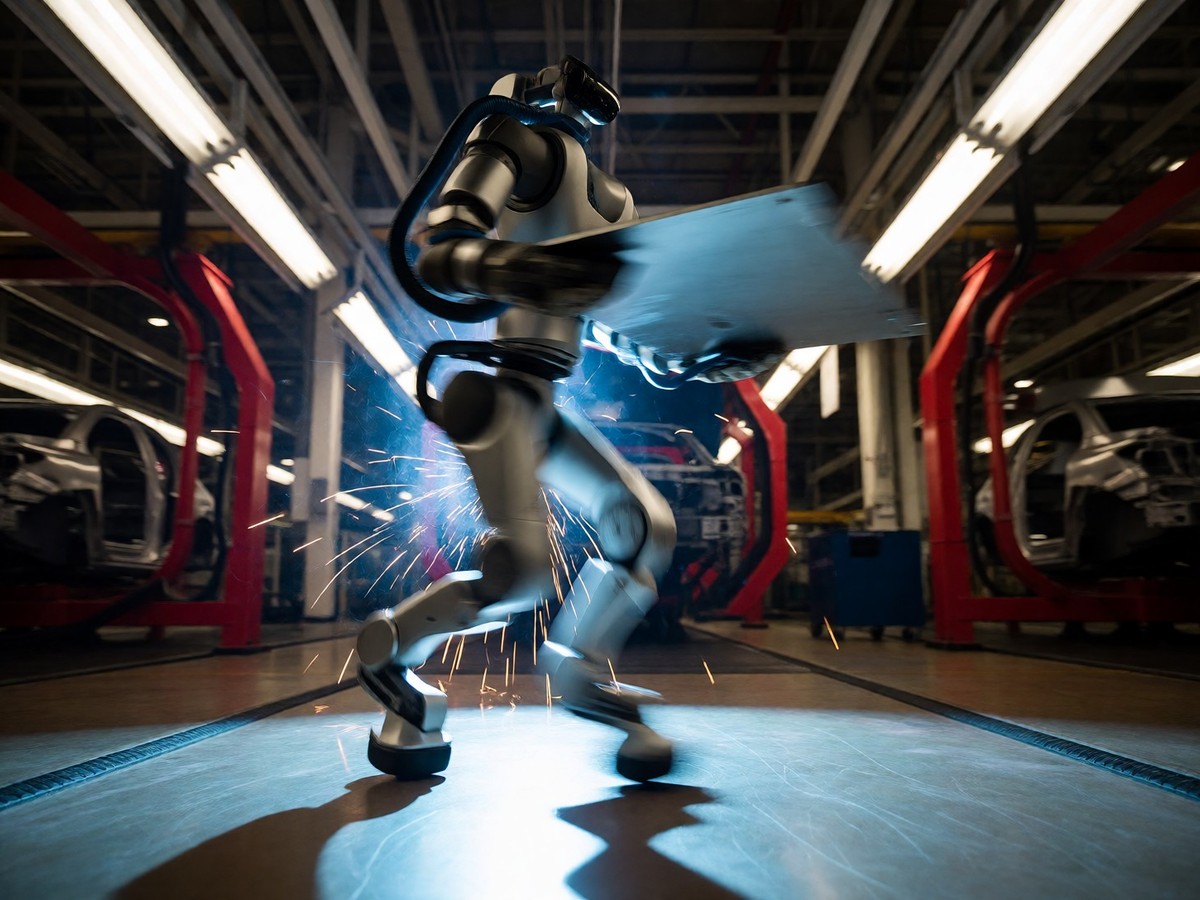
Figure 02 robots supported the production of 30,000 BMW X3 vehicles at the Spartanburg, South Carolina plant during an 11-month deployment. These machines moved 90,000 components and logged 1,250 hours of work during 10-hour shifts. Figure 02 loaded sheet metal parts into welding machines with millimeter precision and met cycle time targets of 84 seconds per task. Founder Brett Adcock assembled a team with expertise from Boston Dynamics, Tesla, Google DeepMind, and Apple to build these systems. Figure AI reached a $39 billion valuation after a $1 billion Series C round in September 2025, with total capital raised reaching $1.9 to $2.34 billion. The company plans to scale its BotQ facility to produce 12,000 robots annually, with a long-term goal of 100,000 robots over four years. Figure 03, which was named the TIME Best Invention of 2025, was launched in October 2025 and uses die-cast components, soft textile coverings, and wireless charging. Figure AI also invests heavily in data, spending $1 billion on computing and data while paying contributors $15 million for 16 million videos of human tasks. Tesla follows a different path by converting its Fremont factory to produce Optimus robots. Tesla targets 1 million units per year for its Gen 3 model and aspires to 10 million units for Gen 4. Tesla also broke ground on a standalone factory at Giga Texas with a 10-million-per-year capacity. I find Figure’s ability to secure high-value industrial contracts with BMW more concrete than Tesla’s internal scaling.
Component costs and the actuator problem
Actuation costs dominate the bill of materials for all humanoid platforms. A Morgan Stanley teardown of the Tesla Optimus Gen 2 shows that legs cost $21,000, which is 38.6% of the $55,000 build. The hands cost $9,500, or 17.2% of the total. High-torque actuators for hip and knee joints cost $500 to $2,000 each at low volumes. Figure 02 uses custom all-rotary cycloidal reduction drives across its primary joints to handle shock loads. Tesla uses a hybrid architecture with rotary drives and planetary roller screws to maximize mechanical leverage. Tesla’s decision to design custom actuators in-house targets the largest cost lever in humanoid production, where moving parts account for 70% of the build and actuators specifically dominate the bill of materials. At a target of 1 million units, these could drop to $100 to $300 each, providing a savings of up to $25,000 per robot. Figure 02 uses 16 degrees of freedom in its hand with palm-integrated micro-actuation, whereas Optimus scales toward a 22-degree of freedom layout driven by forearm-mounted motors. This difference helps Optimus maintain a 13 kg structural weight advantage over Figure’s 70 kg build. Figure 02 uses six perimeter RGB-D cameras for its Helix VLA model, but Tesla uses head-mounted pure vision cameras and Tesla AI5 hardware.
Calculating the payback period for factory automation
A robot that replaces a human worker creates massive savings when the unit cost is low. A US manufacturing worker has a loaded cost of $95,000 to $160,000 annually. This includes an $80,000 base wage, $40,000 for benefits, $24,000 for overhead, and $12,000 for payroll taxes. Benefits include $7,500 to $23,000 for health insurance, $1,800 to $4,500 for retirement, and $1,500 to $4,000 for workers’ compensation. US manufacturing turnover averages 39% per year, and replacing workers costs 30% to 200% of their salary. At current price levels, a humanoid robot can replace two shift workers and pay for itself in 12 to 18 months. For single-shift operations, payback can be 1.9 months. Tesla targets an Optimus price of $20,000 to $30,000 at scale. At a $25,000 price point, Optimus achieves a payback period of 3.3 months against a $110,000 worker. I would skip any robot that cannot hit these efficiency targets. You should look at the effective hourly cost instead of the sticker price. Optimus targets an effective cost of $0.51 per hour, while a human costs $46.30 per hour. However, Musk admitted that current Optimus units are not doing useful work yet.
| Model | Target Price | Payback (vs $110k worker) |
|---|---|---|
| Tesla Optimus (Mass Scale) | $20,000 – $30,000 | 2.4 – 3.3 months |
| 1X NEO (Subscription) | $499/month | 19 – 20 months |
| Unitree G1 | $13,500 | < 2 months |
How will Tesla maintain its margin if the supply chain ramp remains slow? Tesla expects full-year 2026 CapEx to exceed $25 billion.