Groq expansion and leadership shifts
Groq secured $650 million in growth capital to expand its AI inference cloud. Disruptive and Infinitum led the investment, which follows a December 2025 agreement where NVIDIA paid $20 billion to license Groq’s technology and hire founder Jonathan Ross and president Sunny Madra. Many described the deal as a not-acqui-hire that included most of the company’s senior engineers. The company now operates under interim CEO Adam Winter and CFO Matt Eng. The new leadership team includes Chief Operating Officer Alan Rice, who previously worked in U.S. Navy nuclear submarine operations and at Meta Datacenters, along with Chief Technology Officer Sinclair Schuller and Chief Product Officer Rakesh Malhotra. Schuller previously founded Apprenda, which Atos acquired, and later co-founded Nuvalence, which EY acquired in 2024. Malhotra previously spent a decade at Microsoft leading cloud and data-center products. Groq currently serves more than five million developers and thousands of AI-native companies. It operates 13 data centers across North America, Europe, the Middle East, and APAC. This capital accelerates the deployment of the latest inference technology, which includes the NVIDIA LPX system. Groq expects to scale its capacity toward 200 MW by the end of 2027. The round included participation from investors who elected to reinvest in the company. Senators Elizabeth Warren and Richard Blumenthal opened a formal inquiry in March 2026 to determine if the NVIDIA transaction sought to avoid antitrust review thresholds.
LPU architecture and performance
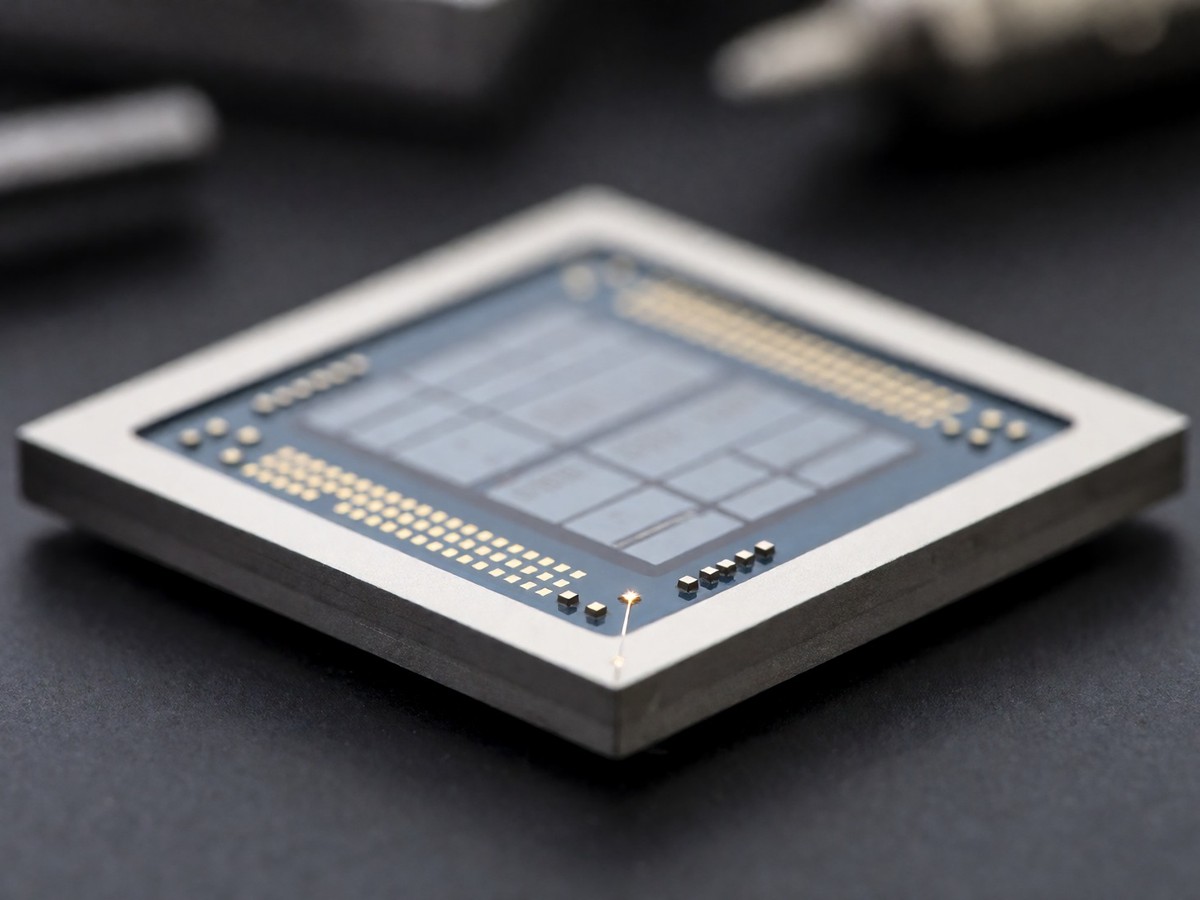
Groq’s Language Processing Unit (LPU) uses a Tensor Streaming Processor (TSP) to provide deterministic performance for AI computations. The hardware architecture utilizes a 2d grid of functional slices, such as Matrix execution modules (MXM), Switch execution modules (SXM), and Vector execution modules (VXM). The memory block (MEM) provides 500 MB of high-speed on-chip SRAM to act as primary working storage. This design minimizes unpredictable stalls and helps deliver stable latency. The LPX system uses 256 interconnected NVIDIA Groq 3 LPU accelerators. Each LPU includes 96 chip-to-chip (C2C) links running at 112 Gbps each. These links enable a scale-up topology with 2.5 TB/s of aggregate I/O bi-directional bandwidth. The system also provides 150 TB/s of on-chip memory bandwidth. The LPU utilizes 320-byte vectors as the unit of work to simplify scheduling and synchronization.
| Metric | Groq LPU (Llama 3 70B) | NVIDIA H100 (Llama 3 70B) |
|---|---|---|
| Tokens per second | 500-750 | 10-30 |
| Time-to-first-token | 0.2 seconds | 2.0 seconds |
| Energy efficiency | 10x better joules-per-token | Baseline |
The LPU delivers much higher throughput for sequential tasks like decoding. While NVIDIA’s GPUs excel at training, Groq’s hardware targets the inference market. In benchmarks running Llama 3, Groq’s LPUs achieve 500-750 tokens per second, while the NVIDIA H100 manages only 10-30 tokens per second. The LPU also consumes up to 10 times less power per token than NVIDIA’s GPUs. This efficiency reduces electricity costs and carbon footprints for data centers. You should look closely at these performance gaps when choosing infrastructure for real-time AI applications. The LPU architecture allows developers to precisely predict and optimize performance through compiler-orchestrated execution.
Oversight of facial recognition technology
The Privacy and Civil Liberties Oversight Board released a staff report regarding the TSA’s facial recognition program at airport security lines. The report found the DHS Chief Privacy Officer failed to conduct a required privacy compliance review of TSA operations. TSA also did not disclose a schedule for such reviews or commit to sharing audit results with oversight entities. The board recommends the TSA keep the facial recognition program voluntary and implement regular independent audits. This recommendation follows calls from groups like EPIC to ensure travelers who refuse facial recognition face no unfavorable treatment.
Clearview AI manages its technology development through an Advisory Board. This board includes former New York City Police Commissioner Raymond Kelly and Richard Clarke, a former National Security Council official. Other members include former Deputy Mayor Rudy Washington, attorney Floyd Abrams, and Ambassador Lee Wolosky, who served as Director of Transnational Threats on the National Security Council. The group also includes Sarah Schott, who served as Chief Compliance Officer of Northwestern Mutual, Thomas Fedto, who led the interagency Committee on Foreign Investment in the United States, and Owen West, a former Assistant Defense Secretary for Special Operations. These members help ensure the technology meets professional standards for government and law enforcement use. Does the expansion of facial recognition technology in airports require even stricter oversight than what the PCLOB recommends?