From drawing boxes to training giants
Alexandr Wang and Lucy Guo founded Scale AI in 2016. They received early support from the Y Combinator incubator, which Sam Altman led at the time. The company provides the human labor needed to improve AI systems, such as workers drawing boxes around pedestrians in street photos. This work helped early clients like General Motors and Toyota. As the market for large language models grew, Scale AI expanded its services to include fine-tuning and evaluation for companies like OpenAI, Anthropic, and Microsoft. In 2021, the company reached a $7.3 billion valuation, which briefly gave Wang a $1 billion net worth because he owned 15% of the firm. In February 2022, Scale AI developed its Automated Damage Identification Service to analyze satellite imagery following the Russian invasion of Ukraine. This service geotagged damaged buildings for humanitarian groups. The company’s growth included a hiring approach Wang called "merit, excellence, and intelligence" in June 2024, which he framed in opposition to corporate diversity, equity, and inclusion programs. In 2023, Wang testified before a House Armed Services subcommittee regarding the challenges the U.S. government faces in adopting AI. He also met with world leaders including UK prime minister Keir Starmer and Indian prime minister Narendra Modi in February 2025 to discuss global cooperation. While the company grew, it laid off 20% of its workforce in January 2023. In 2024, the company’s revenue reached $870 million. I see the company’s evolution from a small labeling service to an infrastructure provider for the entire AI industry. You likely know Scale AI as the backbone of generative AI.
| Feature | Detail |
|---|---|
| Founder | Alexandr Wang |
| 2024 Revenue | $870 million |
| 2025 Valuation | Over $29 billion |
| Meta Stake | 49% nonvoting |
| Headquarters | San Francisco, California |
The military training data bottleneck
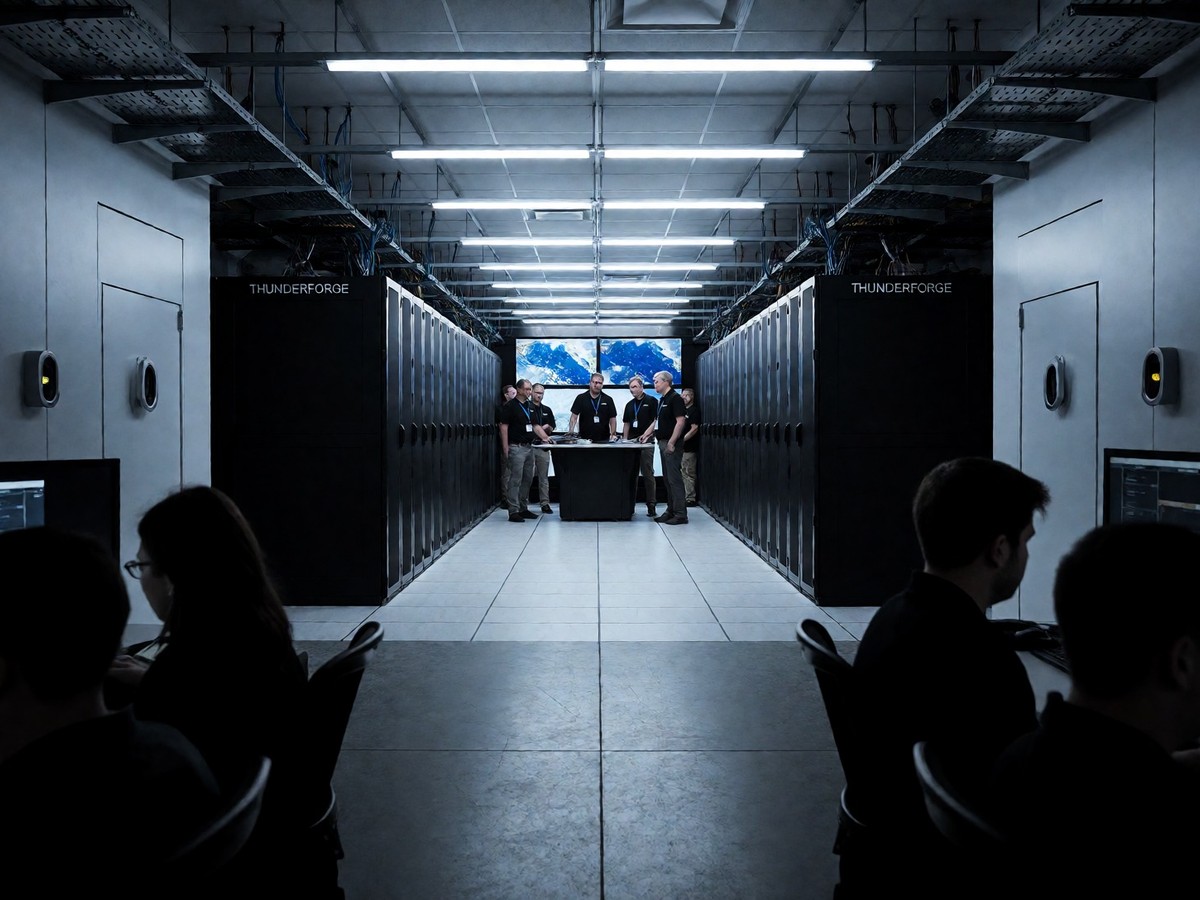
Scale AI secured its first Department of Defense contract in 2020. In January 2022, the company won a $250 million contract to provide federal agencies access to its tool suite. This momentum continued in May 2023, when Scale AI became the first AI company to deploy its Donovan LLM on a classified network for the US Army’s XVIII Airborne Corps. In March 2025, the Defense Innovation Unit awarded Scale AI a multimillion-dollar contract for the Thunderforge project to help plan movements for ships and planes, aiming to speed up military decisions in both peace and wartime environments. This project focuses on USINDOPACOM and EUCOM. The company’s work includes object detection, object tracking, and pattern detection. In August 2024, Scale signed an agreement with the US AI Safety Institute to collaborate on research and testing of its AI models. In February 2025, Scale AI also agreed to a five-year partnership with the Qatari government to improve government services through predictive analytics and automation. Defense data acquisition presents unique difficulties because the Pentagon maintains strict classification rules and requires personnel to sign non-disclosure pledges. Developers cannot easily access real-world combat data without crossing legal lines. Training requires high-fidelity data from rare edge-case scenarios like nighttime infiltration or engagements across complex terrain. This reality forces a reliance on synthetic data that mirrors the chaos of the battlefield.
Meta’s strategic stake and the superintelligence race
Meta announced a $14.3 billion investment in Scale AI in June 2025. This agreement gives Meta a 49% nonvoting stake while allowing Scale AI to remain an independent company. As part of the deal, Wang moved to Meta to lead the Superintelligence Organization, a new division focused on building systems beyond the LLaMA family. He remains on the Scale AI board. This investment places Scale AI’s market value at over $29 billion. The deal mimics previous industry moves, such as Microsoft hiring staff from Inflection AI or Amazon’s deal with Adept. I find the decision to use a minority stake instead of a full acquisition to be a shrewd way to avoid the scrutiny of US antitrust regulators. This maneuver allows Meta to acquire leadership and influence without the friction of a complete takeover. The deal also creates tension with other clients, as Google reportedly severed ties with Scale following the announcement. While the deal avoids an automatic review by US antitrust authorities, Senator Elizabeth Warren stated that regulators should investigate if the investment unlawfully squashes competition or helps Meta dominate the market. This tension follows similar scrutiny from the Department of Justice regarding Google’s partnership with Character.AI. The deal involves 28-year-old Wang and a new interim Scale CEO, Jason Droege. Will the US government allow these massive acqui-hire deals to continue without formal investigation?