
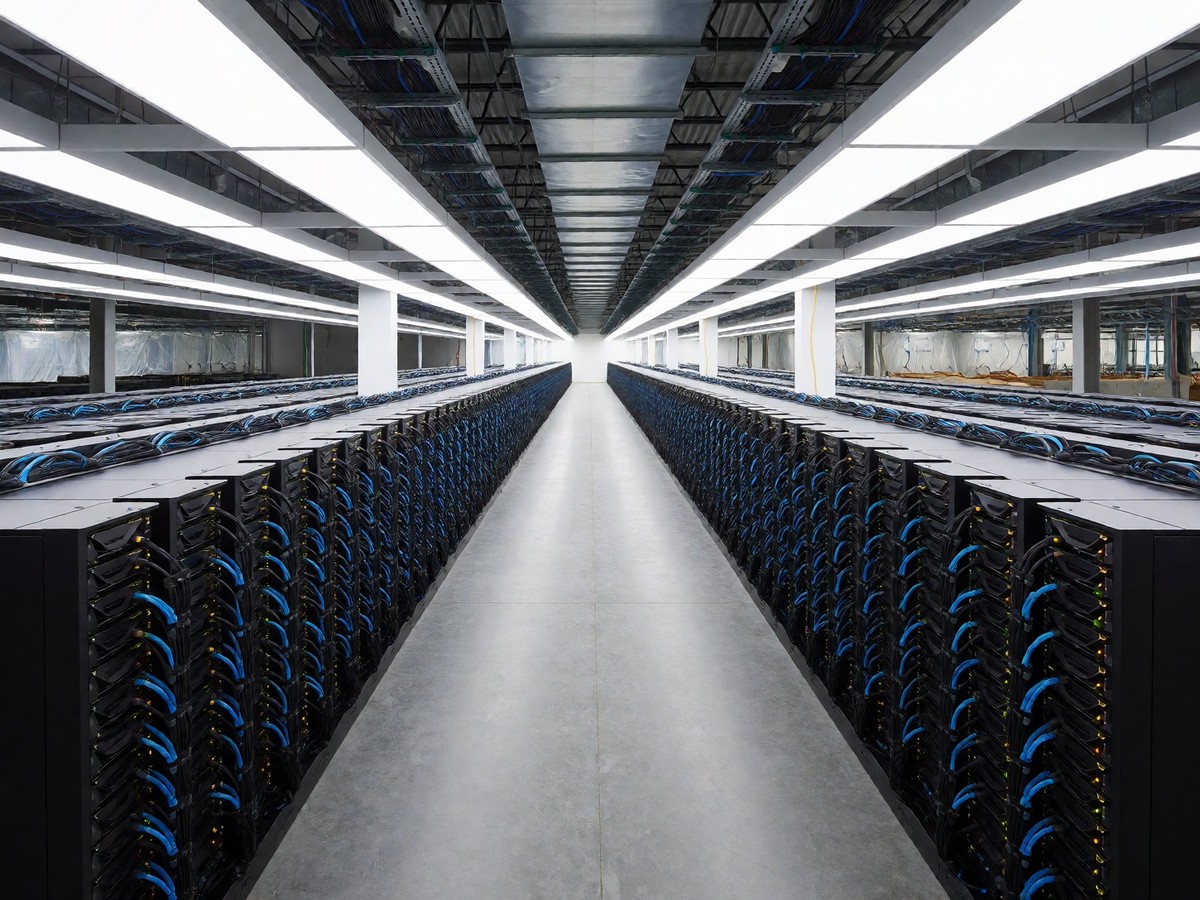
State capital now acts as a structural funder for the AI buildout rather than an occasional participant. You probably think of sovereign wealth funds as distant entities managing oil surpluses, but these funds now act as the primary structural funders for the global AI buildout. This shift moves capital into the very silicon that powers intelligence. Abu Dhabi’s G42 joined Nvidia’s AI security alliance this year. Nvidia also took a $1 billion stake in Korea’s Naver. These moves show that sovereign capital negotiates AI infrastructure terms directly with major technology players. Even markets with less capital depth participate in this trend. Angola’s privatization of its state carrier Unitel via a domestic IPO suggests the state-capital-into-tech pipeline is diversifying beyond the usual Gulf and Asian playbook.
Saudi Arabia’s vertical integration of the AI stack
HUMAIN, the $100 billion artificial intelligence company owned by Saudi Arabia’s Public Investment Fund, builds the entire AI value chain. The company consolidated Saudi national AI capabilities, including assets from Saudi Aramco and Aramco Digital, into a single entity in May 2024. This consolidation prevents the coordination friction that separate state-owned entities produce. HUMAIN operates across four layers: next-generation data centers, high-performance compute infrastructure, advanced AI models, and transformative AI solutions. The company plans to build AI factories in the Kingdom with a capacity of up to 500 megawatts. This deployment will use hundreds of thousands of NVIDIA’s most advanced GPUs over the next five years. The first phase includes an 18,000 NVIDIA GB300 Grace Blackwell AI supercomputer with NVIDIA InfiniInfiniBand networking. HUMAIN also deployed $3 billion into xAI’s Series E financing round in February 2026, which became SpaceX equity following the acquisition by SpaceX in early February 2026. The company also manages the ALLAM Arabic multimodal large language model and the HUMAIN OS agentic operating system.
| Entity | Investment or Capacity Detail | Strategic Target |
|---|---|---|
| Anthropic | $65 billion Series H | $965 billion valuation |
| HUMAIN | $100 billion | 500 megawatts capacity |
| US CHIPS Act/Intel | $8.9 billion | 10% government stake |
| Nvidia/Wall Street Partners | $500 billion | AI compute infrastructure |
| China Big Fund | $39 billion | Front-end manufacturing |
| Norway GPFG | $2.4 trillion | 70% equities, 30% bonds |
| South Korea AIDC | 18.4 gigawatts | Public-private coalition |
| Canada BUZZ HPC | $350 million | GPU cloud services |
The US government’s direct equity strategy
The US administration uses executive power to drive a sovereign wealth strategy through direct, active equity participation in strategic sectors. This strategy is not a single fund but an ad hoc collection of US stakes in business sectors like Bitcoin and TikTok. On August 22, 2025, Intel received $8.9 billion in awards from the US CHIPS Act and additional programs. This transaction gave the US government a 10% stake in the chipmaker. Weeks later, Nvidia announced a $5 billion stake in Intel to co-develop AI data center chips. SoftBank also announced a $2 billion investment into Intel. The US government holds a warrant to buy an additional 5% of Intel shares if the company is no longer the majority owner of its foundry business, providing a mechanism to prevent Intel from exiting the manufacturing segment. The US government’s direct equity in Intel is a blunt attempt to force a domestic manufacturing outcome that the market alone failed to produce. This involvement aims to increase American market share in semiconductor manufacturing to compete with Samsung and TSMC.
China’s massive state-led semiconductor funding
China’s semiconductor industrial policy relies on massive state-backed financing to close the gap with US rivals. The National Integrated Circuits Industry Development Investment Fund, or the Big Fund, has invested $39 billion to date. When combined with more than 15 local government IC funds totaling $25 billion, the total state funding for Chinese semiconductors reaches $73 billion. This level of support is unmatched by any other country. China produces 36% of the world’s electronics, including smartphones, computers, and cloud servers. Chinese firms hold 16% of the global fabless semiconductor market, which ranks them third after the US and Taiwan. In the outsourced assembly, packaging, and testing market, Chinese firms hold 38% of the total market as of 2020. The Chinese government also provides grants, reduced utility rates, and tax breaks to its domestic semiconductor firms.
The scale of global AI infrastructure financing
Major technology companies plan to invest more than $1 trillion in AI-related infrastructure like chips, data centers, and power infrastructure. Nvidia announced strategic partnerships with Apollo, BlackRock, Blackstone, Brookfield, Goldman Sachs, and KKR on August 10, 2026. These partnerships aim to establish independent compute-financing platforms that mobilize over $500 billion of third-party capital. These platforms treat NVIDIA GPUs as financeable infrastructure assets rather than hardware that depreciates quickly. This move reduces the barrier to entry for AI developers who lack hyperscaler-sized balance sheets. It also moves AI infrastructure risk into retirement and pension portfolios through the asset-management arms of BlackRock and Goldman Sachs.
Norway’s warning on the AI market bubble
The world’s largest sovereign wealth fund, Norway’s $2.4 trillion Government Pension Fund Global, faces significant risks from the AI-chip trade. CEO Nicolai Tangen warns that a sharp correction in AI stocks could erase much of the wealth the fund built over 30 years. The fund’s portfolio includes roughly 70% equities and 30% bonds, with technology accounting for about a third of its stock investments. Because the fund follows a passive, benchmark-based investment strategy, it has almost no room to deviate from the index or actively hedge. Norges Bank Investment Management stress-tested an AI correction scenario. This scenario could reduce the entire fund’s value by 18%, which equals roughly €432 billion. Will the massive influx of state capital into physical AI hardware eventually cause the very market correction that Norway’s fund managers fear?
Regional sovereignty and local compute access
National AI strategies in Asia and Europe focus on building local control over the AI stack. South Korea’s AIDC Alliance consists of twelve technology, power, and cooling companies. This coalition aims to build 18.4 gigawatts of AI data center capacity and then export that blueprint. The UK government’s Sovereign AI venture fund recently took an equity stake in the chip designer OLIX. This investment is part of a nine-figure funding round that values OLIX at over $1 billion. In Canada, HIVE’s subsidiary BUZZ HPC signed a $350 million GPU cloud services agreement for a facility in British Columbia. The European Union also attempts to build sovereign compute through the EuroHPC Joint Undertaking. This body launched a call for tenders on July 30, 2026, to build up to seven AI Gigafactories across the EU. This initiative targets €20 billion in private investment to reduce reliance on US and Chinese hyperscalers.
The expansion of the AI value chain
Investment is moving beyond foundation models into the layers that allow for deployment and monetization. Anthropic closed a $65 billion Series H funding round that valued the company at $965 billion. Singaporean sovereign investors GIC and Temasek participated in this round. The financing included $15 billion from hyperscalers, with $5 billion coming from Amazon. Anthropic plans to use these funds to expand compute capacity and scale products. The company also signed agreements with Google and Broadcom for five gigawatts of next-generation TPU capacity. Investment is also flowing into physical AI, including robotics and autonomous systems. SoftBank is negotiating a majority stake in the humanoid-robotics company 1X Technologies at a $6 billion valuation. Investors are also backing vertical AI applications for specific industries. Companies like Rezolvand, which focuses on AI contract management, and Craif, a bio-AI company, receive significant capital from diverse global funds.