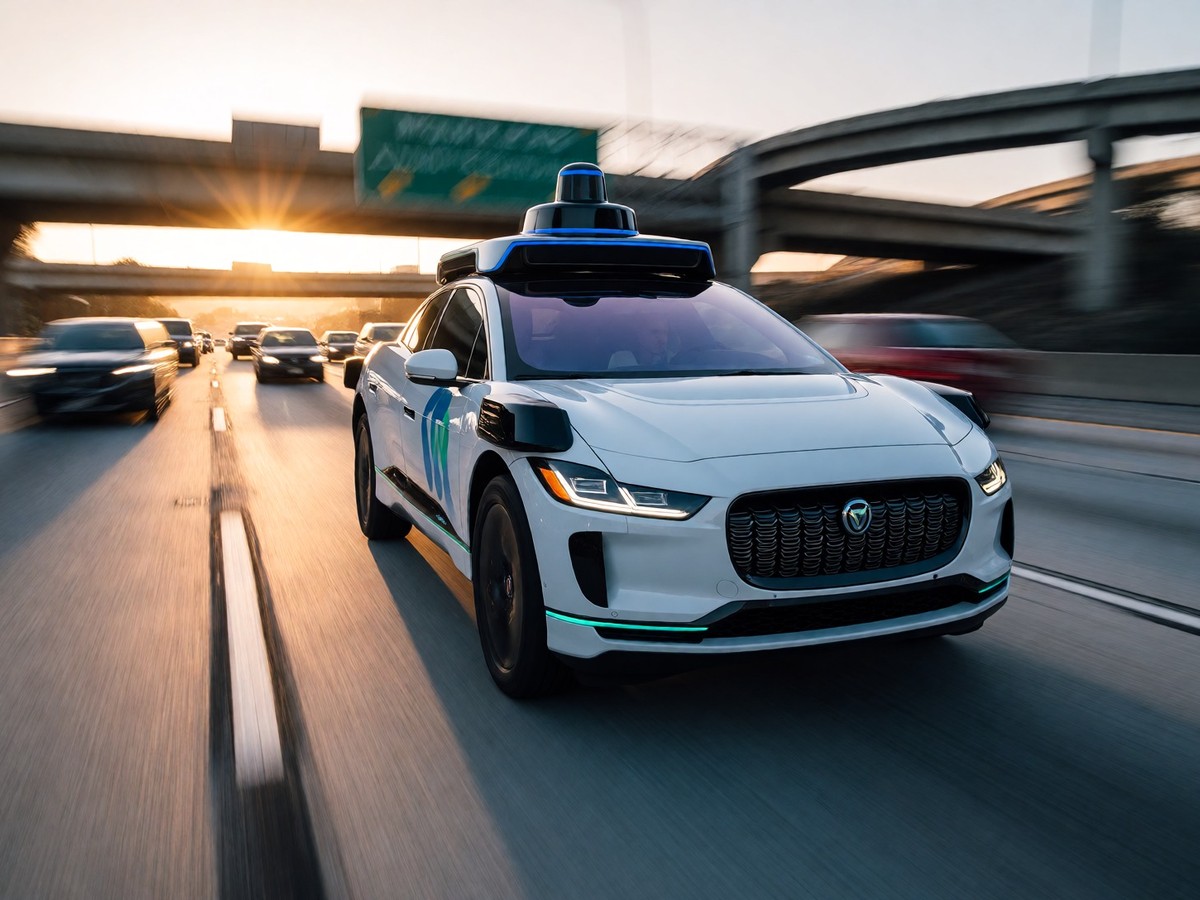
Waymo has crossed a threshold where autonomous mobility functions as infrastructure rather than a demonstration. The company provides hundreds of thousands of rides every week in the U.S., having delivered over 10 million fully autonomous rides to the public since launch. This volume supports Alphabet’s decision to commit a new multiyear investment of $5 billion, a sum consistent with recent annual levels. CEO Sundar Pichai noted that Waymo served more than 2 million trips and drove over 20 million fully autonomous miles on public roads before this latest funding round. The capital allows the fleet to expand beyond its current five U.S. cities into new markets like Atlanta and Miami. It also funds the adaptation of vehicles for international testing in Tokyo and London, where local traffic patterns and left-hand driving rules present distinct technical hurdles.
Scaling across geographies and highways
The expansion strategy pushes into three directions at once: scale, geography, and capability. In November, Waymo received approvals to operate on Bay Area freeways and pick up passengers from San Jose International Airport, marking its biggest geographic jump yet. Service is also starting or about to start in Dallas, Houston, Orlando, and Washington, D.C. Freeway operation introduces high-speed merging and lane changes that urban streets do not require. These conditions demand longer perception distances and stable decision-making under dynamic traffic flow. Without this capability, robotaxis remain localized shuttles; with it, they become regional mobility systems connecting suburbs and airports.
Safety data reveals a clear trend despite rising absolute incident counts. Waymo reported 186 crashes in Los Angeles County this year, compared to 219 in 2025 and 69 in 2024. However, the crash rate per million miles dropped from about 57 in 2023 to fewer than six this year. Across 67 million miles driven in Los Angeles, Waymo recorded zero crashes resulting in serious or fatal injuries, whereas human drivers would have been expected to cause 11 such incidents over the same distance. The company estimates its vehicles avoided injuries that would have affected 841 people based on collision data from more than 50 million rider-only miles.
Critics point to specific failures that highlight software limits. A cat named Kit Kat was crushed under a Waymo in San Francisco’s Mission District after darting under the vehicle while it pulled away. A month later, a Waymo struck an unleashed dog in the roadway. Professor Scott Moura from UC Berkeley notes that these incidents expose gaps in perception and prediction, specifically when the car cannot make out an object or decide how to react to it. Senator Dave Cortese argues that Waymo operates in a "laissez-faire environment" because state regulators currently handle approval rather than local authorities. He has tabled bills to bring autonomous vehicles under the jurisdiction of city firefighters and police.
Competition and regulatory friction
Amazon’s Zoox has begun running driverless vehicles in San Francisco’s Mission District, adding direct competition to the market. Unlike Waymo’s retrofitted Jaguar fleet, Zoox builds its robotaxi from the ground up without a steering wheel, allowing it to move forward and backward seamlessly. Tesla’s Cybercab entered Austin last month, prompting federal regulators to investigate whether the vehicle was properly certified. Tesla’s robotaxis have crashed roughly once every 62,500 miles, while Waymo averages one crash every 98,600 miles despite having no human safety drivers onboard.
Regulatory pressure is intensifying as cities seek control over deployment. San Diego City Council voted to ask the state for authority over when and how robotaxis are deployed. Culver City set rules dictating where and when fleets can be charged, stored, and cleaned. Santa Monica engaged in a legal battle with Waymo over noisy charging depots earlier this year. These moves reflect a shift from state-level oversight to local governance, challenging the current model where the California Public Utilities Commission governs expansion.
The financial backing from Alphabet signals confidence in long-term returns, but the operational reality remains complex. Weather will be a significant factor for sensors, potentially clogging them in snowy cities unlike the warmer locations of Dallas and Miami. Brauer of iSeeCars.com predicts that by 2028-2030, the number of non-human cars across the U.S. will surprise observers. Yet, until then, the industry must navigate the gap between controlled environments and the full spectrum of real-world driving conditions. Will the current safety margins hold as fleets enter snowier climates and denser international networks?