Helsing reached an $18 billion valuation in July 2026 after securing a $1.8 billion Series E funding round. This capital influx follows a June 2025 Series D round that valued the Munich-based company at €12 billion. Earlier, the company raised €450 million in a Series C round in July 2024. The latest round includes participants like JPMorgan Chase, Lightspeed Venture Partners, Iconiq, and Canada Pension Plan Investment Board. This represents the largest private raise ever secured by a European defense-technology company. While American startup Anduril leads the sector with a $61 billion valuation and $2.2 billion in revenue, Helsing positions itself as the primary European alternative. For context, Anduril’s revenue alone exceeds the entire valuation of several other startups in the group. Helsing employs 1,300 people across Europe and maintains offices in Munich, Berlin, London, and Paris. Founders Torsten Reil, Gundbert Scherf, and Niklas Kohler lead the firm. You should note that while Anduril dominates the U.S. market, Helsing builds its scale through European procurement and massive hardware production.
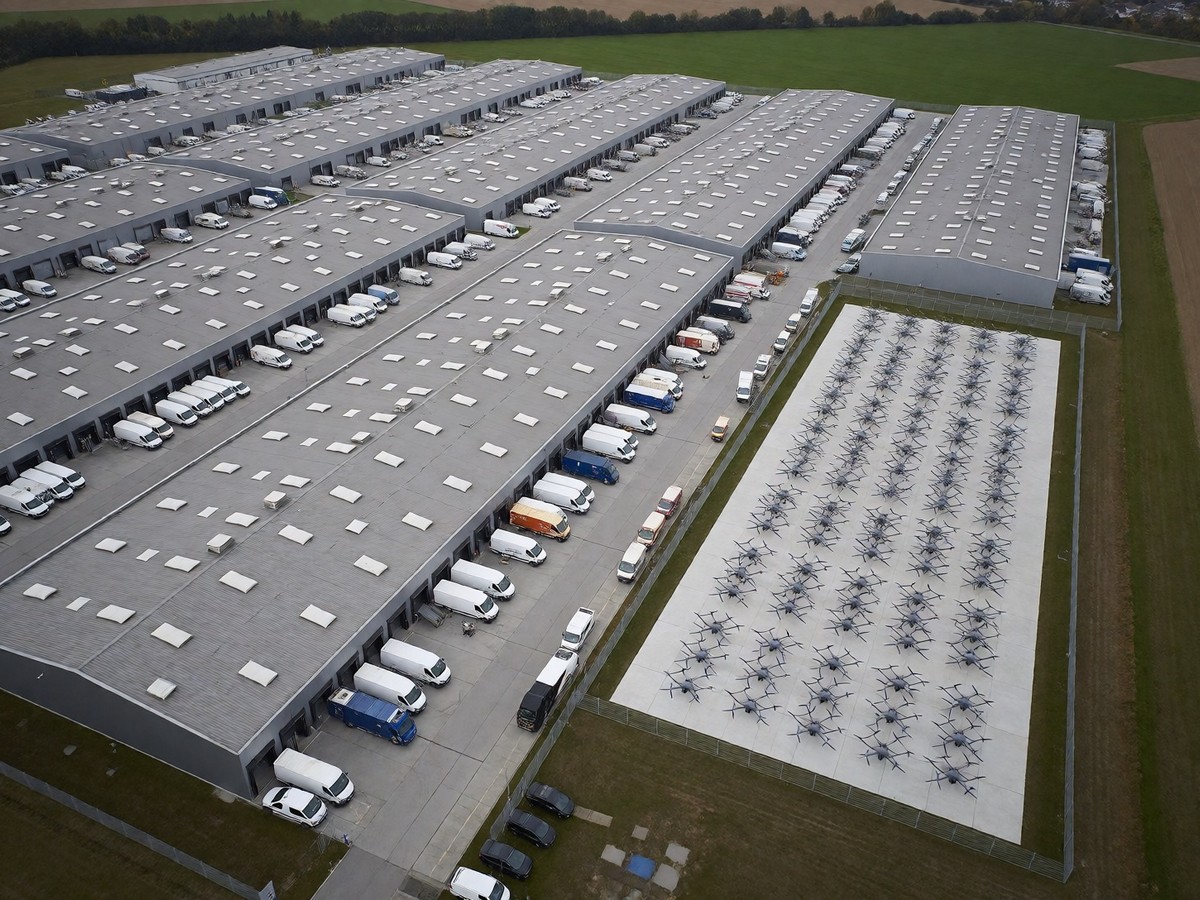
The HX-2 loitering munition, which weighs roughly 12 kilograms and carries up to 5 kilograms of ordnance, uses onboard machine vision to compare live camera imagery to pre-loaded terrain maps to maintain guidance without satellite input. This capability allows the drone to operate in environments where electronic warfare suppresses GPS signals. The HX-2 utilizes a quadcopter design with four wings and rotors in an X configuration. It reaches speeds of 250 km/h and requires only a single pilot using a specialized laptop. In February 2026, the German government approved a contract for HX-2 munitions worth approximately €269 million, with a framework capacity reaching €1.46 billion. A factory in southern Germany manufactures these drones, and the facility can output more than 2,000 units per month. Despite these production numbers, the company faces criticism regarding its reliability. Bloomberg reported in April 2025 that former employees and military experts raised concerns about overpriced drones and glitchy software. In the field, results vary between official claims and combat reports. While Helsing claims a 70% success rate in Ukraine, a WELT investigation reported that units hit targets in only 5 out of 14 documented engagements. However, during the U.S. Army’s Project Flytrap 5.0 in Lithuania, 15 of 17 HX-2 drones hit their targets, yielding an 88% success rate.
| Feature | HX-2 Specification |
|---|---|
| Weight | 12 kg |
| Payload | 5 kg |
| Max Speed | 250 km/h |
| Operational Range | 100 km |
Helsing expands its portfolio through the Altra battlefield operating system and the CA-1 Europa aircraft. Altra fuses data from drones, radar, and electronic warfare systems to create a real-time situational awareness picture. This software operates on both Helsing’s own hardware and as an integration layer for partners like Saab. The CA-1 Europa, an autonomous unmanned combat aerial vehicle weighing approximately 4 tonnes, carries up to 500 kilograms of weapons and achieves an operational range between 1,400 and 1,800 kilometers. This aircraft, which is under development at the Grob Aircraft subsidiary, targets its first flight in 2027. The company produces two variants: the CA-1KA for kinetic attacks and the CA-1 Electronic Attack variant, which carries a broadband jammer. The Electronic Attack variant expects initial operating capability in 2031. Additionally, the company develops the SG-1 Fathom, an autonomous underwater drone for maritime surveillance. The SG-1 Fathom weighs 60kg, reaches speeds of 2 knots, and operates at depths of 1,000m by redistributing its internal weight to glide. The Centaur AI pilot, trained through reinforcement learning, recently controlled a Saab Gripen E fighter jet during testing in the Baltic Sea. Can the company successfully transition its European dominance to the American manufacturing landscape?