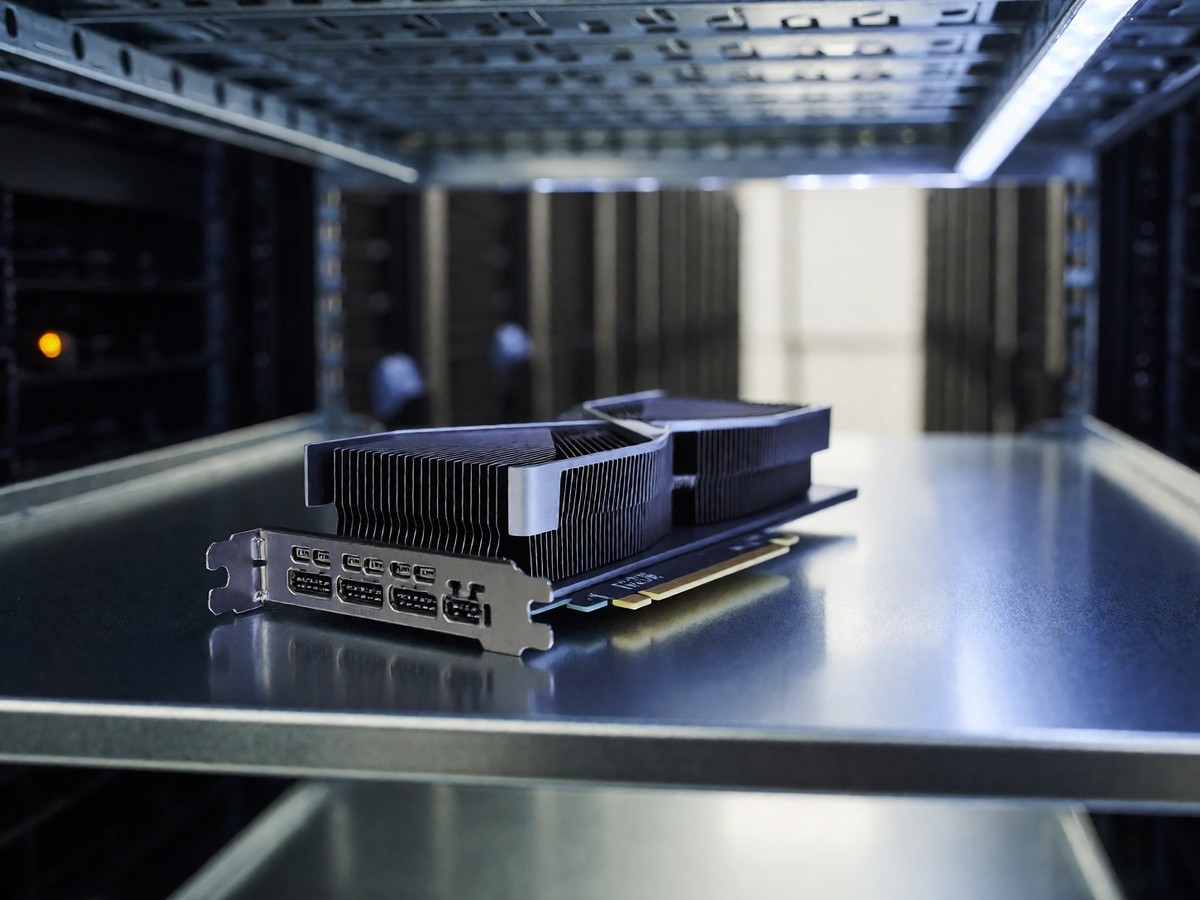
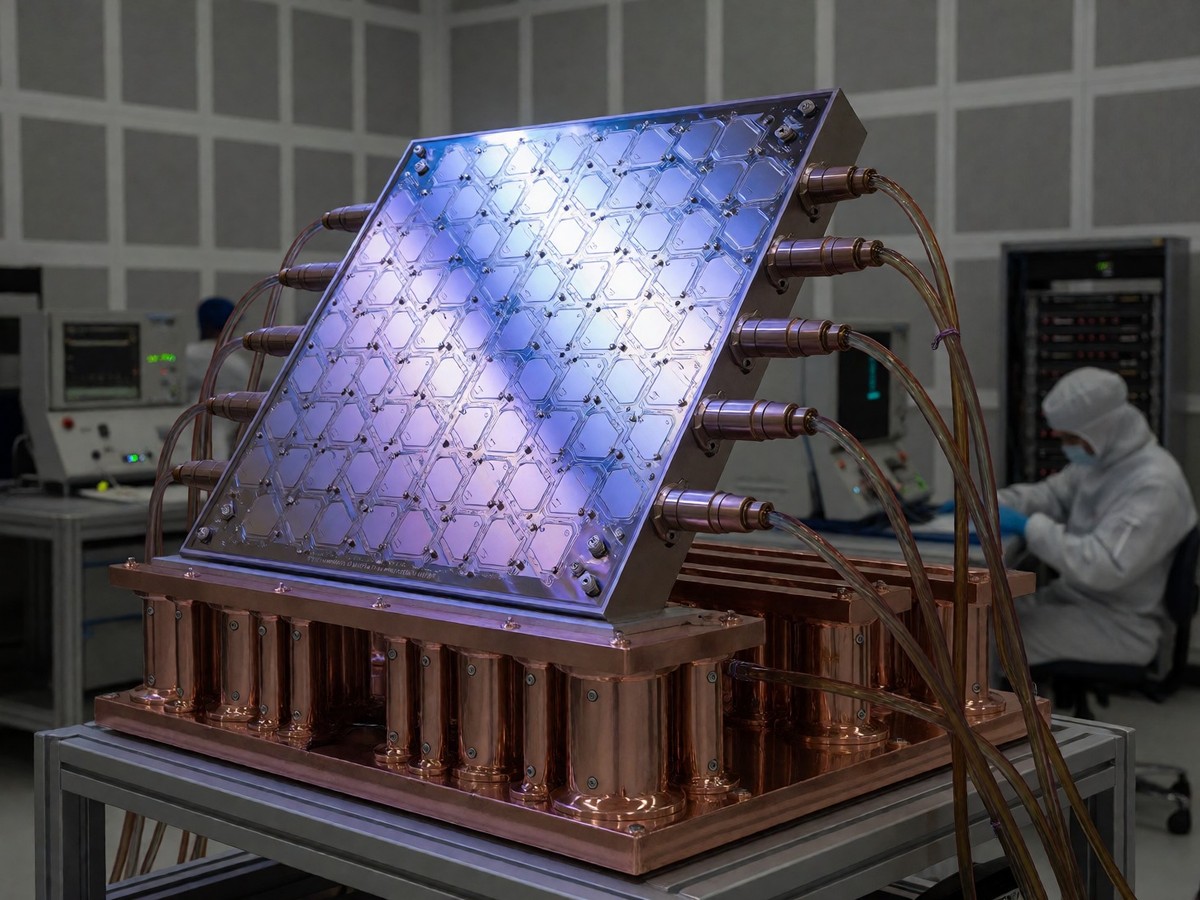
Cerebras WSE-3 provides the only viable alternative to Nvidia for memory-bandwidth-limited workloads in defense. The system delivers 21 petabytes per second of memory bandwidth, which exceeds the H100 bandwidth by 7,000 times. This massive bandwidth advantage solves the memory wall that constrains traditional GPU systems during large language model inference. While Nvidia focuses on multi-die Superchips and increasing HBM capacity, Cerebras uses a single wafer to eliminate the communication delays found in multi-chip architectures. This architectural difference allows the WSE-3 to process large models with much higher efficiency than standard GPU clusters.
Wafer scale integration versus traditional dies
The WSE-3 architecture uses a single 300mm silicon wafer as one massive processor. Traditional semiconductor manufacturing involves processing a wafer, testing it, dicing it into hundreds of individual dies, and then packaging those dies. Cerebras skips the dicing and packaging steps by using the entire 46,225 millimeter squared wafer as a single chip. This approach provides a massive advantage in interconnect bandwidth because it avoids the latency and power costs of off-die communication. By integrating 900,000 cores on a single 46,225 millimeter squared wafer, the WSE-3 provides 21 petabytes per second of memory bandwidth that exceeds the H100 capacity by 7,000 times.
| Specification | Cerebras WSE-3 | Nvidia H100 | Nvidia B200 |
|---|---|---|---|
| Transistor Count | 4 trillion | 80 billion | 208 billion |
| AI Cores | 900,000 | N/A | N/A |
| On-chip SRAM | 44 GB | N/A | N/A |
| Memory Bandwidth | 21 PB/s | 3 TB/s | 8 TB/s |
| Peak Performance | 125 PetaFLOPS (FP16) | N/A | 20 PetaFLOPS (FP4) |
| Process Node | TSMC 5nm | TSMC 4nm | TSMC 4nm |
The WSE-3 contains 4 trillion transistors and 900,000 AI-optimized cores. Because the cores are small, measuring only 0.05mm2, a defect only kills one core rather than the entire chip. The fabric routes around these defective areas to maintain high utilization. The WSE-3 ships with 900,000 active cores out of 970,000 physical cores, which results in 93% utilization.
Engineering solutions for thermal and power density
High compute density creates significant thermal and power challenges for data centers. The CS-3 system, which houses the WSE-3, consumes approximately 23 kW of power. This high power draw requires a specialized 15U rack form factor and a proprietary water cooling system. Standard air cooling cannot handle this load because the vapor chamber dries out. Cerebras uses a custom copper cold plate with micro-fin channels and requires 100 liters per minute of water at 20 degrees Celsius to manage heat.
Silicon expands when it heats up, which causes physical displacement in large chips. A 215mm wafer expands more than a standard 28mm GPU, potentially breaking the connection to the circuit board. Cerebras uses a custom connector material to absorb this displacement. The assembly uses a four-layer sandwich consisting of a cold plate, the wafer, a custom connector, and a PCB. The system also uses vertical power delivery with over 300 voltage regulator modules distributed across the wafer surface. This setup feeds current perpendicular to the silicon to manage the 23 kW load.
Inference performance for large language models
Large language models encounter a bottleneck during the decode phase because they must load model weights from memory for every token generated. This makes inference a memory-bandwidth-limited task. The WSE-3 uses 44 GB of on-chip SRAM to store activations and handles weights through a process called weight streaming. Weights live in external MemoryX storage and stream onto the wafer for processing. This design allows the WSE-3 to achieve much higher token generation speeds than traditional GPUs.
Cerebras demonstrates a clear advantage in speed when running large models. The CS-3 system delivers the Llama 4 Maverick 400-billion parameter model at 2,500 tokens per second per user. The Nvidia DGX B200 processes the same model at roughly 1,000 tokens per second per user. This means Cerebras provides more than double the speed of Nvidia’s flagship Blackwell system for this specific model. The WSE-3 achieves a peak computing performance of 125 petaflops.
| Workload | Cerebras CS-3 | Nvidia DGX B200 |
|---|---|---|
| Llama 4 Maverick (400B) | 2,500 tokens/sec/user | ~1,000 tokens/sec/user |
| Llama 3.1 8B | $0.10/million tokens | N/A |
| Llama 3.1 70B | $0.60/million tokens | N/A |
Can the growing capacity gap between HBM and SRAM eventually make wafer-scale systems the only way to run large language models?
National security and Sandia deployment
The US Department of Energy and the US Department of Defense utilize Cerebras hardware for sensitive research and simulation. Sandia National Laboratories recently deployed a cluster of four Cerebras CS-3 systems to serve as a testbed for AI workloads. This system, named Kingfisher, supports the NNSA’s Advanced Simulation and Computing Artificial Intelligence for Nuclear Deterrence strategy. The cluster allows researchers to develop large scale trusted AI models using secure internal Tri-lab data from Sandia, Lawrence Livermore, and Los Alamos Laboratories.
The deployment provides a novel alternative to traditional accelerators for national security missions. Sandia uses the system to investigate how the architecture applies to traditional modeling and simulation workloads. This capability helps the Department of Energy advance its Frontiers in Artificial Intelligence for Science, Security, and Technology initiative. The US Department of Defense also uses Cerebras through the DARPA MAPLE program, which carries a $45 million contract for multi-domain battlefield simulation. These programs demonstrate that wafer-scale technology meets the rigorous requirements of defense-grade computing.
Federal procurement and American AI requirements
The General Services Administration (GSA) issued proposed terms for the procurement of AI systems through the GSA Schedules program. These terms include a requirement for "American AI Systems" to prevent the use of components manufactured or controlled by non-U.S. entities. The GSA AI Clause prohibits the use of foreign AI systems in the performance of federal contracts. This policy aims to maximize the use of AI products developed and produced within the United States.
The GSA also imposes strict rules on the handling of government data. The proposed clause requires "data localization" and "eyes off" data handling procedures to ensure data remains secure and segregated. These rules prohibit contractors from using government data to train or fine-tune AI systems for purposes other than the contract. The policy also mandates that AI systems remain unbiased and comply with specific federal principles. You should note that these regulations favor domestic providers like Cerebras that manage their own specialized data centers.
Simplified training and software scaling
Training massive models usually requires complex distributed computing frameworks. Training a 175-billion parameter model on 4,000 GPUs requires roughly 20,000 lines of distributed training code. Cerebras accomplishes the same task with only 565 lines of code. The entire model fits on the wafer, so the system does not need the complex tensor or pipeline parallelism required by GPU clusters. This simplification reduces the chance of errors in the software stack.
The WSE-3 architecture uses a dataflow model where computation triggers when data arrives on the fabric. Each of the 900,000 cores has its own program counter and 48 KB of local SRAM. This design allows the system to achieve 10x higher utilization on unstructured sparse workloads compared to GPUs. In the weight streaming mode, one layer of the network occupies the entire wafer. Weights stream in from MemoryX, and the cores process the activations on-chip. This removes the need for complex software distribution tricks used in traditional GPU training.
Strategic infrastructure and sovereign AI
Cerebras targets national AI sovereignty through its Cerebras for Nations program. This initiative supports government AI infrastructure in the United States, the United Kingdom, and the United Arab Emirates. The program helps nations develop in-country AI capabilities and comply with data sovereignty laws. By providing local infrastructure, Cerebras helps reduce the dependence of governments on foreign cloud providers.
The company operates dedicated datacenters to support these needs. In 2025, Cerebras expanded its capacity by 20x and operates facilities in locations including Oklahoma City, Montreal, Dallas, Reno, Ireland, and the Netherlands. The Oklahoma City site contains over 300 CS-3 systems. These datacenters provide guaranteed capacity allocation and custom service level agreements for enterprise and government users. This infrastructure supports large scale deployments like the 750 megawatt agreement with OpenAI to serve AI customers through 2028.
Choosing between wafer-scale and GPU clusters
The choice between Cerebras and Nvidia depends on the specific AI workload. Cerebras is the best option for inference-heavy workloads and models exceeding 70 billion parameters. It excels in applications requiring consistent, low latency and simplified operations. The system also suits organizations that need to avoid the complexity of managing large GPU clusters.
Nvidia remains the preferred choice for training-heavy workloads and environments that require extensive customization. The CUDA programming model provides a massive ecosystem of libraries and developer support. Organizations with existing investments in GPU infrastructure or those needing to run diverse workloads, such as vision or audio, find Nvidia more flexible. For companies serving large language models at scale with high concurrency, the decision requires a careful look at the cost per token versus the total system cost.