Crusoe Energy Systems has raised $3.9 billion in a Series F round at a post-money valuation of $30.9 billion, tripling its worth in under a year. This capital injection follows a $1.375 billion Series E in October 2025 that valued the company above $10 billion. The funding supports a massive expansion from its origins as a Bitcoin miner using stranded natural gas to a vertically integrated AI infrastructure provider. Investors are betting on Crusoe’s ability to secure power and build data centers faster than traditional providers. The company now reports a development pipeline exceeding 40 gigawatts, with 4.9 gigawatts already contracted to hyperscale clients.
From Waste Gas to Gigawatt Campuses
The financial trajectory is clear: investors value the physical layer beneath generative AI more than ever before. Crusoe’s core technology, the "Digital Flare Mitigation" system, initially deployed modular data centers at oil well sites to capture gas that would otherwise be flared. By converting this waste into electricity for compute, the company avoided burning methane while powering high-intensity tasks. According to the company’s ESG report, every ton of CO2 equivalent produced resulted in over 1.6 tons of reduced emissions through avoided methane. This environmental benefit provided the initial credibility needed to pivot toward large-scale artificial intelligence facilities.
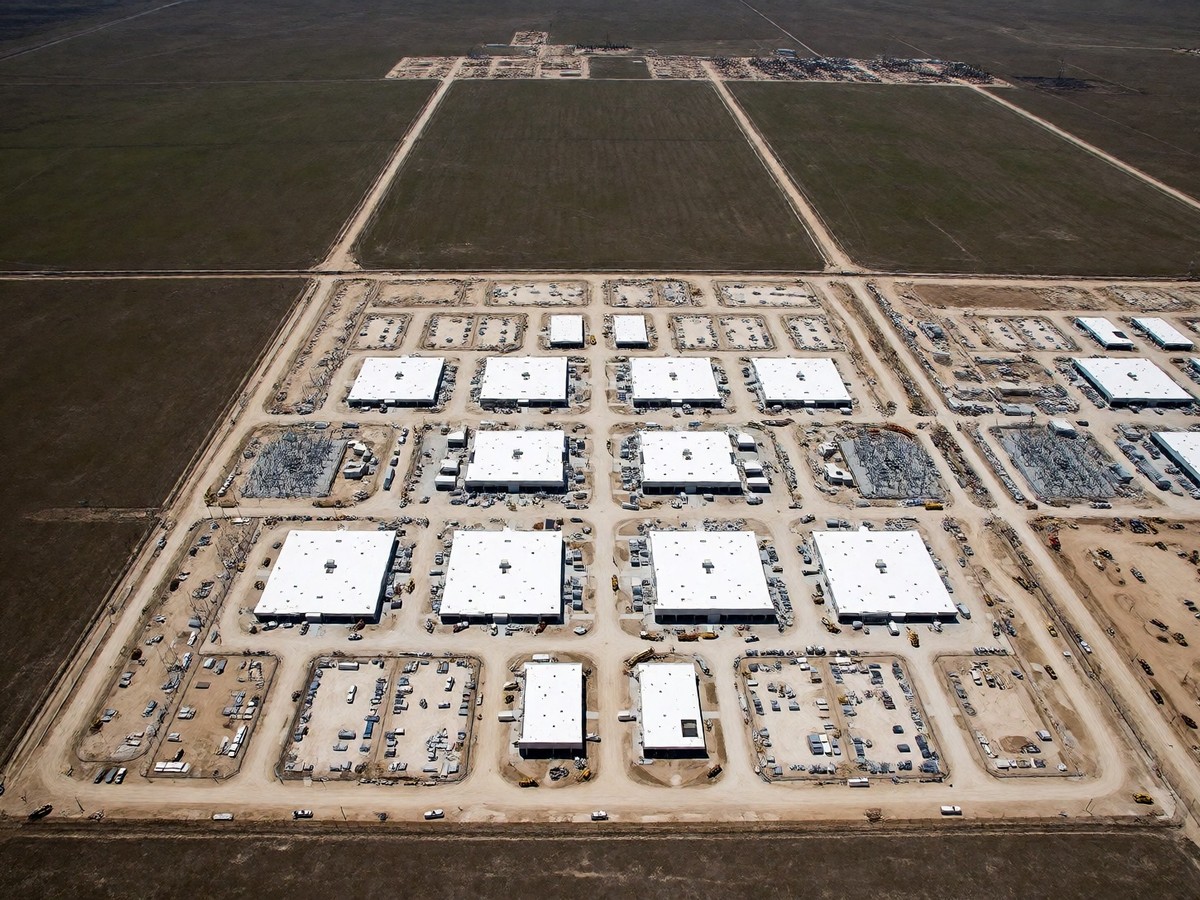
Today, the focus has shifted to dedicated campuses in regions with abundant energy. The flagship project in Abilene, Texas, is a 1.2-gigawatt facility designed for Oracle and OpenAI. Construction began fifteen months before the first phase went live in September 2025. The full campus plan includes eight buildings, with the second phase involving a $15 billion joint venture with Blue Owl Capital and Primary Digital Infrastructure. Microsoft added two additional AI factory buildings to the site after OpenAI stepped away from that specific expansion. This tenant change highlights the volatility of infrastructure development; even prominent projects can shift customers during construction. Crusoe retained the expansion by replacing one major buyer with another, proving it can manage such risks while equipment orders and utility commitments continue moving.
Valuation vs. Execution Reality
The $30.9 billion valuation assumes Crusoe can repeatedly convert contracted megawatts into operating campuses without losing control of costs or schedules. However, the numbers reveal significant tension between ambition and execution. The company has contracted nearly five gigawatts across its portfolio, but this figure describes future capacity, not current operating infrastructure. The gap between contracted and energized capacity is central to the investment case. Contracted capacity unlocks financing, but only energized capacity supports billable workloads. Investors are funding power access before cloud revenue becomes visible, a risky strategy given the complexity of securing land, transformers, and transmission lines.
Critics point to the paused Wyoming project and uncertainty around individual tenants as evidence of execution risk. A delayed substation or turbine cannot be fixed with a software update, unlike a cloud delay. The company’s vertical integration gives it control over deployment schedules but places more risk inside the same organization. CoreWeave offers a public comparison, generating $5.1 billion in 2025 revenue, yet it faces similar debt and customer concentration pressures. Crusoe’s model requires absorbing timing gaps with corporate equity before project-level financing arrives. Can the company translate its financial credibility into operating capacity faster than rivals? The answer remains unresolved as the 40-gigawatt pipeline moves forward.