The economics of Llama 4 inference differ from training. While training requires massive arithmetic throughput, deployment focuses on per-request latency and cost per token. Groq and SambaNova are two major competitors in this specialized market. Groq uses the LPU, which is an SRAM-only architecture. SambaNova uses the RDU, which is a reconfigurable dataflow unit with a three-tier memory system. You know that Llama 4 deployment requires careful memory planning because of the massive parameter counts.
Groq’s LPU and the SRAM bottleneck
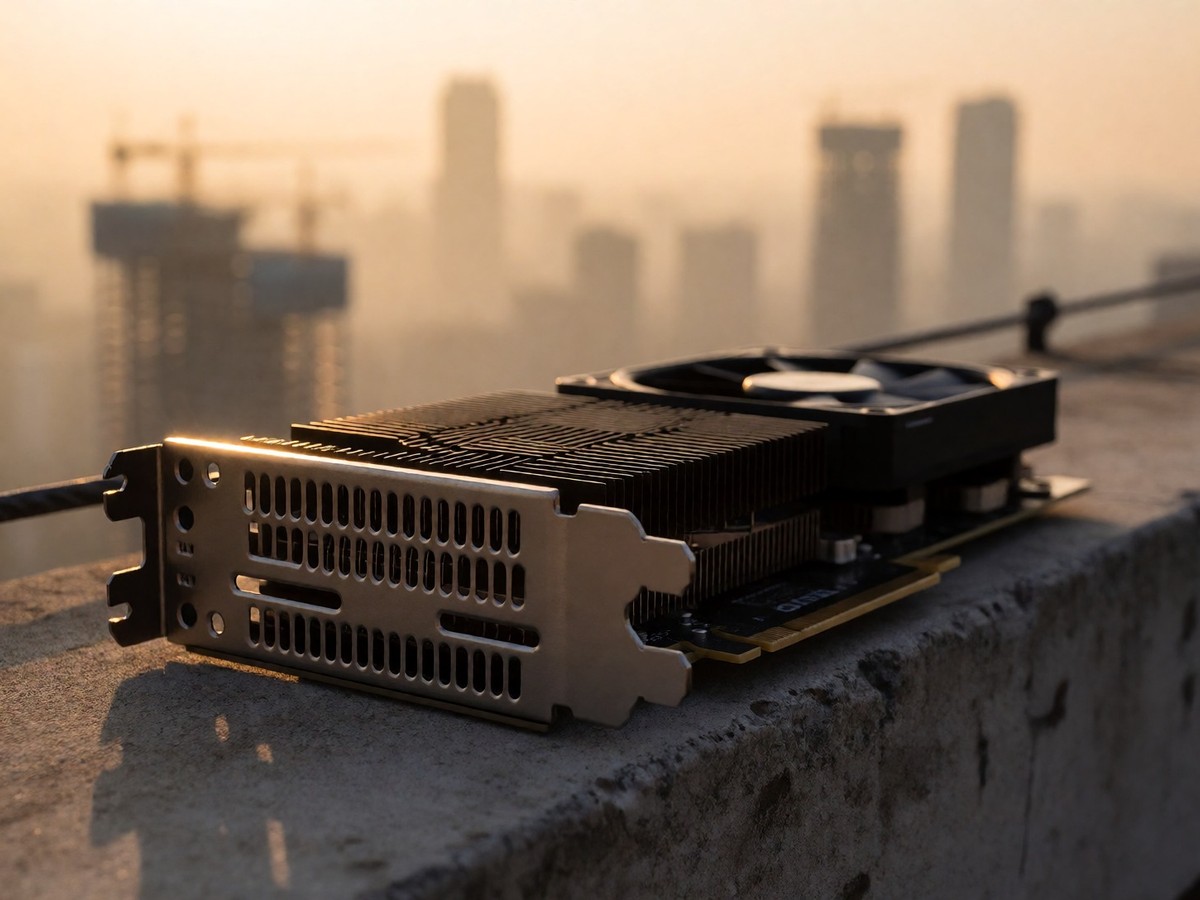
Groq’s LPU is an SRAM-only architecture. Each LPU chip has 230 MiB of memory. This architecture relies on expensive SRAM to achieve high speeds. For Llama 3.3 70B, Groq uses 576 chips to achieve 250 tokens per second. This configuration requires nine racks of hardware. The LPU is a specialized processor designed for high-speed tasks. Groq’s LPU is a small die with 725 mm2 of silicon area.
Groq’s performance on Llama 2 70B is 241 tokens per second according to ArtificialAnalysis.ai. Internal benchmarks from Groq show speeds of 300 tokens per second. The LPU is a programmable assembly line architecture. This design aims for low latency. However, the limited amount of SRAM per chip means that large models require many chips. For Llama 3.3 70B, the workload is spread across many networked chips. Groq’s LPU is an affordable alternative to traditional GPUs for smaller tasks. In late 2025, Nvidia licensed Groq’s IP for the Rubin platform. This deal provides the LPU technology for a new inference co-processor.
SambaNova’s three-tier memory hierarchy
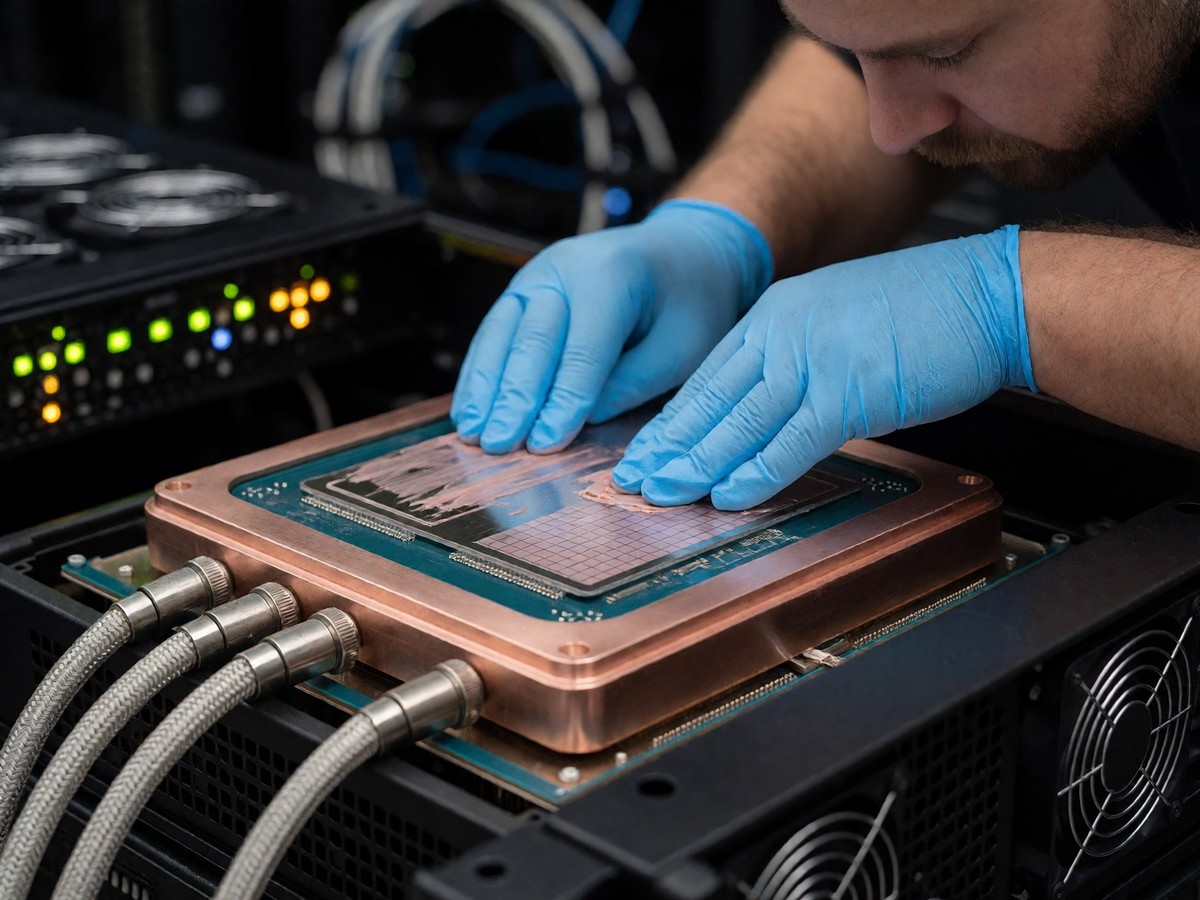
SambaNova’s SN40L is a reconfigurable dataflow unit. It has a three-tier memory system. This system includes on-chip SRAM, HBM, and DDR5. The SRAM provides 520 MiB of capacity. The HBM provides 64 GiB of capacity. The DDR5 provides up to 1.5 TiB of capacity per socket. This hierarchy manages memory for large models. The RDU uses a dataflow execution model. The model is compiled by SambaNova Composer into a static graph. This graph pipelines a single request through the hardware.
The SN40L is a 2.5D chiplet-based design. It uses TSMC 5nm technology. The chip has two logic dies and HBM. It also has direct-attached DDR DRAM. The SN40L provides 638 BF16 TFLOPS of peak compute performance. It has 1040 distributed Pattern Compute Units and 1040 distributed Pattern Memory Units. The RDU is the only AI accelerator with this tightly coupled three-tier memory system. This design allows for the hosting of hundreds of heterogeneous models on a single socket. It also allows for the deployment of trillion-parameter models.
Llama 4 Maverick and MoE scaling
Llama 4 Maverick is a large Mixture of Experts model. It has 128 experts and 400B+ total parameters. It activates 17B parameters per forward pass. The Llama 4 Maverick model has 128 experts and activates 17B parameters per forward pass, which means the DDR5 cold-storage advantage on the SN40L is visible at low batch sizes where the full expert set does not need to fit in HBM simultaneously. An 8-RDU node serves this model at 2,800 tokens per second at batch 1 or 8.
On a standard GPU cluster, you must spread the full model across enough HBM to fit all experts. The SN40L uses DDR5 for cold experts. This eliminates the need for an 8x NVLink tensor-parallel configuration to achieve memory fit. At batch 1 for Llama 4 Maverick, SambaNova reports a time to first token under 100ms. An H200 x8 vLLM setup typically shows 300 to 700ms for the same metric. At batch 32, H200 and B200 chips are faster. The higher HBM bandwidth of NVIDIA chips sustains lower per-token latency under load.
Data center footprint and power draw
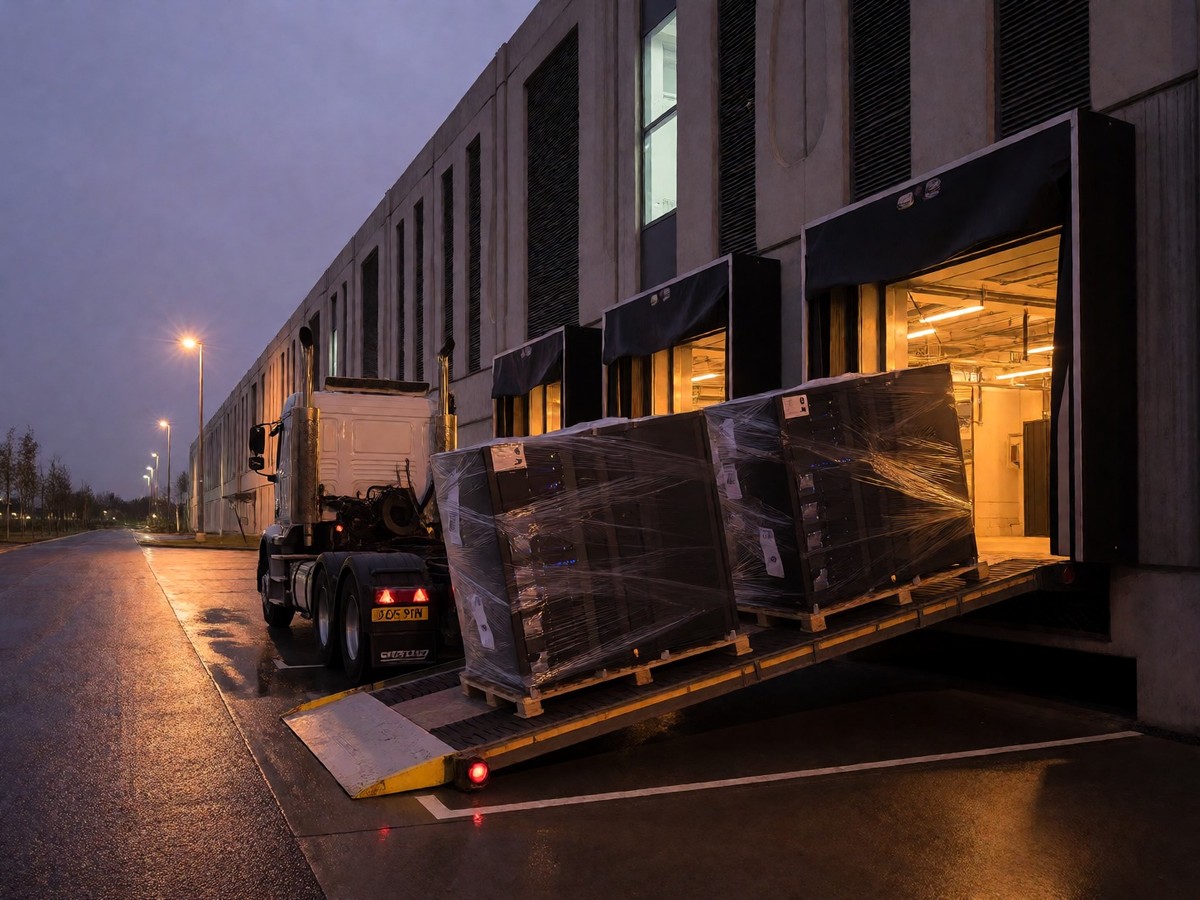
The data center footprint for Groq is massive. To run Llama 3.1 70B, Groq uses 576 chips across nine racks. SambaNova uses only 16 chips for Llama 3.1 70B. This configuration uses a peer-to-peer network. The SN40L rack is an air-cooled 19-inch form factor. It uses 8 kW to 15 kW of power. The average power use is 10 kW. SambaNova’s solution is more compact and uses the compute more effectively.
The data center footprint for Groq is much larger than SambaNova’s. Groq’s LPU uses a high amount of power. This is because it requires a large number of chips to run a single model. SambaNova’s RDU is designed for efficiency. It reduces the need for constant data movement. This reduces power consumption. The SN40L provides a lower total cost of ownership. It uses a small footprint. Can SambaNova maintain this lead when next-generation GPUs arrive?
Cost-per-million-token math
Pricing for Llama 4 Maverick at batch 32 is very different between providers. SambaCloud charges $6 per million output tokens. Spheron sells H200 instances. These H200 instances cost $0.47 per million tokens on spot. They cost $1.39 to $1.52 per million tokens on demand. The GPU cloud advantage at scale is substantial. SambaNova’s argument is about zero infrastructure overhead. It removes the need for Docker or vLLM configuration.
SambaNova Cloud manages hardware, software updates, and capacity planning. This is an ideal solution for teams without dedicated ML infrastructure engineers. For teams that run production GPU infrastructure, the cost math for GPUs is hard to ignore. Groq’s LPU is an affordable alternative for small models. However, the cost increases as models grow. Groq requires more and more chips to scale. This drags down efficiency for large workloads.
Hardware comparison
The following table compares the primary specifications of the leading inference accelerators.
| Component | Groq LPU | SambaNova SN40L | NVIDIA H200 (SXM5) |
|---|---|---|---|
| Memory Tiers | SRAM | SRAM, HBM, DDR5 | HBM3 |
| Memory Capacity | 230 MiB per chip | 64 GiB HBM, 1.5 TiB DDR5 | 141 GB |
| Peak Compute (BF16) | Not published | 638 TFLOPS | Not specified |
| Peak Compute (FP8) | Not published | Not specified | 1,989 TFLOPS |
| Power (per rack/node) | High (9 racks for 70B) | 8-15 kW | Not specified |
| Form Factor | Multi-chip cluster | 19-inch rack | SXM5/NVL |
Groq’s LPU is a specialized processor. It is built on a tensor streaming architecture. SambaNova’s SN40L is a reconfigurable dataflow unit. It is built on a 5nm process. NVIDIA’s H200 is a GPU. It is built on the Hopper architecture.
The verdict on Llama 4 deployment
The winner for Llama 4 deployment is SambaNova. The DDR5 tier solves the memory wall for MoE models. Groq’s SRAM-only architecture requires too many chips for large models. This makes Groq expensive and power-hungry for Llama 4. I would skip Groq for this specific deployment. SambaNova is the better choice for latency per dollar.
The SN40L handles the large parameter counts of Llama 4 Maverick easily. It uses its three-tier memory to manage expert weights. Groq’s LPU is better for low-latency, single-model tasks. This includes interactive chatbots and agentic workflows. However, Llama 4 is a frontier-class model. Groq’s footprint is too large for this scale. SambaNova provides the necessary capacity and speed in a single rack. Buy the SN40L if you need to deploy Llama 4 efficiently.