OpenAI plans to use 6 gigawatts of AMD MI450 chips for its AI data center buildout. This multibillion-dollar agreement allows OpenAI to purchase chips directly or through cloud computing partners. AMD chief Lisa Su stated the deal results in tens of billions of dollars in new revenue over the next five years. The agreement involves a 6-gigawatt multi-year AI data center buildout worth several hundred billion in infrastructure and power investments. OpenAI will begin using 1 gigawatt worth of the MI450 chip in the second half of next year. This deployment directly challenges the market dominance of Nvidia.
The MI400 series uses the CDNA 5 architecture to drive AI training and inference. The flagship MI455X contains 320 billion transistors across 12 TSMC N2 compute chiplets and 3 advanced 3nm chiplets. This chip provides up to 40.26 PFLOPS of MXFP4 throughput. The MI455X provides 432 GB of HBM4 memory and 23.3 TB/s of memory bandwidth. The MI450 provides the same 432 GB HBM4 capacity and 23.3 TB/s bandwidth but works within a lower power envelope. The MI440X targets on-premises enterprise AI, while the MI430X provides native FP64 acceleration for scientific computing. The MI400X serves as a general-purpose accelerator. The MI430X will become available in 2027.
The physical limits of advanced packaging and high-bandwidth memory constitute the most significant risk to the MI400 deployment in the Stargate timeline.
The Advanced Packaging Constraint
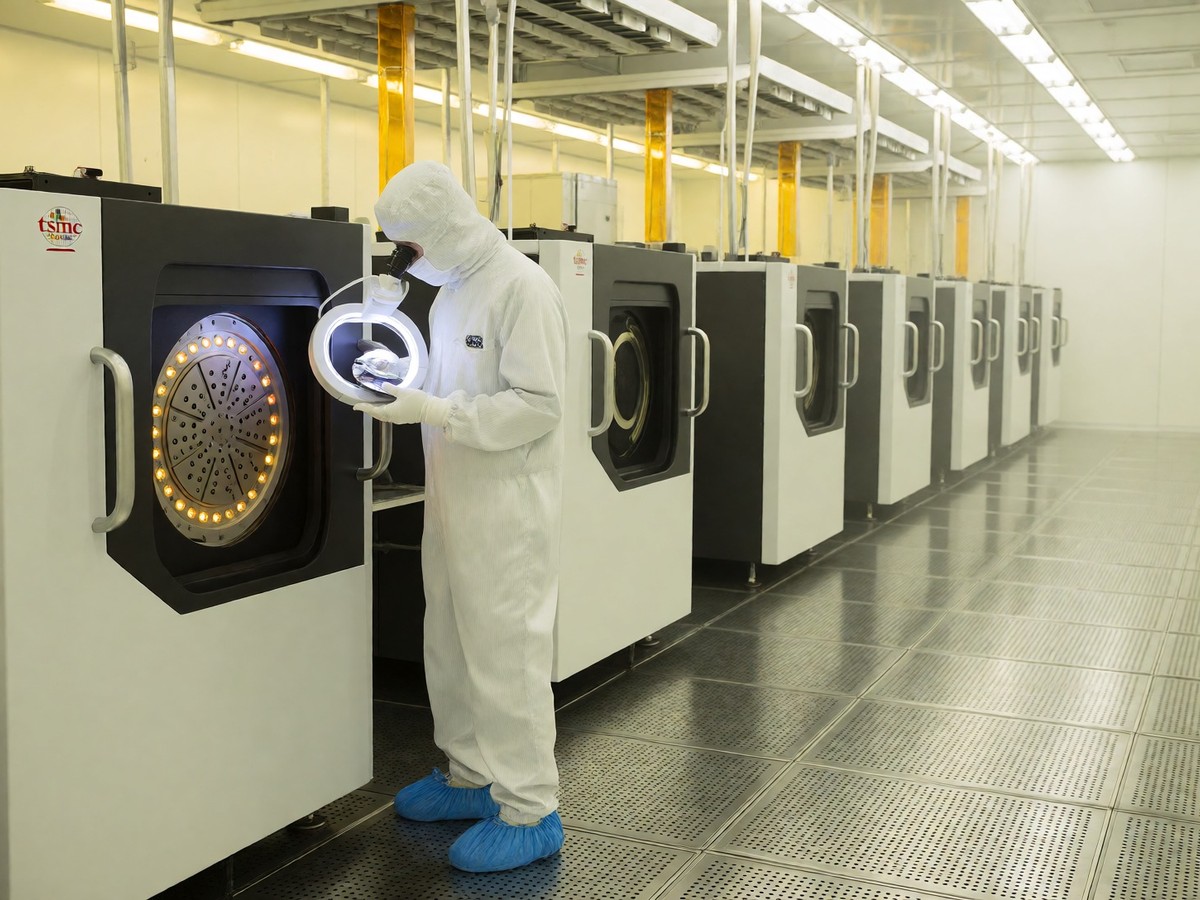
AMD faces a physical bottleneck in advanced packaging. TSMC provides CoWoS technology to bond chiplets into finished AI accelerators. This packaging step makes the silicon usable. TSMC CEO stated that CoWoS capacity remains tight and sold out through 2026. NVIDIA holds roughly 60% of total CoWoS output, which equals approximately 595,000 wafers. AMD holds around 11% of total demand, or 105,000 wafers. AMD must split its CoWoS allocation between its MI400 GPU line and its Venice EPYC CPU line. This internal competition for limited capacity limits the ability to scale one product without reducing the other.
NVIDIA does not face this internal competition because its CoWoS allocation serves one product family. AMD uses both SoIC-X and CoWoS-L packaging across its entire data center portfolio. Packaging capacity is reserved years in advance, so AMD cannot buy additional capacity if MI400 demand exceeds expectations. The tooling required to expand packaging capacity takes years to procure and install. You already know that the industry expects a massive compute crunch.
HBM4 Production and the Memory Wall
The HBM4 memory subsystem provides the high bandwidth required for large language models. Each MI400 GPU includes 432 GB of HBM4 memory. This capacity is 50% higher than the 288 GB of HBM3e used in the MI350. HBM requires a silicon or organic interposer in a 2.5D package assembly like CoWoS. Each HBM3E stack uses over 1,000 wires between the XPU and the memory. This level of routing density makes PCB or package substrate solutions insufficient. Manufacturers must place HBM directly adjacent to the shoreline of the compute engine. This proximity is necessary to reduce latency and energy consumption. The shoreline area of a SOC is limited to two edges because the other two edges reserve space for I/O off the package. To solve this, manufacturers use vertical stacking of memory die.
Each layer needs through-silicon vias (TSVs) to deliver power and signal. Producing these vias requires etchers, deposition tools, and plating tools. Grinders and temporary bonders also assist in the process. Optical inspection tools from Camtek and Onto check the quality of the bumps. HBM demand drives cost inflation across the electronics industry. Memory supply for 2026 remains tight. Higher layer counts make achieving high yields more difficult. Non-critical stack defects accumulate as the number of layers increases.
| Specification | MI455X GPU | Helios Rack |
|---|---|---|
| Transistor Count | 320 billion | N/A |
| HBM4 Capacity | 432 GB | 31 TB |
| Memory Bandwidth | 23.3 TB/s | 1.7 PB/s |
| FP4 Performance | 40.26 PFLOPS | 2.9 exaFLOPS |
| FP8 Performance | 20 PFLOPS | 1.4 exaFLOPS |
| GPU Count | 1 | 72 |
Stargate Site Expansion and Regulatory Resistance
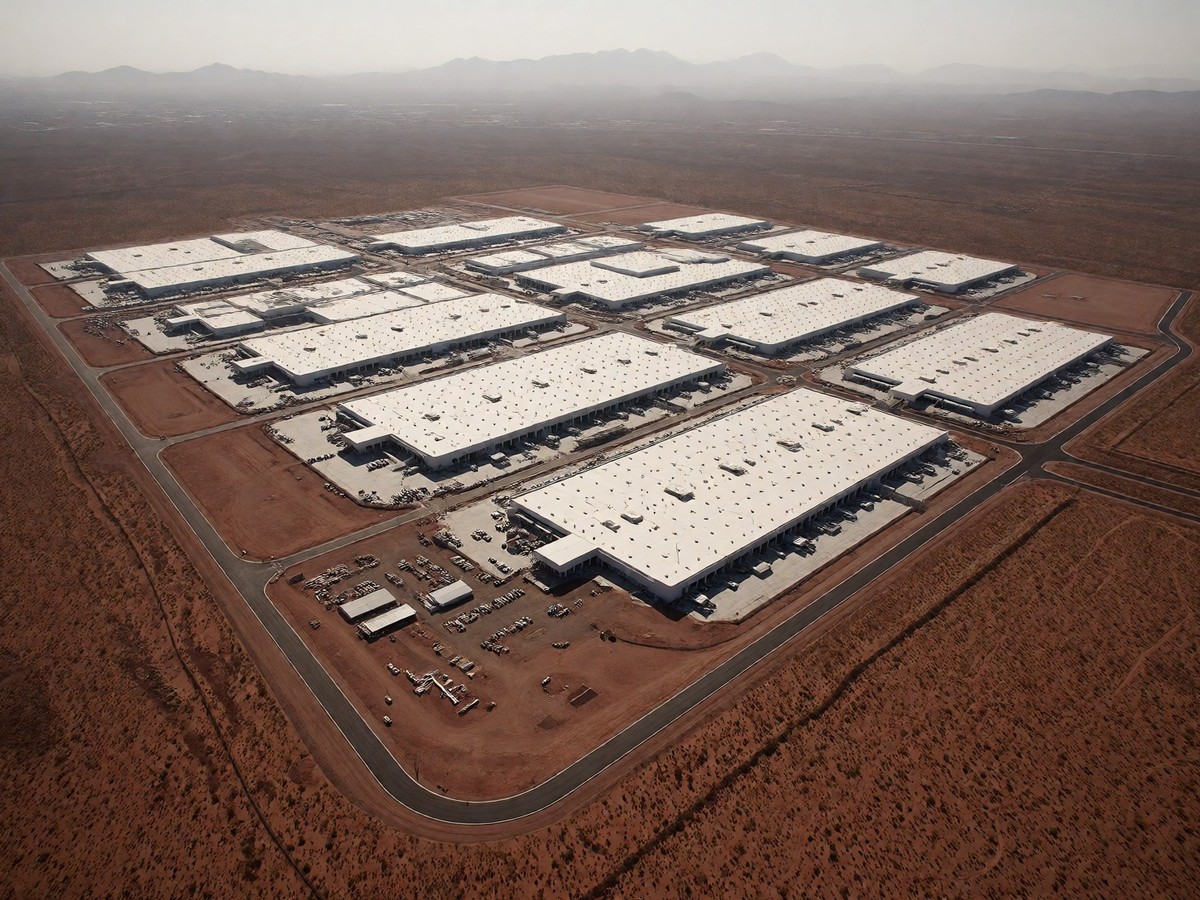
The Stargate project involves five new U.S. AI data center sites. These sites include locations in Shackelford County, Texas; Dona Ana County, New Mexico; and a Midwest site. SoftBank and OpenAI developed a site in Lordstown, Ohio, which stays on track to be operational next year. A site in Milam County, Texas, uses infrastructure from SB Energy. The Abilene, Texas, flagship campus has two buildings operational since September 2025. The New Mexico site, known as Project Jupiter, faces delays. The air-permit hearing that was scheduled for September 14, 2026, did not take place because the New Mexico Environment Department must first appoint a new hearing officer to manage the proceedings. The New Mexico Supreme Court denied the due-process petitions behind the August 23 stays and lifted both holds, allowing the air-permit proceeding and the use of the construction well to resume under a new schedule.
The expansion involves substantial infrastructure. The Abilene campus has the potential to scale past a gigawatt of capacity. This capacity is enough electricity to power 750,000 U.S. homes. Project Jupiter uses Bloom Energy fuel cells for its energy architecture. The Stargate project involves an investment of $500 billion. OpenAI and Oracle entered an agreement to develop 4.5 gigawatts of additional capacity. This partnership exceeds $300 billion between the two companies. Will the regulatory hurdles in New Mexico stall the development of Project Jupiter as effectively as the water-well protests?
CPU Supply Shortages in the Chinese Market
AMD notified Chinese customers of supply constraints for server CPUs. Delivery lead times for some AMD products reached eight to 10 weeks. This shortage follows the rapid adoption of AI, which increases demand for traditional compute. The shortage in memory chips also affects the CPU supply chain. Customers in China often accelerate CPU purchases to lock in lower memory prices.
The supply constraints in China impact major cloud computing providers like Alibaba and Tencent. Intel also reported supply shortages for server CPUs in China. Intel warned of delivery lead times of up to six months. These shortages drive up prices for server products in China. The rapid adoption of agentic AI systems, which perform complex operations, requires more CPU processing power than traditional workloads. This demand strains the entire supply chain for server components.
Hardware Competition and Memory Advantages
NVIDIA remains the preferred supplier for most AI companies. NVIDIA is releasing the Vera Rubin chip next year. The Vera Rubin chip promises more than twice the power of the Grace Blackwell generation. AMD competes with NVIDIA by offering higher memory capacity. The MI455X provides 2.25x the memory capacity of the B200 and 1.5x the capacity of the B300. AMD memory bandwidth is 2.9x higher than the B200.
The scale of the MI455X memory subsystem allows it to run models with hundreds of billions of parameters more efficiently. This additional memory reduces the number of GPUs needed to hold a model in memory. It reduces the total cost of ownership for hyperscale data centers. AMD uses UALink, an open interconnect standard backed by AMD, Intel, Google, Meta, and Microsoft. This standard challenges NVIDIA proprietary NVLink technology. The MI455X provides 34x the token throughput and an 18x reduction in per-token cost compared to the MI355X on real-world inference workloads.
The Physical Infrastructure Risk
The Stargate project requires massive coordination between chipmakers, energy developers, and construction firms. OpenAI, Oracle, and SoftBank lead the project. SoftBank and OpenAI are the lead partners, with SoftBank managing financial responsibility and OpenAI managing operational responsibility. The project involves more than 400 billion dollars of investment over the next three years. The scale of the project is significant. OpenAI finance chief Sarah Friar stated that no one in history built data centers this fast.
The buildout relies on a continuous flow of hardware and power. The companies must secure land, power, and equipment to meet the 10-gigawatt commitment. Constraints in the supply chain for power and equipment could slow the timeline. The industry faces a massive compute crunch. Companies must secure access to physical resources to avoid falling behind in the race for AI breakthroughs.