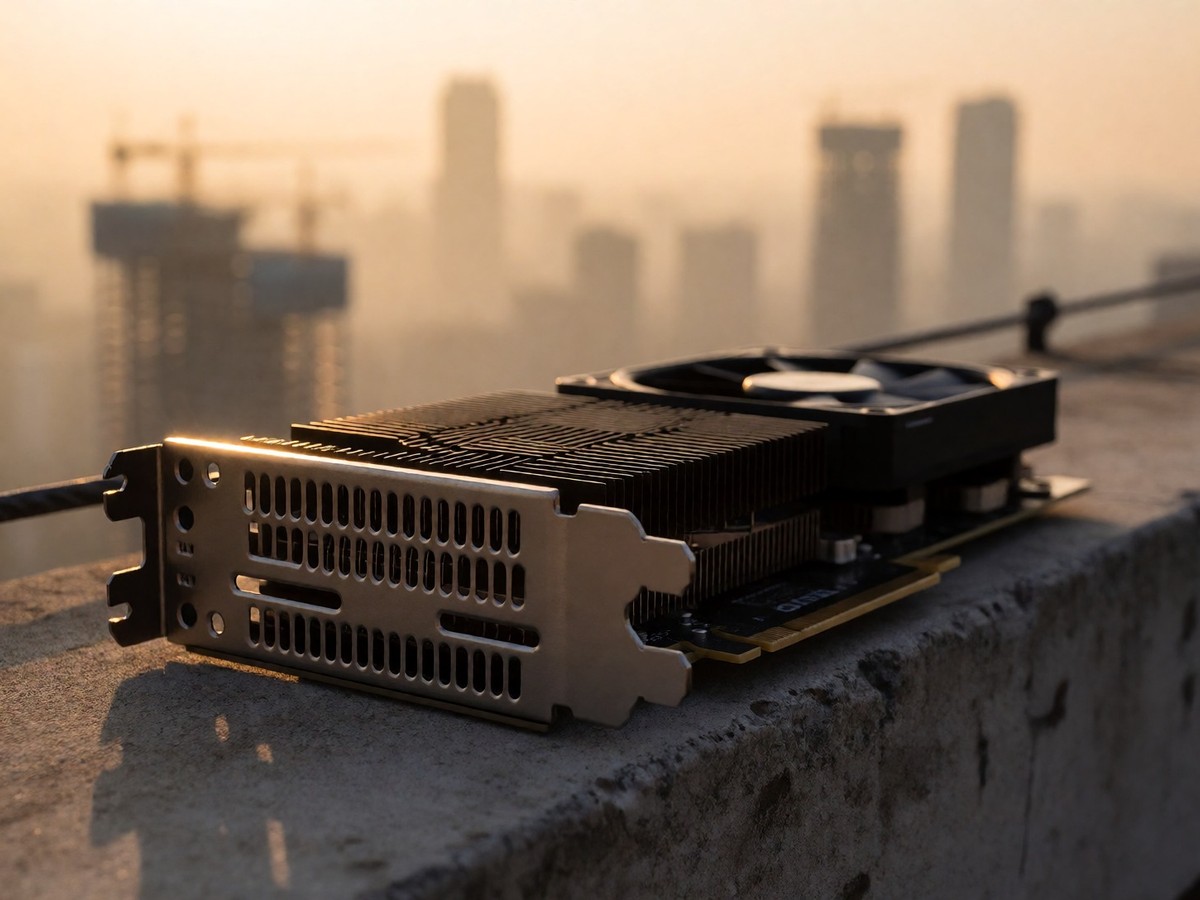
Positron AI secured $875 million in a Series C funding round in September 2026. This investment brings the company’s total valuation to $5 billion. The Reno-based startup, founded in spring 2023 by Thomas Sohmers, Barrett Woodside, and Edward Kmett, focuses on inference hardware that prioritizes memory capacity and bandwidth. The company plans to tape out its Asimov chip on the TSMC N3P process in October 2026. This next-generation silicon combines compute architecture with between 288 GB and 2,304 GB of LPDDR5X memory per device. This design sidesteps the supply constraints surrounding high-bandwidth memory. The Titan system will host four to eight Asimov chips in a single node. This configuration supports models with more than 16 trillion parameters and context windows exceeding 10 million tokens. Asimov aims for five times more tokens per watt than Nvidia’s Rubin GPU. The Atlas server rack already ships to production data centers, including Oracle Cloud Infrastructure. The Atlas platform delivers 280 tokens per second on Llama 3.1 8B at 2,000W. This performance consumes much less power than the 5,900W required by an H200 DGX. Customers like Parasail, Jump Trading, and i3d.net use this capacity. The company’s Series B in February 2026 raised $230 million and was co-led by ARENA Private Wealth, Jump Trading, and Unless. The Series C round drew co-lead investments from NEA, Atreides Management, Valor Equity Partners, Andra Capital, and SemiAnalysis Capital. A follow-on Series C-1 of up to $500 million was anchored by NEA and Netscape co-founder Jim Clark.
Lightmatter scales bandwidth with Passage
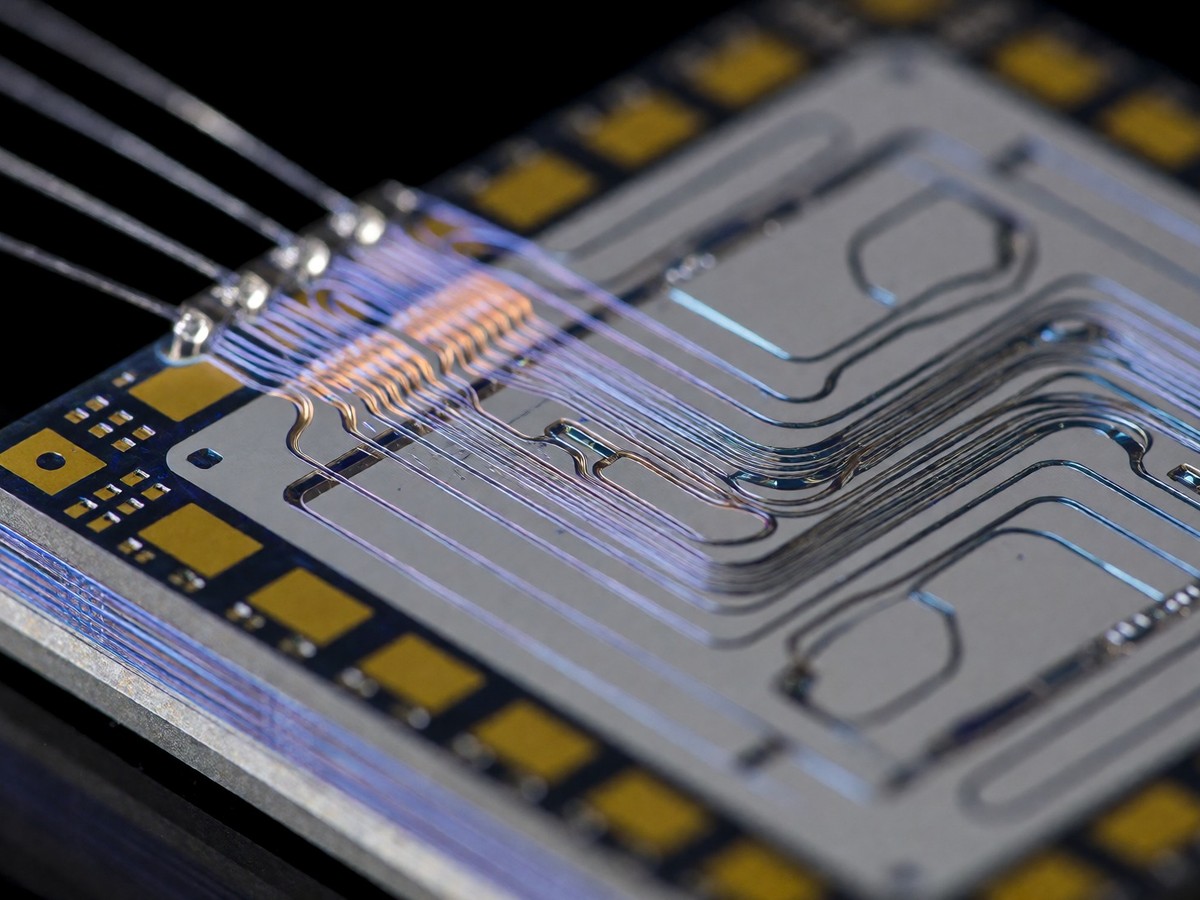
Lightmatter provides the Passage platform to connect thousands of processors using light. The Passage M1000 is a 3D photonic interposer that enables 114 Tbps of total optical bandwidth. It uses an 8-tile 3D active interposer with an integrated programmable waveguide network. The M1000 reference platform uses a multi-reticle active photonic interposer to enable the world’s largest die complexes in a 3D package that provides connectivity to thousands of GPUs in a single domain. The M1000 includes 1,024 electrical SerDes and 56 Gbps NRZ modulation. It also includes 256 optical fibers with 448 Gbps bandwidth per fiber. The M1000 delivers 1.5 kW of power in an integrated advanced package of 7,735 mm2. This technology uses the GF Fotonix silicon photonics platform to integrate photonic components with high-performance CMOS logic. The Passage L200 3D CPO engine provides 32 Tbps or 64 Tbps of total bandwidth. The L200X variant uses 106/112 Gbps PAM4 modulation for higher throughput. These modules provide 16 wavelength WDM per waveguide. The L200 uses an interoperable UCIe die-to-die interface and combines Alphawave Semi’s chiplet technology with Lightmatter’s photonic integrated circuit. The Passage L20 provides a 6.4 Tbps optical engine for Near-Package Optics and On-Board Optics applications. The L20 uses 2 wavelength BiDi transmission and 212.5 Gbps PAM4 SerDes line rates. You should note that current optical interconnects face bottlenecks in data center rack space utilization. The Passage L20 reduces fiber management requirements by 50% compared to unidirectional Data center Reach standards.
| Component | Specification |
|---|---|
| Positron Asimov Memory | 288 GB to 2,304 GB LPDDR5X |
| Positron Titan Node | 4 to 8 Asimov chips |
| Lightmatter M1000 Bandwidth | 114 Tbps total |
| Lightmatter M1000 Area | 7,735 mm2 |
| Lightmatter L200 Bandwidth | 32 or 64 Tbps |
| Lightmatter L20 Bandwidth | 6.4 Tbps (each direction) |
Exascale computing and photonic convergence
The Department of Energy’s INCITE program manages access to exascale systems like Frontier and Aurora. The 2026 Call for Proposals allows researchers to apply for these extreme-scale resources. These high-performance computing workloads require the efficiency of photonic interconnects to manage power density. The Department of Energy allocates 60% of node-hours on the Frontier system at Oak Ridge National Laboratory. Individual awards reach 1,000,000 node-hours on Aurora and Frontier. The program supports scientific modeling, simulation, data analytics, and artificial intelligence. Researchers from academia, national laboratories, industry, and federal agencies can apply. Positron’s Asimov chip delivers 3x lower end-to-end latency than H100-based systems at one-third the power. Lightmatter’s technology addresses the energy costs of AI growth. The combination of high-density memory and photonic connectivity provides the most viable path for scaling AI training and inference. The industry needs these tools to bypass the physical limits of traditional electronic processors. The scalability of the Titan system and the Passage platform could provide the performance for the next era of AI. Will these specialized architectures satisfy the strict power requirements of national laboratory supercomputers?