Positron optimizes memory for LLM inference
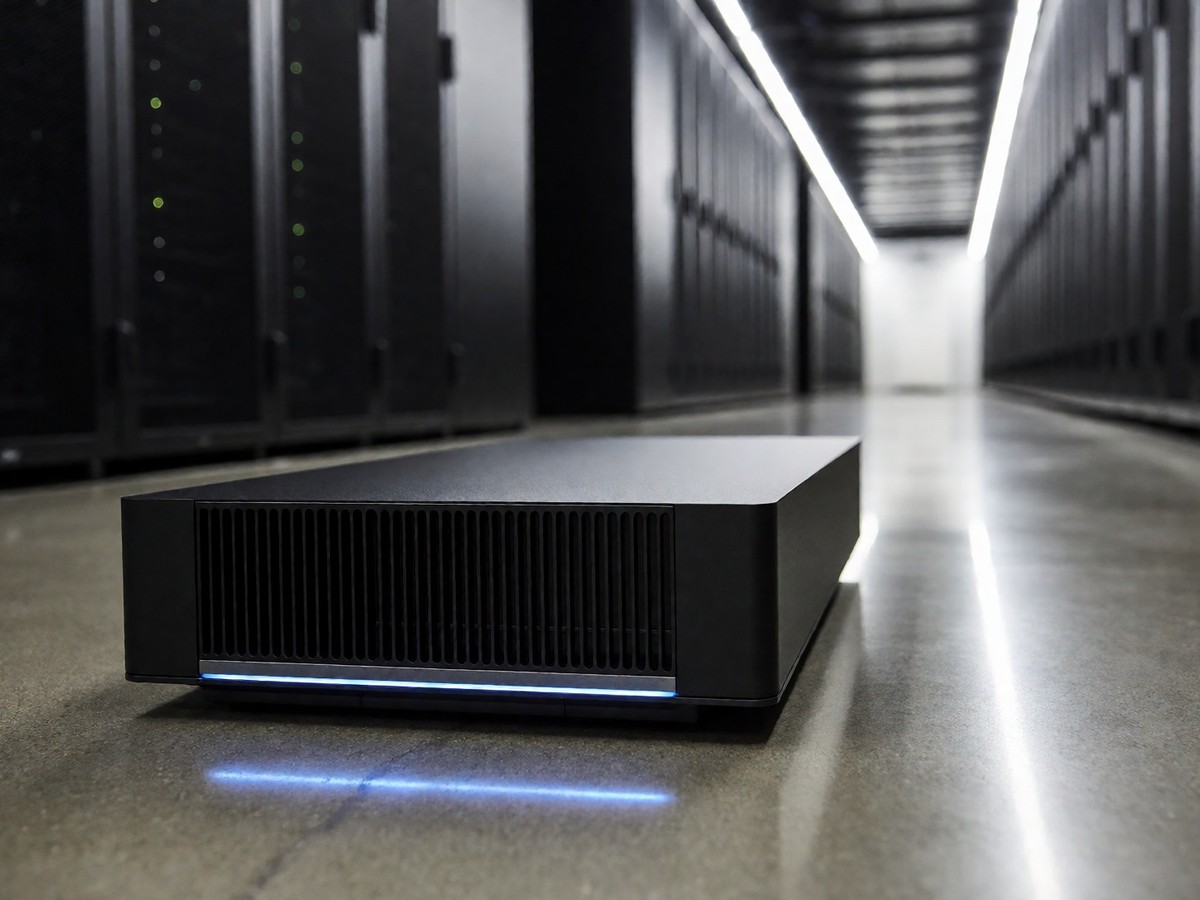
Positron delivers the Atlas server, which currently ships to production data centers. This first-generation hardware achieves 280 tokens/sec on Llama 3.1 8B at 2,000W, whereas an H200 DGX requires 5,900W for comparable workloads. The Reno-based startup focuses on memory bandwidth to solve the bottleneck for large language models. Thomas Sohmers, a former Thiel Fellow, and Barrett Woodside and Edward Kmett founded the company in spring 2023. The upcoming Asimov custom silicon, targeting tape-out in October 2026, promises 5x more tokens per watt than Nvidia’s Rubin GPU, while providing 2,304 GB of RAM per device compared to the 384 GB found in Rubin. The company plans the Titan system for early 2027, which will house four Asimov chips with over 8TB of memory. Although Positron designs the hardware in Nevada, TSMC will manufacture the advanced Asimov silicon in Taiwan. The startup reached a $5B valuation in September 2026 after raising $875M. This follows a $230M Series B in February 2026 led by ARENA Private Wealth, Jump Trading, and Unless. The company also received a $51.6M Series A in July 2025 and a $23.5M Seed round in February 2025. The company grows to 76 employees and targets 100 by the end of 2026, having achieved the #3 spot on The Information’s 50 Most Promising Startups list for 2024.
Lightmatter expands optical interconnect capacity
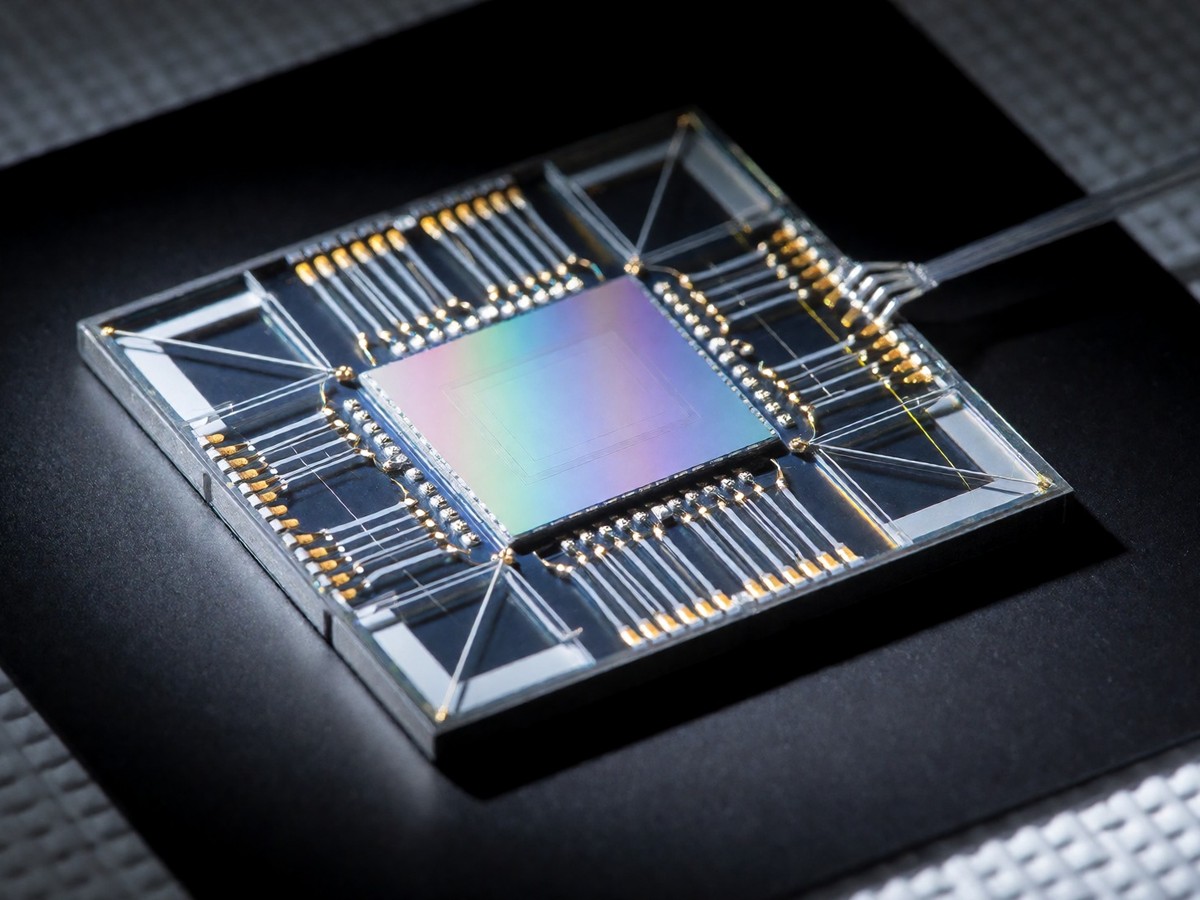
Lightmatter addresses communication bottlenecks through its Passage platform. The Passage M1000 provides 114 Tbps of total bidirectional bandwidth and 1,024 high-speed SerDes lanes via a 3D photonic interposer. This interposer uses 256 optical fibers across a 4,000 mm2 multi-reticle design to connect thousands of GPUs. The Passage L200 offers up to 256 Tbps of I/O bandwidth per chip package. This L200 module achieves 8x faster AI model training through 3D co-packaged optics.
| Component | Metric | Value |
|---|---|---|
| Passage M1000 | Total Bidirectional Bandwidth | 114 Tbps |
| Passage L200 | I/O Bandwidth per package | 256 Tbps |
| Passage L20 | Bandwidth per direction | 6.4 Tbps |
| Asimov | RAM per device | 2,304 GB |
| Atlas | Llama 3.1 8B throughput | 280 tokens/sec |
Lightmatter uses the GlobalFoundries GF Fotonix platform and partners with Amkor and ASE for packaging. The company works with Synopsys to integrate 224G SerDes and UCIe IP for the 3nm process. The Passage L20 optical engine, which begins sampling in late 2026, uses 224G PAM4 interfaces and 2 wavelength BiDi (1311, 1331nm) transmission for compatibility with existing XPU and switch packages. This L20 module provides 32 optical ports at 200 Gbps per lane. The Passage L20 also reduces fiber management requirements by 50% compared to unidirectional Data center Reach standards. Lightmatter secured $400M in a Series D round in October 2024 at a $4.4B valuation. The company scales its technology to connect millions of processors with light.
Which architecture wins at scale?
Data center operators require high density and efficiency to manage growing energy costs. Positron sold its chips into Oracle’s cloud in 2026, placing systems worth tens of millions of dollars into a major data-center operator’s infrastructure. The company reached unicorn status 34 months after its 2023 founding. You should watch how Positron handles software toolchain maturity as they scale. Lightmatter, which raised $400M in October 2024, also targets large-scale deployments through its 3D photonic engines. The Passage M1000 enables over 1.5kW power delivery. While Positron wins on individual chip memory density, Lightmatter wins on massive inter-chip communication. Nvidia’s Blackwell architecture includes a dual-die design with 208 billion transistors. The Rubin GPU, arriving in 2025-2026, offers 50 PFLOPS (4-bit) inference peak performance and 20.7 TB of HBM4. The Rubin architecture provides 260 TB/s of NVLink 6 scale-up bandwidth. Positron’s Asimov aims for 5x more tokens per watt than this Rubin architecture. Cerebras offers the WSE-3 with 4 trillion transistors and 21 PB/s of on-chip memory bandwidth, but the WSE-3 consumes up to 15 kW. Lightmatter’s approach uses light to move data, which generates less heat than electronic circuits. Will Lightmatter’s optical approach overcome the precision requirements of high-accuracy models? Positron’s memory-first architecture provides the better path for specialized inference workloads that prioritize throughput and low power.