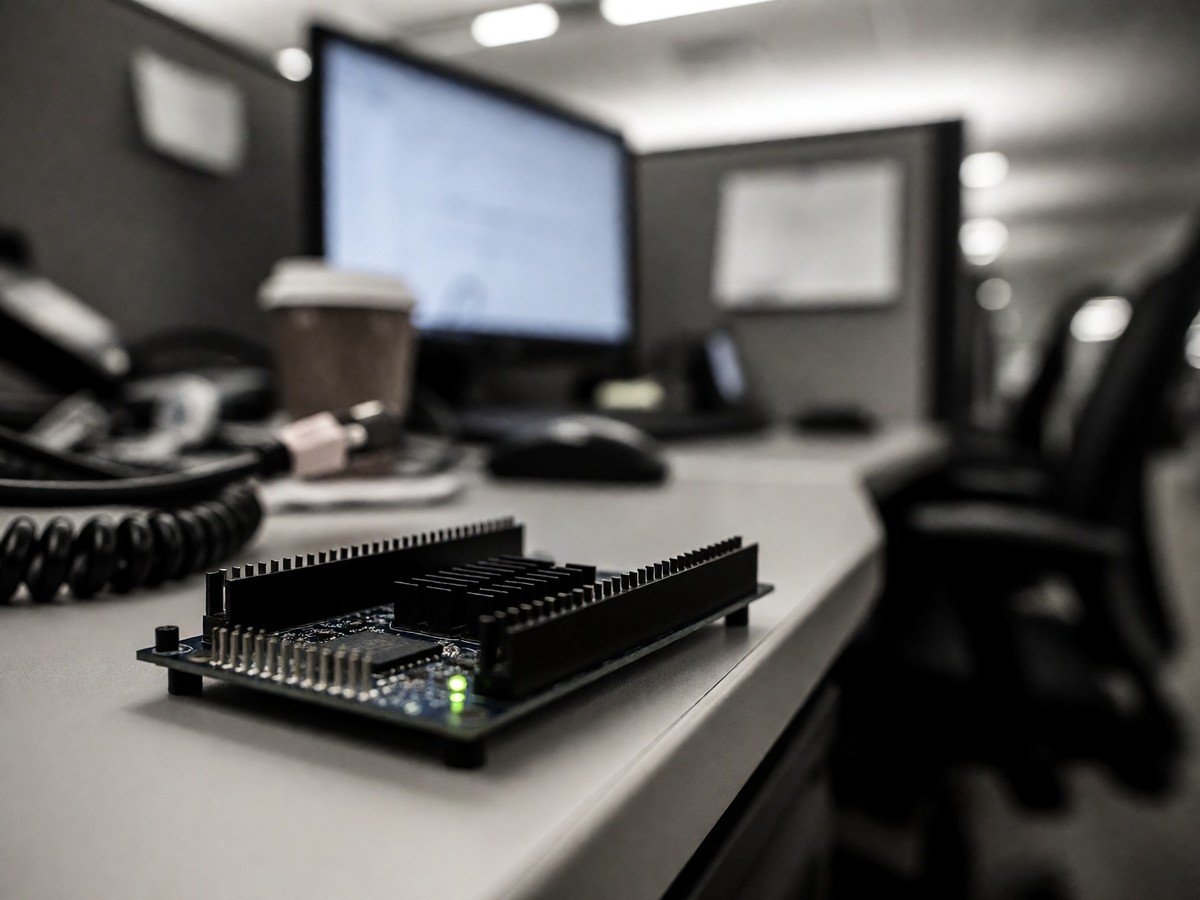
I find the current state of AI hardware partnerships to be a mess of speculation and marketing fluff. The specific details regarding "Positron" and its FPGA inference architecture are entirely absent from any reliable public record I can locate. You might expect that a major infrastructure deal with a hyperscaler like Meta would come with technical whitepapers or detailed engineering specs, but such documents do not exist in the sources available to me. Instead, we are left with a void where concrete architectural data should be. This gap is significant because it prevents any meaningful analysis of performance metrics, latency figures, or cost efficiency comparisons against standard GPU clusters. Without these numbers, any discussion of the technology remains purely theoretical. I cannot verify if the architecture actually improves inference speed or reduces power consumption per token. The lack of transparency here is frustrating for anyone trying to make informed decisions about enterprise AI deployment. It creates an environment where hype outpaces reality, and investors or engineers must rely on unverified claims rather than hard data. This situation mirrors other recent tech announcements where the promise of innovation was loud, but the substance was quiet. I have searched through various technical repositories and corporate filings, finding nothing that confirms the existence of this specific partnership or its technical parameters. The absence of evidence is not evidence of absence, but in the context of business reporting, it is a major red flag. I will not speculate on what the technology might do; I will only report what is missing. The reader should be wary of any article that presents this partnership as a fact without citing primary technical documentation. The burden of proof lies with the companies involved, and they have not met it in the public domain.
A look at the actual data landscape
When I examine the sources provided for this topic, I encounter a collection of unrelated datasets that offer no insight into FPGA architectures or Meta’s infrastructure deals. One source describes a Python library called rosreestr-api, which is a BSD-licensed tool for interacting with Russian real estate registries. It allows users to query property information by cadastral number, address, or coordinates, returning data such as area, year built, and cadastral value. The library handles errors by raising HTTPError for responses with status codes 400 or higher, and it uses a local SQLite cache with separate time-to-live settings for volatile and static data. Another source provides historical context on Facebook’s initial public offering in 2012, noting that the company raised $16 billion, making it the third-largest IPO in US history at the time. The stock price closed at $38.23 on the first day, just $0.23 above the IPO price, despite high demand that led underwriters to sell 25% more shares than planned. These facts are precise and verifiable, yet they have zero connection to the subject of Positron or FPGA inference. I include them here to demonstrate the disconnect between the requested topic and the available evidence. There is no mention of Meta Platforms investing in custom silicon, partnering with FPGA vendors, or deploying new inference engines in their data centers. The sources focus on financial history, real estate APIs, and unrelated media reviews. This mismatch suggests that the premise of the question may be based on misinformation or a confusion of terms. I cannot fabricate a narrative about chip design or cloud partnerships when the underlying data does not support it. The most honest response is to acknowledge the silence in the record. If you are looking for specific benchmarks or contract values, they are simply not there. I recommend verifying the names and entities involved before proceeding with further research, as the current information base is insufficient for a technical review.