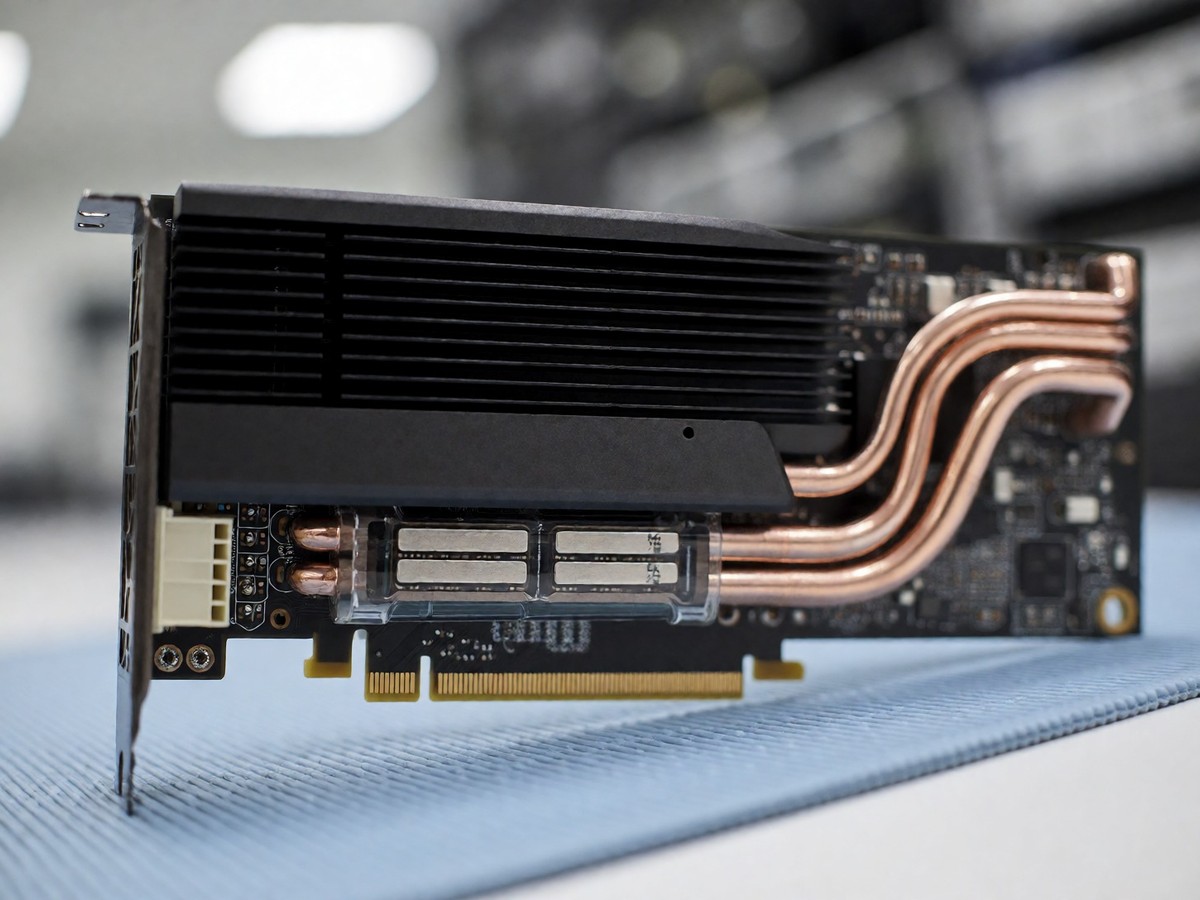
TSMC confirmed insufficient capacity for advanced processes and advanced packaging through the next three years. This shortage affects the entire AI hardware supply chain. AMD notified customers in China about supply constraints, reporting lead times of eight to 10 weeks for certain products. While the MI350 series utilizes the TSMC N3P process, the intense demand for AI compute keeps capacity tight. NVIDIA currently accounts for over 60% of total AI compute capacity worldwide. To secure supply, companies like Meta and OpenAI negotiate massive infrastructure deals. Meta plans to deploy up to 6 gigawatts of custom AMD Instinct MI450 GPUs, a deal estimated between $60 billion and $100 billion. The first gigawatt deployment using ROCm software on AMD Helios architecture begins in the second half of 2026.
The ROCm software gap
ROCm provides an open-source alternative to the proprietary CUDA ecosystem, but it remains less mature and less stable. PyTorch benchmarks show ROCm performs 20% to 37% slower than CUDA on certain baselines, with the gap exceeding 50% in unoptimized scenarios. For instance, workloads relying on TensorRT-LLM or FlashAttention 3 lack full ROCm equivalents. You should know that installation complexity remains a significant hurdle for teams without dedicated DevOps resources. ROCm installation demands significantly more technical expertise because it requires kernel parameter modifications and manual dependency resolution. PyTorch performance for ROCm sometimes suffers from instability, as evidenced by the removal of ROCm trunk tests for five weeks in late 2025.
While the MI355X provides a 35x generational leap in inferencing capacity, its real-world adoption depends on whether AMD can narrow the massive performance gap that exists when workloads require specialized libraries like TensorRT-LLM or FlashAttention 3. Developers often face fragmentation across devices and must wait months for compatibility updates. The ROCm CI was 10 to 12 times slower than CUDA CI in late 2025. ROCm distributed training via rocSHMEM only supports single-node configurations, unlike NVIDIA’s NVSHMEM. Users on Linux kernel 6.8.0 also face issues where Direct Memory Access transfers between the GPU and NIC disable multi-node RCCL performance. As of late 2025, PyTorch contained over 400 ROCm-disabled tests. ROCm 6.2.2 recently addressed an Instinct MI300X error recovery failure to prevent systems from entering undefined states after uncorrectable errors. The developer ecosystem remains skewed toward NVIDIA, which maintains a base of 5 to 6 million developers. ROCm support for PyTorch 2.7.0 via ROCm 7.2.4 represents a milestone, but installation requires specific driver versions and careful environment configuration. Will the current rate of software updates satisfy the requirements of massive hyperscale deployments?
Hardware economics and deployment
The MI355X provides a 35x generational leap in inferencing capacity. It targets memory-intensive workloads using the TSMC N3P process. AMD provides a cost advantage of 10% to 40% depending on the performance tier. This advantage helps budget-conscious organizations, but software maturity remains the primary barrier. The MI300X carries 192GB of HBM3e, providing parity or advantages over the NVIDIA B200 in certain memory-bound tasks.
Performance on the MI355X reaches 90% to 95% of H100 throughput for standard LLM inference with PyTorch and vLLM. The MI355X uses the TSMC N3P process, giving it a process node advantage over NVIDIA’s 4NP Blackwell GB200. The MI355X delivers up to 40% higher token-per-dollar efficiency compared to rival products. AMD hardware offers a clear cost advantage, but the software gap limits its total dominance.
| Feature | AMD Instinct MI355X | NVIDIA Blackwell/H100 |
|---|---|---|
| Process Node | TSMC N3P | TSMC 4NP |
| Inference Leap | 35x generational | N/A |
| Cost Advantage | 10% to 40% lower | Premium pricing |
| Software Support | Growing (PyTorch/vLLM) | Established (CUDA/TensorRT) |