
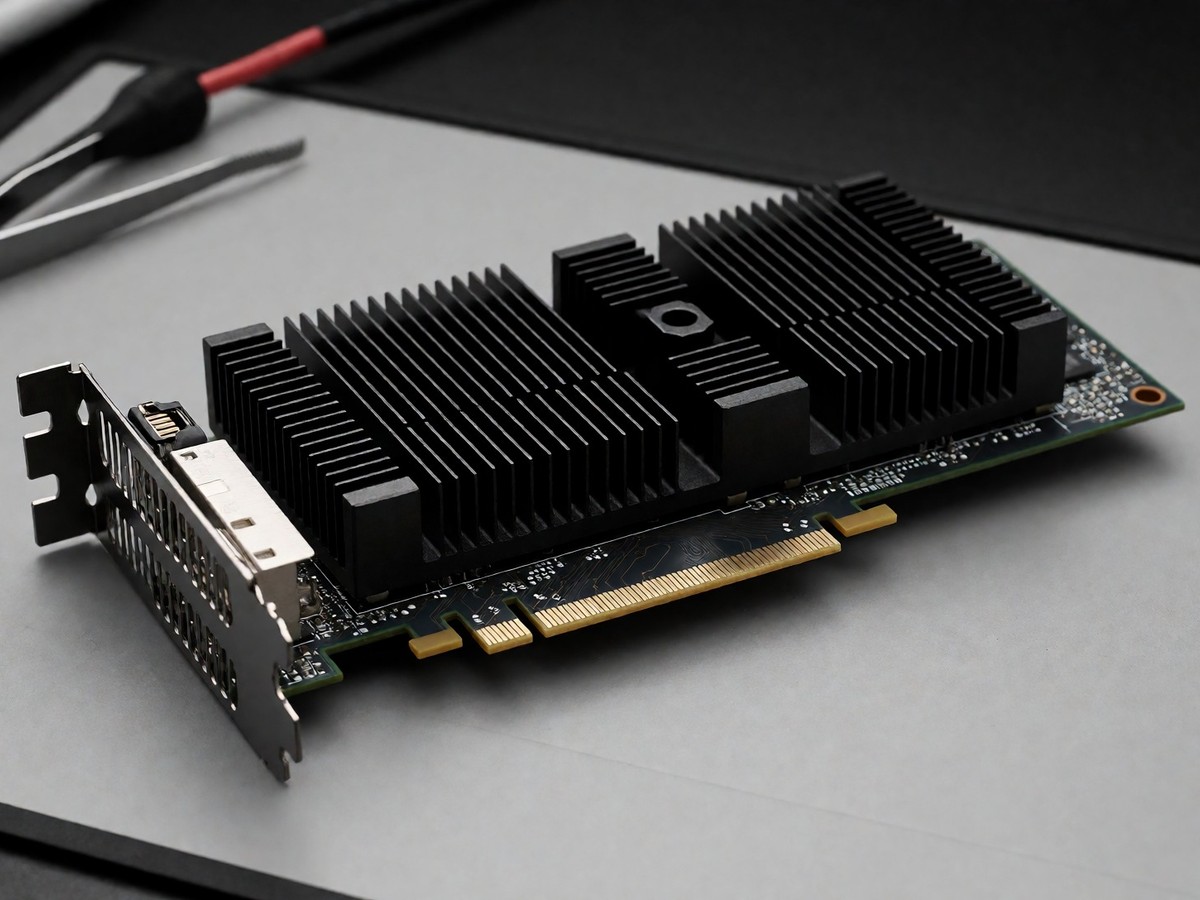
The instability of the Intel GPU roadmap poses a direct threat to the continuity of high-performance computing deployments. Intel’s frequent shifts in strategy, including the cancellation of the Rialto Bridge GPU and the redirection of the Xe3 architecture from consumer gaming to data center products, create significant uncertainty for future exascale upgrades at facilities like Argonne National Laboratory. The cancellation of the Xe3p Celestial discrete gaming GPUs in April 2026 forced a reallocation of engineering resources toward the Panther Lake CPUs and the Crescent Island data center GPUs. This transition leaves a gap in the discrete graphics lineup until at least 2028 and places the burden of Intel’s AI ambitions on the Falcon Shores architecture.
Roadmap shifts and the hardware gap
The decision to abandon the Rialto Bridge architecture in favor of Falcon Shores changes the trajectory of Intel’s high-performance computing plans. Rialto Bridge was intended to provide incremental improvements over the current Max Series GPU, but Intel decided to skip it to focus on the Falcon Shores project. Falcon Shores will arrive in 2025 as a GPU-only solution that does not include integrated CPU chiplets. This architecture aims to address the growth in AI computing through a flexible chiplet design, but the absence of a planned successor to the Max Series creates a vacuum in the interim.
The redirection of the Xe3 architecture is a clear response to the need for more specialized AI silicon. Intel repurposed the Xe3 design, which was originally intended for the Celestial gaming line, to power the Panther Lake CPUs and the Crescent Island data center accelerators. This move attempts to amortize engineering costs across both client and data center lines. You likely realize that Intel’s ability to maintain its position in the supercomputing market depends on the successful delivery of these redirected architectures. The pivot from high-end gaming to high-margin data center solutions demonstrates a pragmatic shift in how the company allocates its silicon resources.
| Feature | Intel Crescent Island | AMD Instinct MI355X | Nvidia B200 |
|---|---|---|---|
| Memory Type | LPDDR5X | HBM3E | HBM3E |
| Memory Capacity | 160GB to 480GB | 288GB | 192GB |
| Memory Bandwidth | Lower than HBM3E | 8 TB/s | 8.0 TB/s |
| TDP | 350W | 1,400W | 1,000W |
| Architecture | Xe3P | CDNA4 | Blackwell |
The timeline and manufacturing risk
The commercial timeline for Crescent Island creates a significant window of vulnerability for Intel. While customer sampling for the 160GB LPDDR5X part is expected in the third quarter of 2026, the official commercial launch will likely slip into 2027. This delay between sampling and volume revenue creates a gap that competitors like Nvidia and AMD intend to exploit. The instability in the shipping schedule mirrors the historical difficulties Intel faced with the Ponte Vecchio GPU, which suffered from manufacturing complexities involving 7nm process technology.
Intel’s manufacturing history suggests that timeline shifts are a recurring problem for its high-end accelerators. The Ponte Vecchio project required Intel to use TSMC for sixteen of its compute tiles to compensate for 7nm production issues. This reliance on a competitor’s foundry for essential components added layers of complexity to the deployment of the Aurora supercomputer. The current gap between the sampling of Crescent Island and its expected 2027 arrival suggests that Intel must manage its production capacity with extreme precision to avoid repeating these past errors.
Hardware specifications and the inference market
Crescent Island targets the AI inference market by prioritizing low power consumption over raw throughput. The chip carries 32 Xe3P cores and 256 XMX matrix engines alongside 160GB of base memory and a 350W TDP. The XMX units are approximately four times larger than the units found in the Xe2 architecture, and they include support for FP8 and FP4 formats. This design allows the chip to run large language models within a tight power envelope, making it suitable for agentic AI workloads.
The technical specifications of Crescent Island differentiate it from the massive power draws of its rivals. The 350W air-cooled reference design stands in contrast to the 1,400W TDP of the AMD Instinct MI355X and the 1,000W TDP of the Nvidia B200. While the AMD and Nvidia chips provide massive bandwidth via HBM3E, Crescent Island uses a PCIe Gen5 x16 host interface and 32MB of unified L2 cache. The engineering team also doubled the register file per Xe3P core to 1MB and increased the per-core L1/shared local memory from 384KB to 512KB.
Aurora and the exascale requirement
The Aurora supercomputer at Argonne National Laboratory relies on a massive installation of Intel hardware to maintain its performance. The system contains 10,624 nodes, with each node housing two Intel Xeon Max processors and six Intel Max series GPUs. This configuration provides a maximum computing power of 130 teraFLOPS per node. The system consumes approximately 39MW of power, which is higher than the 24MW consumed by Frontier and the 30MW used by El Capitan.
The complexity of maintaining such a large-scale system makes the reliability of Intel’s hardware roadmap a necessity for Argonne. Aurora reached a peak performance of 1.012 exaFLOPS, placing it second on the Top500 list in May 2024. The system uses 10 petabytes of memory and 230 petabytes of storage to support scientific research. Because the Aurora deployment relies on the Intel Xe architecture, any disruption in the transition from Ponte Vecchio to future accelerators like Falcon Shores impacts the long-term stability of the Argonne facility. The massive scale of the Aurora supercomputer, which contains 10,624 nodes and uses 166 racks, requires a reliable stream of Intel hardware to maintain its position in the Top500 list.
Memory bottlenecks and the LPDDR5X bet
Intel’s decision to use LPDDR5X for Crescent Island attempts to sidestep the global shortage of HBM3E memory. The current shortage of HBM3E is expected to persist through 2026, which creates a bottleneck for manufacturers of high-end accelerators. By using a commodity mobile-class memory standard, Intel can offer variants with capacities ranging from 160GB to 480GB. This approach reduces the cost per gigabyte of memory compared to the HBM3E solutions used by Nvidia and AMD.
The trade-off for using LPDDR5X is a significant reduction in raw memory bandwidth. The AMD Instinct MI355X delivers 8 TB/s of bandwidth, and the Nvidia B200 provides 8.0 TB/s of bandwidth. Crescent Island cannot match these speeds, which may limit its effectiveness for workloads that require high-speed data movement. Whether the cost savings of LPDDR5X outweigh the bandwidth deficit depends on the specific requirements of inference tasks. Will the decision to use LPDDR5X instead of HBM3E provide enough bandwidth for the next generation of exascale workloads?
Competition in the AI infrastructure market
Nvidia and AMD maintain a dominant position in the data center GPU market, making it difficult for Intel to gain traction. Gartner’s 2026 forecast shows that inference spending reached $23.3 billion for the year, while training spending stood at $19.0 billion. As companies move from model experimentation to large-scale production, the demand for efficient inference chips increases. Intel’s Crescent Island is designed to capture this growing segment, but it faces a market where Nvidia and AMD have already established deep relationships with hyperscalers.
The competitive landscape is further complicated by the performance of existing AMD and Nvidia products. The AMD Instinct MI355X is already in production at sites like the HUMAIN buildout in Saudi Arabia. The Nvidia B200, which preceded the GB300, provides 9 petaflops of FP4 tensor throughput with structured sparsity. Intel must prove that its low-power, air-cooled design provides enough value to convince buyers to switch from the liquid-cooled architectures of its competitors.
Software and leadership transitions
Intel is attempting to break Nvidia’s grip on the market by promoting the OneAPI software framework. The company uses tools like SYCLomatic to help developers move code away from the proprietary CUDA platform. This effort aims to ensure that AI models can run on industry-standard hardware without massive rewrites. The success of this transition depends on the ability of Intel’s software stack to provide parity with the performance and ease of use of existing proprietary solutions.
Frequent leadership changes within the Accelerated Computing Systems and Graphics group have also defined Intel’s trajectory. Following the departure of Raja Koduri in early 2023, Deepak Patil took control of the group and shifted the focus toward tighter integration with data center goals. The current management structure emphasizes architectural stability and efficient execution. This focus on stability is intended to prevent the roadmap slips that characterized the earlier Gaudi and Ponte Vecchio eras.
The stability of the software ecosystem remains the most significant barrier to Intel’s growth. Even if the hardware arrives on schedule, the adoption of Crescent Island and Falcon Shores requires a developer base that is willing to move away from established workflows. Intel’s focus on the professional AI developer over the enthusiast gamer suggests a long-term strategy to build this base. The company’s ability to deliver a cohesive software and hardware package will determine if it can regain any meaningful share of the data center market.