I choose SambaNova for 2026 sovereign cloud bids because it fits into existing data center power envelopes where Cerebras fails. While Cerebras delivers higher throughput for single-user Llama 4 Maverick workloads, its 23 kW power draw and liquid cooling requirements make it a difficult choice for brownfield facilities. SambaNova’s SN40L RDU manages 10 kW per system and handles massive models like DeepSeek-R1 671B through a flexible three-tier memory hierarchy.
Cerebras WSE-3 Wafer-Scale Architecture
The Cerebras WSE-3 consists of a single silicon wafer that acts as one chip. It contains 4 trillion transistors and 900,000 AI cores. The architecture provides 44 GB of on-chip SRAM with 21 PB/s of bandwidth. The WSE-3 uses 44 GB of on-chip SRAM to achieve 21 PB/s bandwidth, which provides a massive advantage over the H100’s 3.35 TB/s HBM3 bandwidth during memory-bound LLM decode tasks that require rapid weight loading. This speed helps because LLM token generation is memory-bandwidth-bound. The WSE-3 delivers 2,500 tokens per second per user for Llama 4 Maverick. It also hits 450 tokens per second for Llama 3.1 70B. This performance comes from reducing the memory access time by 6,000x compared to HBM. The WSE-3 eliminates the HBM memory wall. This architecture avoids the latency of off-chip memory stacks.
Cerebras uses a different manufacturing approach than traditional semiconductor companies. Standard processes involve dicing wafers into small dies and mounting them in packages. This method limits chip size to approximately 800 square millimeters. Cerebras uses nearly the entire 300mm wafer as one processor. This results in a chip that is 50x larger than a conventional GPU die. The company uses redundant cores and an on-chip fabric to route around defects. This design handles the random defects that occur in large-area silicon.
SambaNova SN40L Reconfigurable Dataflow
SambaNova’s SN40L RDU is a 2.5D-packaged accelerator on TSMC 5nm. It contains 102 billion transistors per socket. The system uses a three-tier memory hierarchy to manage data. Each socket pairs 520 MiB of on-chip SRAM with 64 GiB of HBM and up to 1.5 TiB of external DDR. A 16-chip SambaRack system aggregates 24 TB of DDR DRAM. This architecture allows for the deployment of very large models. The SN40L manages models like DeepSeek-R1 671B and DeepSeek-R1 671B405B. It also supports Llama 3.1 405B with 114 tokens per second. The RDU design allows for dynamic adaptation to diverse AI workloads. This flexibility minimizes bottlenecks.
SambaNova provides a developer-friendly platform through SambaCloud. This platform offers fully managed AI inference with API access. Developers can deploy models without specialized hardware. The platform supports Llama 3 variants, Llama 4 Maverick, and OpenAI GPT-OSS 120B. The system is capable of powering both large numbers of models and very large models on a single system. This enables users to build agentic applications using multiple models.
| Metric | Cerebras WSE-3 (CS-3) | SambaNova SN40L |
|---|---|---|
| Transistors | 4 Trillion | 102 Billion |
| AI Cores | 900,000 | – |
| SRAM | 44 GB | 520 MiB |
| HBM | – | 64 GiB |
| DDR | – | 1.5 TiB |
| Power Draw | 23 kW | 10 kW |
| Llama 3.1 8B | 1,800 tokens/sec | 1,000+ tokens/sec |
| Llama 3.1 70B | 450 tokens/sec | – |
| Llama 3.1 405B | – | 114 tokens/sec |
| Llama 4 Maverick | 2,500 tokens/sec | – |
Thermal and Power Management in Data Centers
Data center power density determines which hardware stays in the rack. Most enterprise facilities operate at 5-15 kW per cabinet. An NVIDIA DGX H100 draws 10.2 kW per 8-GPU chassis. A fully loaded GPU rack can draw 132 kW. Cerebras CS-3 draws 23 kW per system. A standard 42U rack holds two CS-3 systems for a total of 46 kW. This draw exceeds the 15 kW limit of most brownfield cabinets. SambaNova’s SN40L draws 10 kW. This lower requirement makes it easier to deploy in existing facilities.
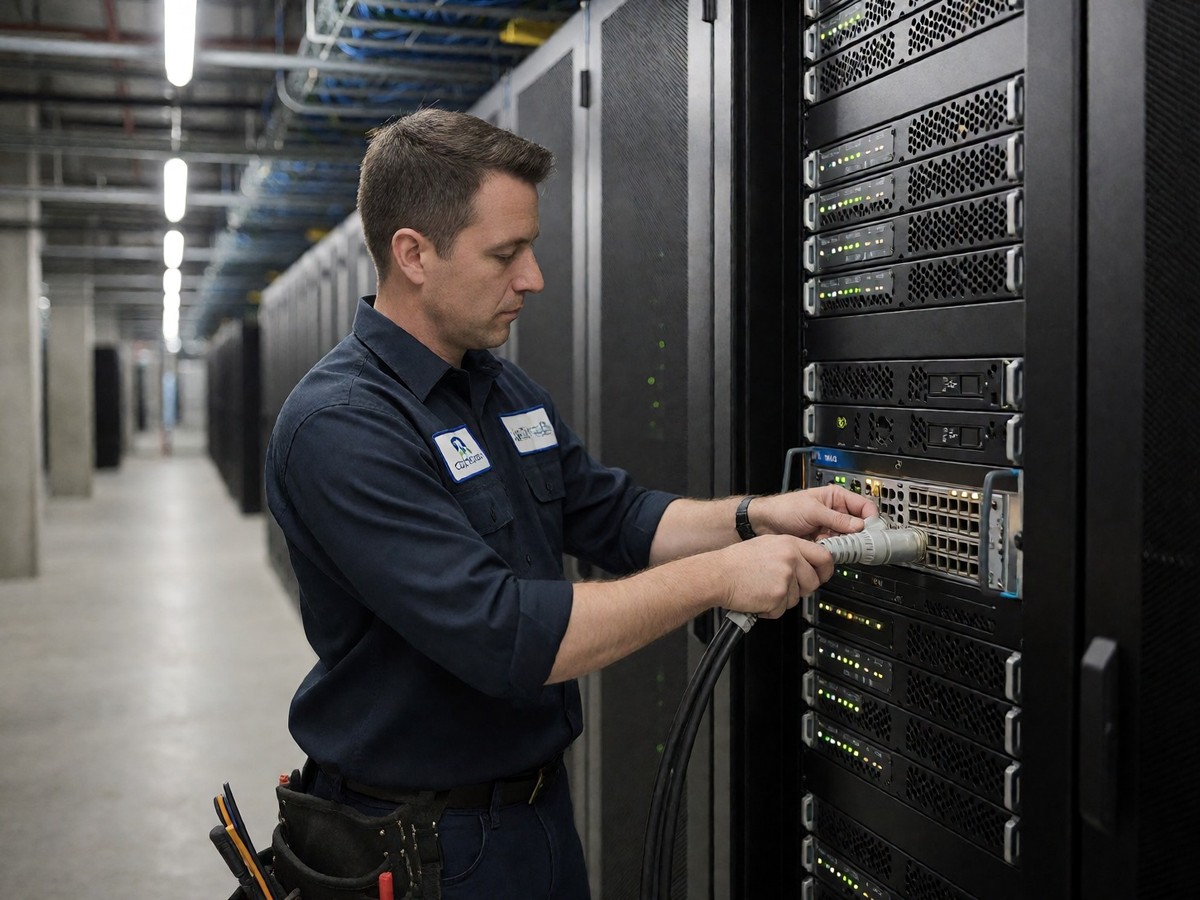
Cerebras requires proprietary water cooling for its CS-3 systems. This adds complexity to the installation process. It also necessitates specialized infrastructure. SambaNova uses a compact design that reduces the data center footprint. This efficiency lowers operational costs. You should consider the thermal budget of your facility before committing to a wafer-scale solution.
Memory Capacity and Model Scaling
The memory wall limits inference performance. Every token requires the system to load all model weights from memory. Cerebras holds 44 GB of SRAM on the wafer. A 70B model at FP8 requires 70 GB of memory. Cerebras must use quantization or partition the model across multiple WSE-3 systems. This partitioning increases system complexity. SambaNova uses its three-tier hierarchy to solve this. It combines SRAM, HBM, and DDR. This allows it to scale to much larger models without the same constraints.
The mismatch between compute and bandwidth remains a struggle. Training processes massive batches of data to saturate arithmetic units. Inference generates tokens one at a time. This makes inference a memory-bandwidth-bound task. Cerebras provides 21 PB/s of on-wafer bandwidth. This bandwidth is 27 petabytes per second of aggregate bandwidth. This advantage helps in memory-bandwidth-limited workloads. SambaNova addresses this through its RDU architecture.
Inference Throughput Comparison
Cerebras delivers high throughput for specific workloads. For Llama 3.1 8B, it reaches 1,800 tokens per second. For Llama 3.1 70B, it reaches 450 tokens per second. For Llama 4 Maverick, it reaches 2,500 tokens per second. This performance stays consistent regardless of batch size. This is because the on-die SRAM bandwidth saturates a single pipeline.
SambaNova provides competitive speeds for large models. It delivers 114 tokens per second for Llama 3.1 405B. It also provides 1,000 tokens per second for Llama 3.1 8B. The SN40L is designed for enterprise-level scalability. It supports enhanced sequence lengths. This enables the processing of extensive data sequences in a single pass.
| Model | Cerebras Throughput | SambaNova Throughput |
|---|---|---|
| Llama 3.1 8B | 1,800 tokens/sec | 1,000+ tokens/sec |
| Llama 3.1 70B | 450 tokens/sec | – |
| Llama 3.1 405B | – | 114 tokens/sec |
| Llama 4 Maverick | 2,500 tokens/sec | – |
Financial and Operational Economics
Cerebras offers a managed API for immediate access. It prices Llama 3.1 8B at $0.10 per million input tokens. It prices Llama 3.1 70B at $0.60 per million input tokens. This pricing remains a fraction of some GPU-based costs. Cerebras signed a $100 billion agreement with OpenAI in January 2026. This deal involves 750 megawatts of computing power.
SambaNova also provides managed services through SambaCloud. This platform supports high-performance inference. SambaNova’s SN40L provides a lower total cost of ownership for enterprises. Efficiency in running large language model inference reduces operational costs. The platform is suitable for both developers and large-scale enterprises.
The economic profile of Cerebras changed after its IPO. It listed on the Nasdaq in May 2026. The stock closed with a 68% gain on its first day. The market capitalization reached $95 billion. However, the stock price fell below the IPO price in July 2026. This decline followed disclosures about the company leasing back systems from customers.
Deployment Strategy for National AI
Sovereign AI requires in-country infrastructure and data sovereignty. Cerebras supports this through its Cerebras for Nations program. This program targets the United States, the United Kingdom, and the United Arab Emirates. It aims to reduce dependence on foreign cloud providers. Cerebras plans to launch its first data center in Europe in 2026.
SambaNova serves governments and sovereign clouds globally. Its RDU architecture targets large MoE inference specifically. It provides scalable solutions beyond individual developers. The platform allows users to bring their own checkpoints. This is useful for organizations with pre-trained models.
I recommend SambaNova for 2026 sovereign cloud bids. Its 10 kW power draw and flexible memory hierarchy fit the requirements of existing data centers. It handles massive models like DeepSeek-R1 671B more efficiently than a single wafer. Cerebras is a strong choice for low-latency, single-user chat workloads. Will Cerebras manage to maintain its market lead as NVIDIA releases higher-bandwidth Blackwell variants? I select SambaNova for its versatility and power efficiency.