Inadequate air cooling for high-density chips
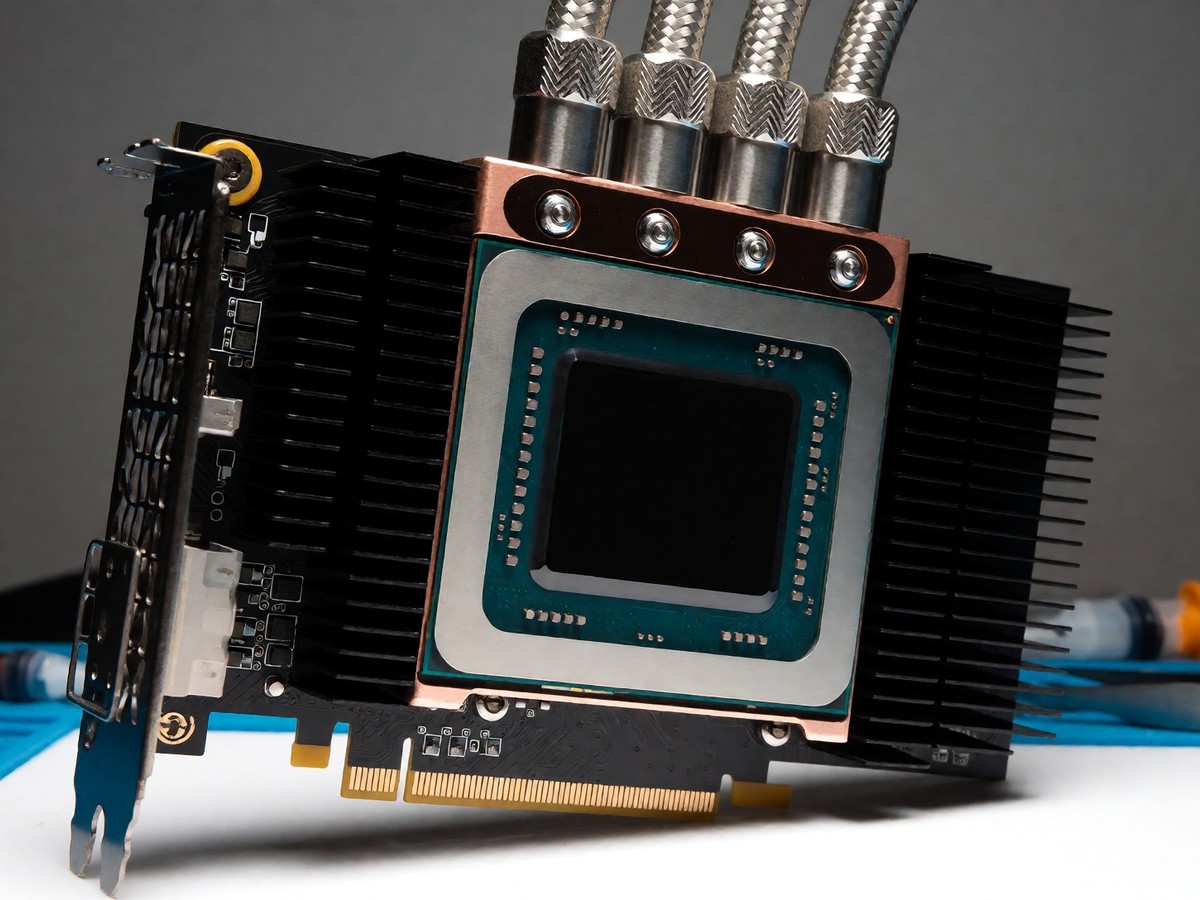
The thermal management of Maia 100 clusters fails when operators rely on traditional air cooling. Advanced AI workloads generate heat exceeding 1000 watts per chip. Air possesses a low specific heat capacity. This makes air ineffective at absorbing energy from high-power heat sources. In air-cooled clusters, temperature ranges exceed 30 degrees Celsius. These high temperature nodes suffer severe power throttling that can exceed 15 percent of the thermal design power. This reduction in processing speed extends training duration and increases costs. The power density measured in watts per square centimeter reaches levels comparable to the surface of a nuclear reactor rod. As power densities climb, the temperature differential required to drive heat flow increases. This forces processors to operate dangerously close to their thermal junction limits to maintain performance. This compromise affects reliability and longevity. Liquid cooling removes these limits. Direct-to-chip cooling uses cold plates to establish a direct thermal conduction path from the silicon to the circulating fluid.
Managing liquid cooling risks and maintenance
Liquid cooling systems require disciplined fluid management to prevent catastrophic failure. A leak in a system using conductive water-glycol mixes can short a GPU’s 12V power plane to ground. This event destroys the card and trips the rack’s power distribution unit. Operators must select high-purity dielectric coolants with low electrical conductivity. High-quality dielectric coolants used in servers often have a dielectric strength exceeding 35 kV/mm. You should check if your current cooling strategy includes a sufficient safety buffer.
| Cooling Spec/Task | Requirement or Detail |
|---|---|
| Dielectric Strength | >35 kV/mm |
| Air-cooled Temperature Range | $\ge$ 30 degrees Celsius |
| Air-cooled Power Throttling | >15% of TDP |
| Maintenance Frequency | Quarterly physical inspections |
Maintenance involves several specific steps. Technicians must visually examine all fluid connections, such as quick-disconnects or manifold seals, for signs of weeping or corrosion. Engineers should perform a functional test of every leak detection sensor by applying a simulated fluid like deionized water. Regular fluid analysis must check for changes in pH, conductivity, or microbial growth. Operators must also use filtration loops with sub-micron filters to remove metallic wear particles. Maintenance logs must track every inspection, test result, and fluid change to predict maintenance intervals. Leak detection systems use strategically placed sensors to monitor for coolant. Contact or conductivity sensors use exposed probes to complete an electrical circuit when conductive fluid bridges the gap. For non-conductive dielectric coolants, optical or humidity sensors are better. Optical sensors detect changes in light refraction caused by fluid presence. Humidity sensors monitor for a rapid increase in ambient moisture within the sealed server chassis. Pressure or flow sensors within the coolant loop can indicate a breach in the plumbing before a drop escapes. When a hot spot develops on a chip, the fluid immediately above it vaporizes, forming bubbles that rise to the surface, which increases the rate of heat removal without requiring active control of the coolant flow rate over the chip surface.
Infrastructure dependencies and the September outage
The September 3, 2026 outage at Microsoft Azure’s East US region proves that infrastructure dependencies create correlated failures. ChatGPT, Claude, or Grok all experienced issues because they shared Azure capacity. Redundancy at the vendor layer does not provide redundancy at the infrastructure layer. Microsoft’s Fairwater program in Wisconsin uses a 350 MW campus with a closed-loop liquid cooling system. The Wisconsin campus draws power from the MISO grid. This facility uses a private, managed optical transport network with dedicated wavelengths for AI traffic. The Wisconsin climate provides a cooling advantage because temperatures stay below 10 degrees Celsius for five months per year. This allows free cooling using outdoor air or water-side economizers to supplement or replace chiller operation. The use of free cooling reduces energy consumption and impacts annual Power Usage Effectiveness. The September 3, 2026 outage showed that one upstream failure can impact multiple brands. Microsoft Azure’s East US region hit ingress failures at around 15:49 UTC. This infrastructure failure takes out every dependent product in that region. What happens if a leak originates in a blind spot between two point sensors?