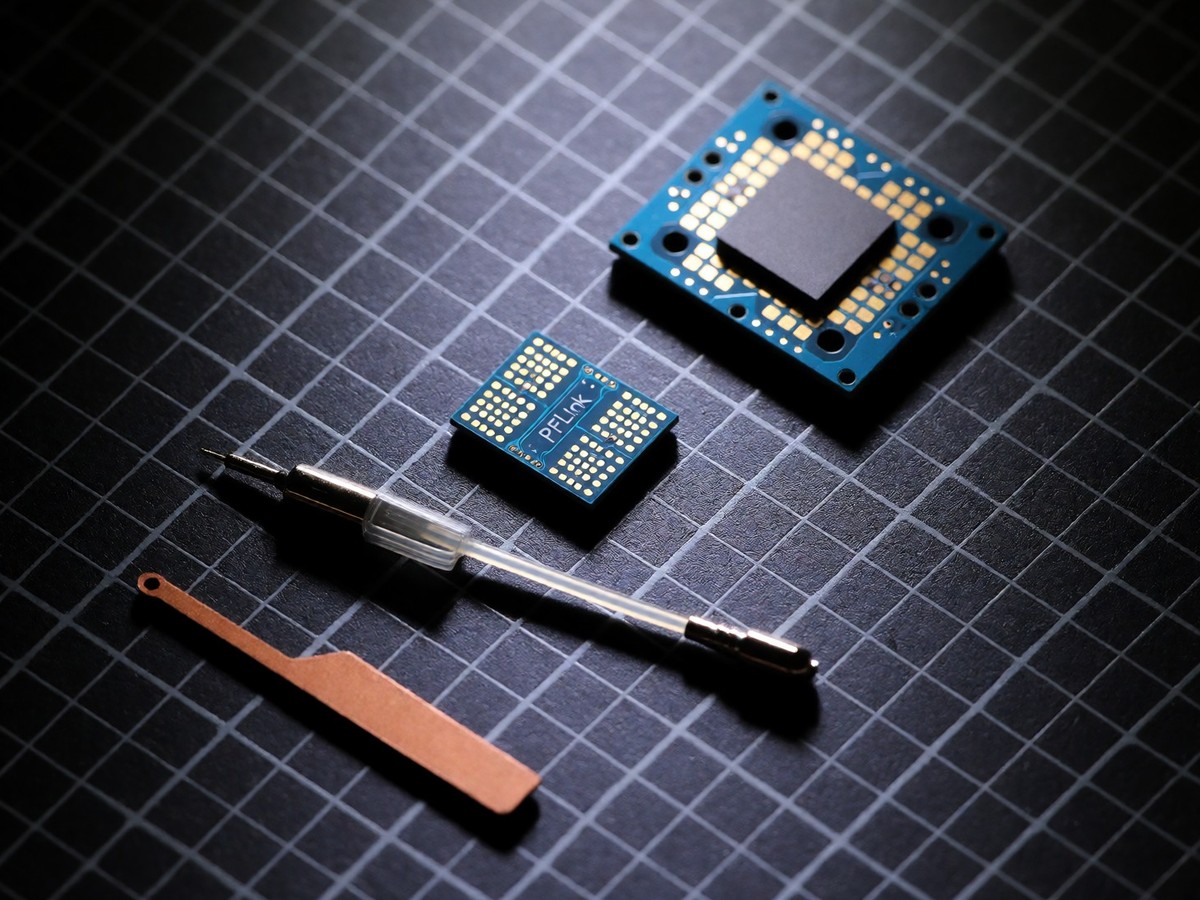
Marvell Technology acquired Celestial AI for $3.25 billion in late 2025, a move that signals the definitive end of the "copper era" for high-performance computing. The deal centers on the Photonic Fabric, a technology allowing AI accelerators to communicate via light directly from the silicon die. As global demand pushes data centers toward million-GPU clusters, this acquisition positions Marvell as the primary architect of the optical nervous system required to sustain next-generation generative AI. Traditional electrical links hit a practical ceiling at 224G per lane, where routing density and channel loss collide to create an impassable constraint. The transition to optical fabrics is no longer an elective upgrade; it is a fundamental requirement for the survival of AI scaling laws. I see this as the critical pivot point where infrastructure design shifts from board-level copper traces to die-level photonics.
Breaking the physical wall
The core problem with current architectures is that traditional copper-based interconnects are reaching their limits and are unable to scale without incurring excessive power and costs. The fundamental unit of compute is evolving from a few XPUs in a server to tens of XPUs in a rack to a cluster of thousands of XPUs across multiple racks. Celestial AI’s PFLink chiplets provide 14.4 to 16 Terabits per second of optical bandwidth per chiplet, which is roughly 25 times the bandwidth density of current copper-based solutions. This allows for scale-up interconnects that treat an entire rack of GPUs as a single, massive compute node. The technology utilizes an Optical Multi-Die Interposer, or OMIB, which enables the disaggregation of compute and memory. In traditional setups, High Bandwidth Memory must sit in immediate proximity to the GPU, limiting total capacity. With this new approach, a single XPU can access a pool of up to 32TB of shared HBM3E or DDR5 memory at nanosecond-class latencies of approximately 250 to 300 ns. This "optical memory pooling" shatters the memory bottlenecks that have plagued large language model training. You already know that idle accelerators waste capital, so seeing how much faster data moves here should change your view on cluster efficiency.
| Feature | Electrical Interconnect | Optical Interconnect (Photonic Fabric) |
|---|---|---|
| Bandwidth Density | Limited scalability | 14.4-16 Tbps per chiplet |
| Power Consumption | High SerDes overhead | ~2.4 pJ/bit |
| Latency | Higher at high speed | Nanosecond class (250-300 ns) |
| Reach | Centimeters | Meters to kilometers |
The efficiency gains are transformative because the Photonic Fabric operates at approximately 2.4 picojoules per bit, offering a 10x reduction in power consumption compared to energy-intensive SerDes processes. This reduction is critical as data centers face increasingly stringent thermal and power constraints. Initial reactions suggest this shift could reduce the total cost of ownership for AI clusters by as much as 30%, primarily through energy savings and simplified thermal management. However, the manufacturing yield of complex silicon photonics at scale remains a significant hurdle that Marvell expects to clear within the next 24 months using TSMC’s advanced packaging capabilities.
Strategic implications for hyperscalers
This acquisition places Marvell in a formidable position against Broadcom, which has dominated the high-end switch and custom ASIC market for years. While Broadcom focused on Co-Packaged Optics and its Tomahawk switch series, Marvell’s integration provides a more holistic die-to-die and rack-to-rack optical solution. For NVIDIA, whose NVLink remains largely proprietary and electrical at the board level, this move presents both a challenge and an opportunity. Marvell’s technology offers an open-standard alternative via CXL and UCIe that could allow other chipmakers like AMD or Intel to build competitive multi-chip clusters. This democratization of high-speed interconnects could potentially erode NVIDIA’s moat by allowing a broader ecosystem of hardware to perform at the same scale. The industry is watching closely to see how quickly Marvell can productize the Photonic Fabric and whether competitors will respond with their own major acquisitions. Will the first truly optical AI supercomputer arrive before the next generation of copper-based improvements?