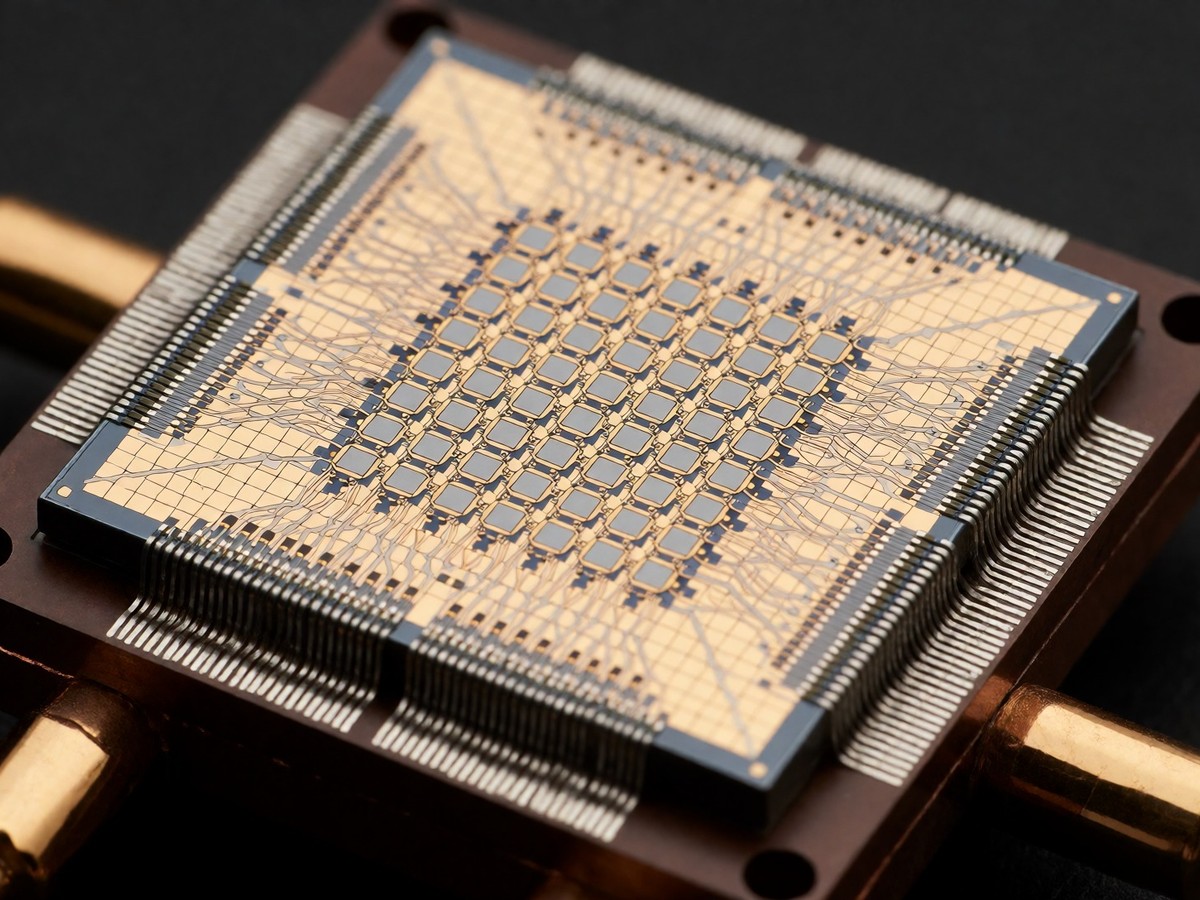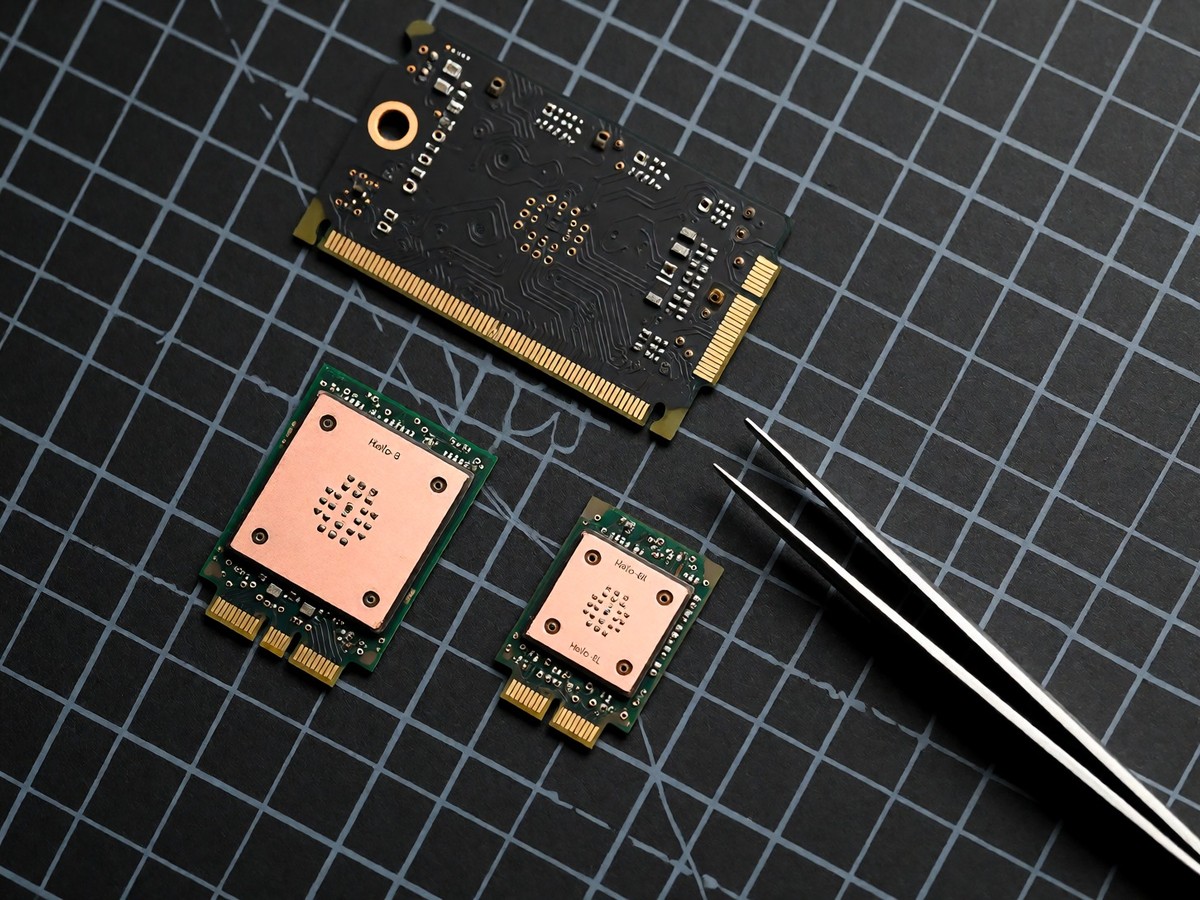
Hailo closed a $120 million extension to its Series C funding round, bringing the total investment in the company to $340 million. Investors in this round include the Zisapel family, Alfred Akirov, Delek Motors, OurCrowd, Talcar, Comasco, Automotive Equipment (AEV), and Poalim Equity. The company, co-founded in 2017 by Orr Danon and Avi Baum, serves over 300 customers in the automotive, security, and industrial sectors. The Hailo-8 processor provides 26 TOPS of INT8 performance and integrates all required memory on the processor die. This on-chip memory architecture reduces system cost and simplifies hardware design because it removes the need for external DRAM. The chip size remains smaller than a penny, including the required memory. The Hailo-8 uses a dataflow architecture that distributes compute and memory resources across the chip. The company provides a dataflow compiler to help customers port neural network models. The Hailo-8 supports industrial temperatures from -40°C to 85°C and automotive temperatures from -40°C to 105°C. The M-key version of the Hailo-8 provides PCIe Gen3 x4, while the A+E and B+M versions use PCIe Gen3 x2. The Hailo-8 performs YOLOv8m at 140 FPS at batch 8, whereas the Hailo-8L performs at 87 FPS. The Hailo-8 is a computer vision accelerator for tasks like object detection, classification, segmentation, pose estimation, and depth.
Generative AI with Hailo-10H
The Hailo-10H M.2 module provides generative AI capabilities for personal computers and automotive cockpit systems. This second-generation accelerator provides 40 TOPS at INT4 and 20 TOPS at INT8. The module includes 4GB or 8GB of LPDDR4/4X memory to keep language model weights close to the accelerator. This design allows the chip to run Llama2-7B at 10 tokens per second using less than 5W of power. The Hailo-10H also processes Stable Diffusion 2.1 images in under 5 seconds within a 5W power envelope. The Hailo-10H delivers at least 2X more performance at half the power of Intel’s Core Ultra NPU. This module supports local LLM and VLM workloads without cloud connectivity.
| Accelerator | INT8 TOPS | INT4 TOPS | Typical Power | Memory |
|---|---|---|---|---|
| Hailo-8 | 26 | N/A | 8.25W | Integrated |
| Hailo-8L | 13 | N/A | 6.6W | Integrated |
| Hailo-10H | 20 | 40 | 2.5W | 4GB or 8GB |
The Hailo-10H is compatible with the Raspberry Pi 5 via the AI HAT+ 2. The 26 TOPS AI HAT+ uses the Hailo-8, while the 13 TOPS AI HAT+ uses the Hailo-8L. You should check the carrier support, mounting length, and power requirements before building a custom stack with these M.2 modules. The Hailo-10H M.2 module pairs a second-generation neural core with 4GB or 8GB of LPDDR4/4X memory, allowing it to run large language models and vision-language models locally without needing cloud connectivity. The 26 TOPS performance of the Hailo-8 does not provide a universal twofold speed increase over the 13 TOPS Hailo-8L, because factors like cooling and batch size influence results.
Automotive deployment and the Asian competition
Automotive manufacturers use these accelerators to develop systems that compete with Tesla’s Full Self-Driving (FSD) software. While Tesla maintains a large fleet in the U.S., companies like Baidu, Pony.ai, Xpeng, and Nio challenge its position. Xpeng’s head of general intelligence, Liu Xianming, said the company adapted its driver-assist software for European safety standards in only two weeks. This process used minimal data inputs to train AI models. Other companies like AutoX run driverless taxis in Shenzhen, and Nio uses advanced sensor fusion for its EVs. Baidu operates robotaxi fleets in Beijing, Wuhan, and Shenzhen with claims of profitability per car. Tesla recently expanded its Cybercab fleet in Austin to more than 300 units. Meanwhile, GM has shut down its Cruise robotaxi program following safety incidents and regulatory setbacks.
The U.S. chip market saw investment drop from $1.79 billion in the first three quarters of 2022 to $881 million from January to September 2023. Chinese automakers face headwinds as officials omitted EVs from the list of strategic industries and rolled back subsidies. Waymo remains strong in the U.S. market with robotaxi operations, but its cautious rollout contrasts with Tesla’s aggressive consumer deployment. The Hailo-10H is automotive-qualified to AEC-Q100 Grade 2 standards and aims for production in 2026. The chip supports pedestrian detection and automated parking for advanced driver-assist systems. This deployment targets automotive infotainment and media centers. Will the rapid software adaptations from Chinese rivals like Xpeng force a redesign of local hardware architectures?