Studio training and industry alliances
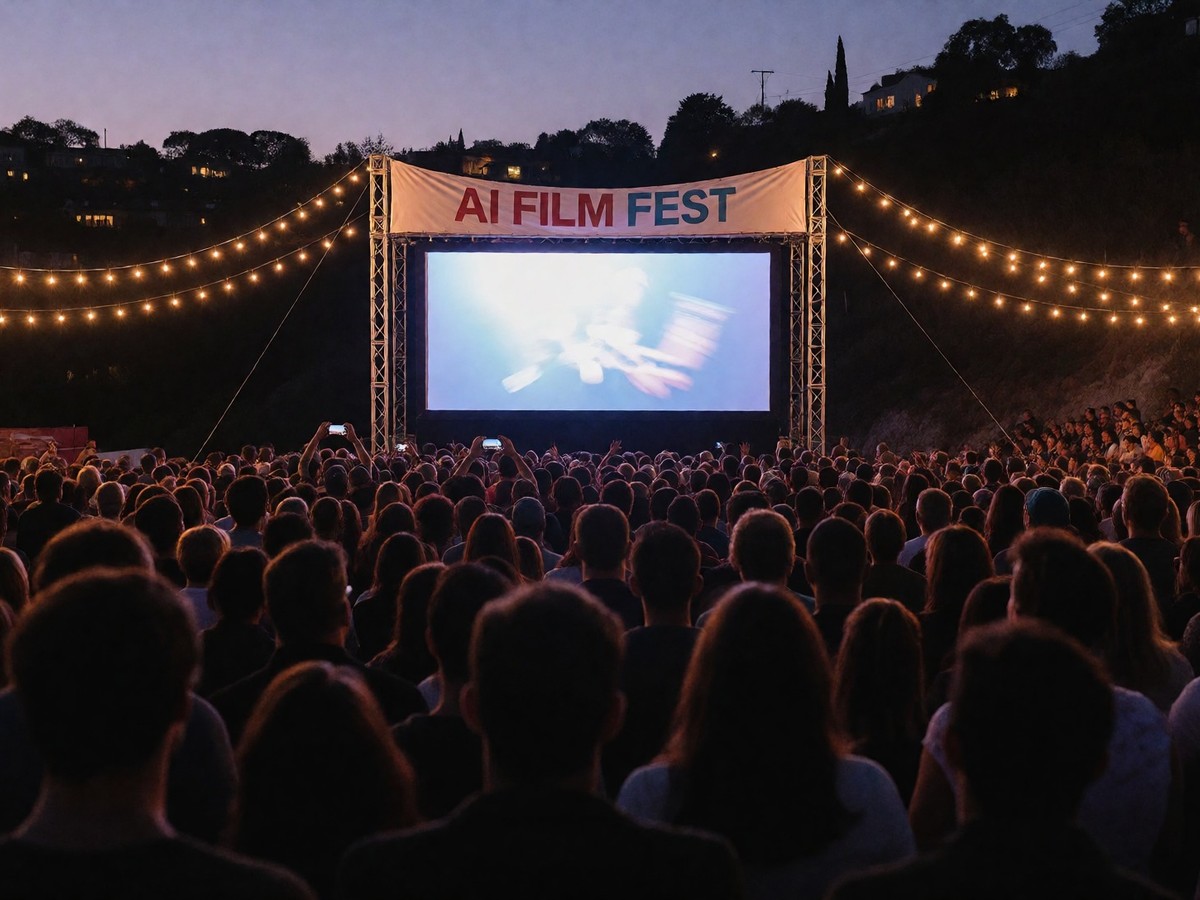
Lionsgate holds an equity interest in Runway to develop custom video generation models. This partnership uses the Lionsgate film catalog to train AI models for pre-visualization, storyboarding, and special effects like explosions. Lionsgate Vice Chair Michael Burns expects the new model to save the studio millions of dollars. The company also reached a deal with AMC Networks to use Runway tools for marketing materials and TV development processes. Lionsgate acts as a presenting partner for the Runway AI Film Festival. This festival saw submissions grow from 300 in its first year to 6,000 this year. Runway faces copyright accusations because it used publicly available YouTube videos for training. This training included content from The New Yorker, VICE News, Pixar, Disney, Netflix, and Sony. Lionsgate maintains a broader AI strategy led by Chief AI Officer Kathleen Grace. The studio was the first Hollywood studio to partner with an applied research AI company. Lionsgate owns franchises such as "The Hunger Games," "Twilight," "John Wick," "Saw," "Divergent," and "Knives Out." Other competitors like The Walt Disney Co. and Paramount Pictures Corp. have held discussions about partnering with generative AI video companies. Runway recently raised $308 million in a round led by General Atlantic, which values the startup at more than $3 billion. The collaboration aims to create a slate of co-developed projects, starting with a short-form episodic series using existing IP.
Professional control and model capabilities
Runway Gen-3 Alpha is the best overall choice for professional creators. The model includes Director Mode for camera movements and Act-One to drive characters using reference video. Users also use Motion Brush to designate specific areas for movement in a static frame. Gen-4.5 expands these capabilities with text-to-video and image-to-video functions that produce clips between 2 and 10 seconds. The platform provides professional creators with significant control through features like Director Mode for camera movements, Act-One for character animation via reference video, and Motion Brush for targeting specific dynamics within a single user interface. The Gen-1 model is a content-guided video diffusion model that allows users to generate new videos from existing ones by applying the composition and style of an image or text prompt.
| Plan Type | Monthly Price | Monthly Credits | Commercial Rights |
|---|---|---|---|
| Free | $0 | 125 one-time | No |
| Standard | $15 | 625 | Yes |
| Pro | $35 | 2,250 | Yes |
| Unlimited | $95 | 9,500 | Yes |
Paid Runway subscribers own their video outputs and use them commercially. Free plan users remain limited to personal, non-commercial use and see watermarks on their output. Runway uses user inputs and outputs to train its models by default. Enterprise customers negotiate different terms that exclude training. You should check your plan’s specific rights before starting a commercial project. For developers, the Runway API uses usage-based billing where credits cost $0.01 each and Gen-4.5 costs 12 credits per second, which equals $0.12 per generated second. Runway embeds C2PA provenance standards with invisible watermarks in all generated content. In a study, people identified AI versus real videos only 57.1% of the time. Under current U.S. law and the 2025 D.C. Circuit ruling in Thaler v. Perlmutter, purely AI-generated content lacks the human authorship required for copyright.
Creative funding and the competitive landscape
Runway manages the Hundred Film Fund to support AI-augmented storytelling. The fund holds $5 million with the potential to reach $10 million. It provides grants ranging from $5,000 to over $1 million along with $2 million in Runway credits. This fund targets directors and producers who use Runway for their projects. The advisory panel for this fund includes Jane Rosenthal, Christina Lee Storm, Stefan Sonnenfeld, will.i.am, and Richard Kerris.
Competitors like OpenAI Sora 2 focus on artistic visual styles and creative transitions. Google’s Veo 3.1 provides 4, 6, or 8 second clips and is the leader for long, coherent shots up to a minute long. Kling 3 provides 4K output and lip-synced dialogue in five languages. Pika provides fast clips for social media through Pikaffects and lip-syncing features. MiniMax provides high generation speeds for social ad optimization. HeyGen and Synthesia focus on avatar-presenter videos. Luma AI provides 3D-aware shots through its Dream Machine. Can the industry balance these high-speed technological advances with the need for human authorship?