The business of Anysphere
Anysphere closed a $2.3 billion Series D at a $29.3 billion post-money valuation in November 2025. The company reached a $2 billion annual recurring revenue run rate in the first quarter of 2026, and this is a tenfold jump in twelve months. Cursor, the product from Anysphere, forks Visual Studio Code to provide an AI-native editing experience. This choice allows users to keep their existing extensions and themes while using advanced agentic features. I find that Cursor is the best tool for professional engineers who require deep codebase context for TypeScript refactoring. While Replit targets "vibe coders" and students with its browser-based platform, Cursor targets professional developers who want to maintain local control over their environment. Anysphere is currently in talks for a new funding round that could value the company at $50 billion, which follows a $900 million Series C in June 2025 that valued the company at $9.9 billion after reaching $100 million in revenue. The company serves customers including Nvidia, OpenAI, and Stripe.
Managing Composer workflows
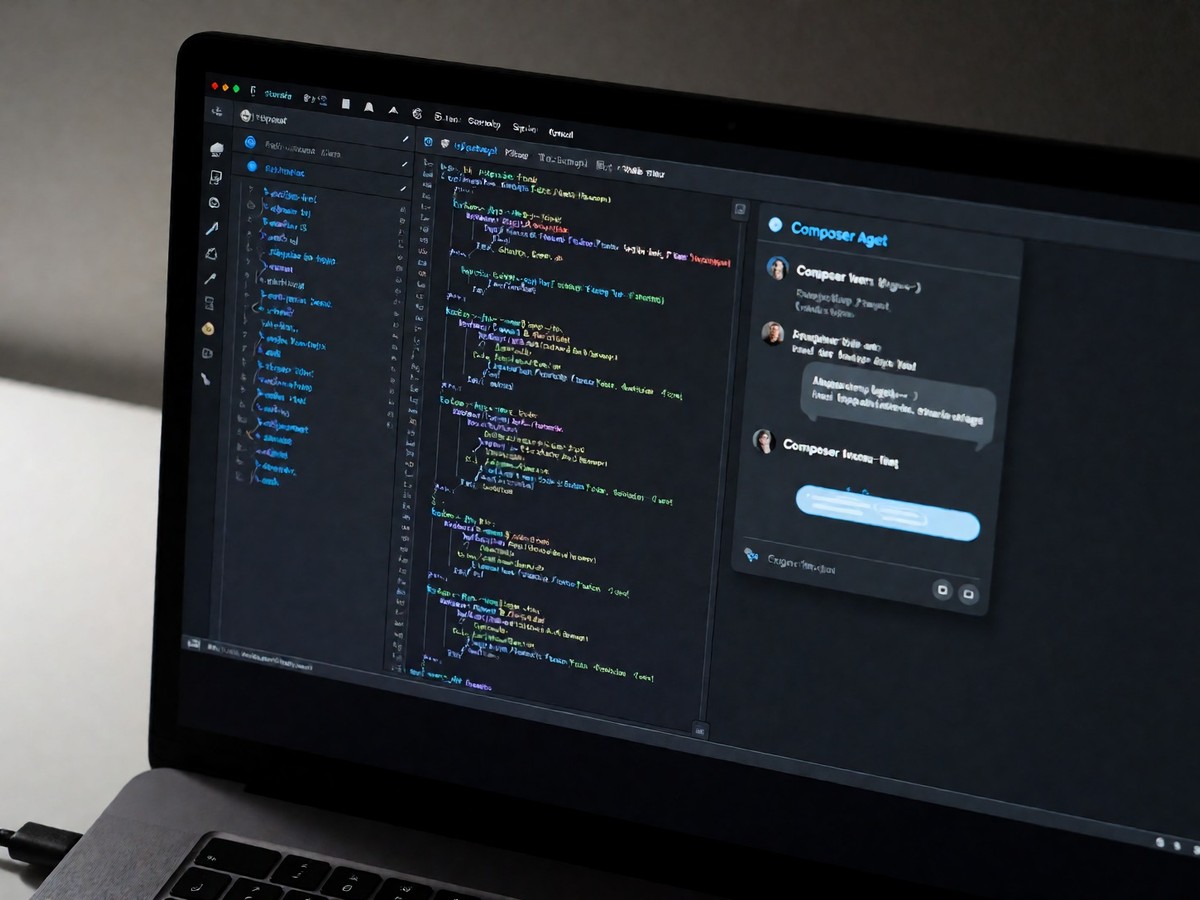
Composer enables multi-file editing by allowing an agent to modify several files simultaneously. The workflow consists of four steps: provide textual instructions, select the files for the tool to read, wait for the generation, and review the diffs. I estimate that a task involving multiple components takes between 30 and 60 seconds to complete. The proprietary Anysphere model delivers generation speeds 4x faster than other intelligent models. You probably already know that providing a clear implementation plan works better than providing a vague problem description. For example, a developer might use it to migrate Dialog components from a legacy isOpen prop to a new controller pattern, which requires updating usage across multiple app directories.
| Plan Tier | Monthly Price | Model Usage Limit |
|---|---|---|
| Hobby | $0 | Limited Agent requests |
| Pro | $20 | $20 credit pool |
| Pro+ | $60 | $60 credit pool |
| Ultra | $200 | $200 credit pool |
| Teams | $40 | Pooled usage |
The credit system in Cursor uses a credit pool equal to the plan’s monthly price. When users manually select a frontier model like Claude Sonnet, the tool drains these credits. Using Auto mode or Composer 2.5 does not touch this pool. Once the credits run out, Cursor switches to on-demand usage at API rates. This switch can lead to high bills if a user sends large context payloads. One developer noted that a simple documentation edit cost $0.50 instead of the expected $0.05 because of the context sent to the model. I find the pricing structure works well for most, but the pay-as-you-go layer can surprise heavy users. One limitation is that some users report Composer 2 fails to start subagents or struggles with basic tasks on large repositories. One user observed the model spent 30 minutes on a problem that a different tool solved immediately.
Performance and accuracy
Cursor maintains a speed advantage in real-world testing, but it often trails in successful task resolution. In a benchmark of 500 tasks from the SWE-bench Verified dataset, Cursor finished tasks in an average of 62.95 seconds. Copilot finished the same tasks in 89.91 seconds, which is significantly slower. Copilot successfully resolved 283 tasks, while Cursor resolved only 258. This result means Copilot achieved a 56.5 percent resolution rate, while Cursor hit 51.7 percent.
The ability to perform tasks like migrating legacy props to new controller patterns or extracting logic into custom hooks makes Cursor useful for TypeScript developers. Copilot works effectively for small, single-file tasks like adding Zod schema validators or generating React hooks. However, Copilot struggles when a change requires modifying multiple files across a monorepo or shared library. Cursor handles these multi-file edits by accessing the full shape of the system. Managing context size is the only way to keep costs predictable. One developer found that splitting a large request into smaller, scoped edits reduced the context overhead and the resulting bill. The distinction between professional coding and "vibe coding" is that vibe coding involves accepting code without fully reviewing the underlying structure, whereas professional engineering requires verifying every diff. Will the reliance on proprietary models eventually narrow the gap with general-purpose LLMs?