Midjourney V7 changes the creative search process for professional teams. Instead of producing one-off images, V7 enables repeatable creative systems. The model performs best for taste-driven tasks like campaign concept exploration, hero visuals, and moodboards. It performs poorly with exact typography or rigid design-system layouts where one label must change without any other element moving. Teams must decide if they need visual taste or pixel-level obedience.
Draft Mode alters the economics of ideation for creative departments. This feature generates images ten times faster than standard generation. It also costs roughly half the GPU price of standard generation. This changes how teams manage the economics of exploration. Creative teams generate many rough directions cheaply, keep promising compositions, and promote winners to higher quality. This process mirrors how visual work happens in professional studios. Most work involves exploration, and only a few outputs become final assets. A practical product pattern uses Draft Mode for option generation, shortlists candidates, and runs final-quality generation only after selection.
Personalization and style consistency maintain visual coherence across multiple generations. Omni Reference and style personalization allow a brand to hold the same face, outfit, or chromatic atmosphere across several pieces. Users apply a Style Reference by adding the –sref parameter and an image URL to the prompt. The –sw parameter controls how much the style of the reference influences the new image. This value ranges from 0 to 1000, and the default value is 100. Users find styles in the Style Explorer and copy numeric style codes directly into their prompts. Users can also blend multiple style reference codes in a single prompt, such as –sref 123 456. The weight of individual codes changes with the notation –sref 123::2 456::1.
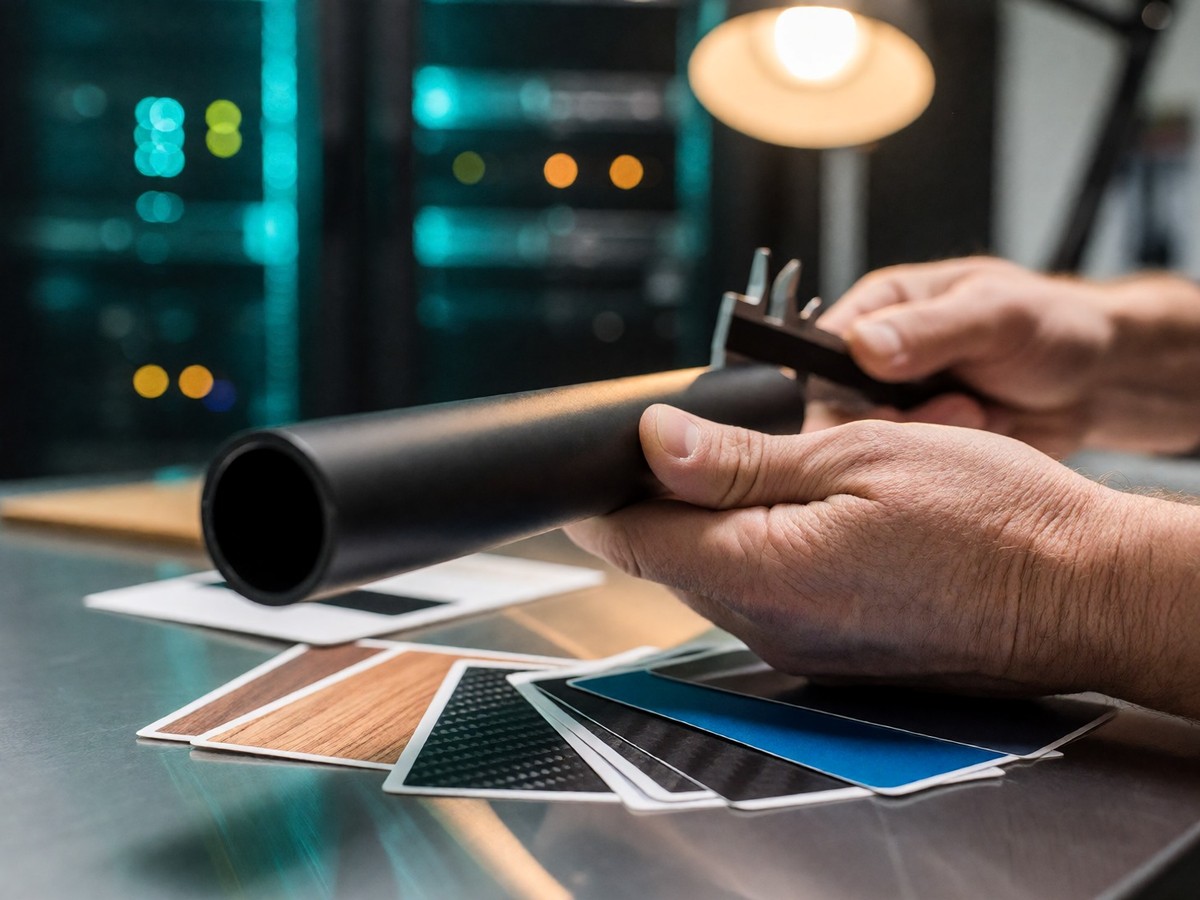
Industrial designers use Midjourney to explore product aesthetics and materiality. Proportions in bicycle frames determine the stance or feel of a bike. The Subtle V-Roll feature allows for the examination of hundreds of subtle variations in tube profiles. The Dig for Gold approach helps users explore potential solutions for surface intersections. This helps visualize how different surfaces meet, such as at the head tube junction of a bicycle. The model provides an accurate interpretation of light and shadow. A professional designer creates a visual language for a product by using Midjourney to generate moodboards, CMF studies, and underlays that allow stakeholders to see how different materials and textures work in a real product context. Designers use these outputs as underlays for new concepts. Because the Midjourney output is already rendered, sketches and Photoshop iterations achieve higher fidelity than conventional processes.
| Area | Midjourney V6 | Midjourney V7 |
|---|---|---|
| Prompt handling | Parameter-heavy | Cleaner prompt-to-result behavior |
| Draft exploration | Not the headline feature | Core part of the workflow |
| References | Useful style workflows | Stronger Omni Reference and personalization |
| Team workflow | Manual iteration | Easier to standardize around repeatable directions |
| Editing | Legacy edit behavior | Some edit surfaces require careful auditing |
Commercial use of Midjourney requires specific subscription tiers based on company revenue. Paid subscribers using Basic, Standard, Pro, or Mega plans receive commercial rights. These rights allow users to sell prints, use images for client work, and mint NFTs. Companies that earn more than $1,000,000 USD in annual revenue must use Pro or Mega plans for commercial use. Free trial users do not own any images. Midjourney retains the images from free users and grants only a non-commercial CC BY-NC 4.0 license. Stealth Mode, available for Pro and Mega plans, allows users to keep images private. By default, all generated images are public and viewable in the Midjourney gallery.
| Model | Best For | Key Feature |
|---|---|---|
| FLUX 1.1 Pro | Photorealism | 4.5s generation speed |
| Adobe Firefly | Commercial safety | Licensed training data |
| GPT Image 1.5 | Conversational editing | Natural language iterations |
| Ideogram v3 | Typography | Error-free text rendering |
| Stable Diffusion 3.5 | Customization | Local deployment and LoRAs |
The creative search process for professionals moves through distinct stages. First, teams collect intent by defining the goal, such as a hero image or a brand moodboard. Second, they generate draft directions using Draft Mode. Third, they present candidates as directions rather than finished assets. Fourth, they promote winners to higher quality. This workflow avoids expensive generation until a user selects a direction. The system also persists references, such as prompt text, task IDs, and rejected candidates. Rejected candidates provide information about what the system should not repeat. You already know the basics of prompt engineering, so focus instead on the workflow integration.
The backend for an image product must track specific states to ensure reliability. These states include queued, running, needs_review, selected, enhancing, completed, failed, and moderated. A predictable system manages the creative potential of the model. Designers rely on this structure to build dependable workflows. The model handles the creativity while the system manages the process.
Midjourney V7 does not replace deterministic design editors. It remains a stage in a creative decision loop. The model produces strong compositions, but composition quality does not equal text fidelity. If a project requires precise packaging copy or exact UI text, teams should use other tools.
| Feature | Midjourney v7 | Stable Diffusion 3.5 | Leonardo.Ai | DALL-E 3 (via ChatGPT) |
|---|---|---|---|---|
| Artistic Quality | High | Moderate | High | Moderate |
| Customization | Moderate | Excellent | High | Low |
| Consistency | Style Ref | LoRA training | Character Reference | Fair |
| Learning Curve | Low | High | Medium | Very Low |
FLUX 1.1 Pro leads industry quality benchmarks for photorealism. It generates images in 4.5 seconds. FLUX 2 Pro improves prompt adherence and photographic fidelity in scenes with complex lighting. Adobe Firefly integrates FLUX inside its model hub. Firefly provides a safe choice because it uses licensed content. GPT Image 1.5, released in December 2025, uses conversational editing to modify details like the color of a sky or the type of clothing. Ideogram v3 excels at rendering text within images without errors. Google Imagen 4 provides high-quality text rendering and fast generation. Stable Diffusion 3.5 offers flexibility through local deployment and custom training.
Personalization uses feedback and preferences to shape results around a user’s visual taste. Users can blend multiple personalization codes, such as –p ab12ad3 cd34gl. The weight of personalization codes changes with the notation –p ab12ad3::2 cd34gl::1.
Will the industry ever fully replace human designers with purely autonomous image models?
Professional designers use Midjourney to build visual libraries. They use –sref to anchor all generation within a defined aesthetic. They bring outputs into tools like Adobe Color to formalize palettes. They present direction boards to clients that include images, color palettes, and typeface suggestions. This positions the designer as a creative director. The tool is Midjourney. The judgment is yours.