Adept AI raised over $415 million at a roughly $1 billion valuation before the company split in June 2024. Co-founders David Luan, Augustus Odena, Maxwell Nye, Erich Elsen, and Kelsey Szot joined Amazon’s AGI organization, while Amazon licensed Adept’s core agent models and technology. The remaining entity operates with approximately 30 employees under new CEO Zach Brock. This structural shift moved the research focus from general foundation models to specific enterprise workflow automation. The team that stayed behind now builds agents for complex business tasks without relying on the massive compute resources that once defined the startup’s ambition.
From foundation models to browser actions
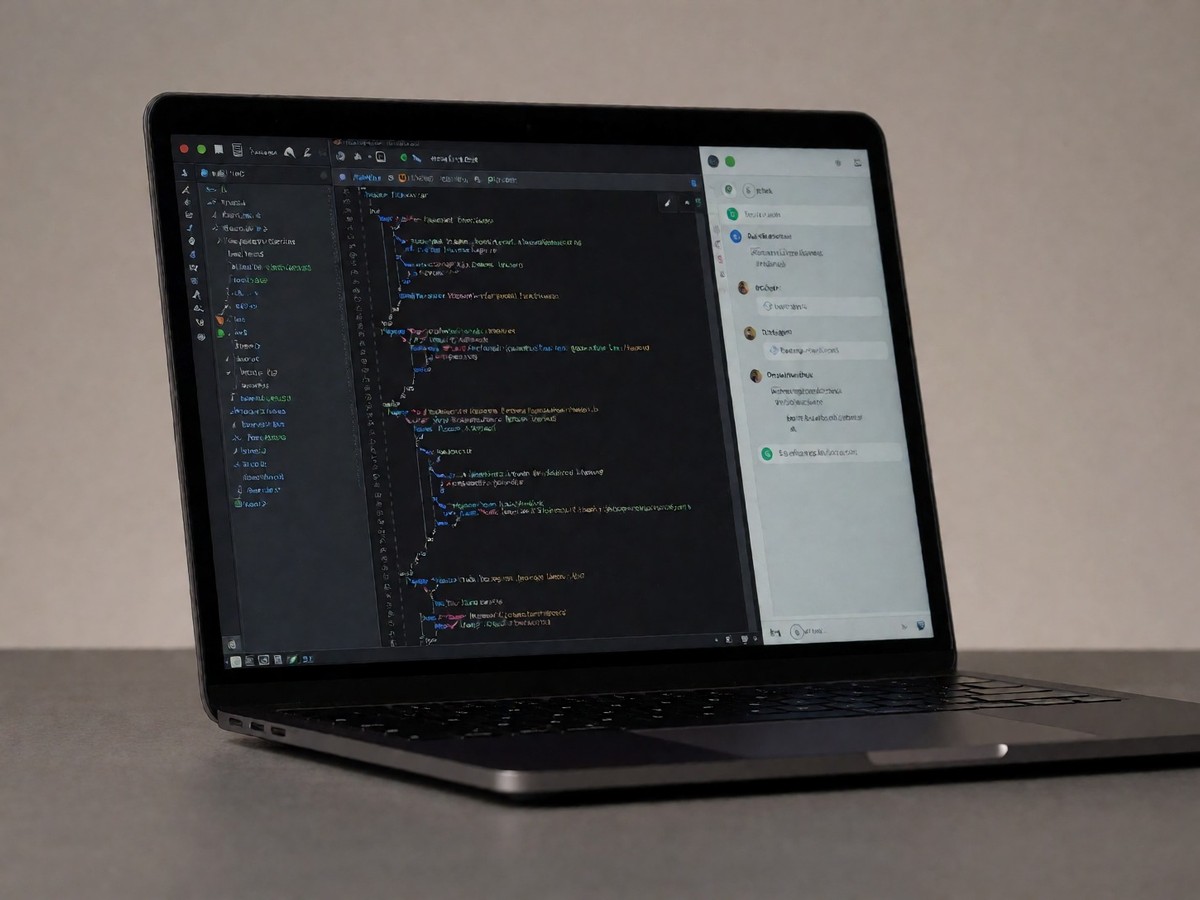
David Luan defined useful AGI as a system that can do anything a human does on a computer. He argued that behavioral cloning of existing human knowledge provides a shortcut to this goal. Adept built ACT-1 in September 2022 as a large Transformers model optimized for browser interactions. The model uses a custom rendering of the browser viewport to understand state and execute actions like navigation, clicking, typing, and form entry. Unlike API-based integration, which fails when legacy systems lack modern capabilities, Adept’s agents drive by vision. They see the screen as a human sees it and pinpoint where to click or type without predefined selectors.
Luan emphasized that most multimodal models are trained on natural images, but economic value lies in knowledge work. Adept spent significant time training on charts, graphs, tables, invoices, PDFs, receipts, and unstructured data. This focus produced Fuyu Heavy in January 2024, a multimodal model designed specifically for digital agents. It became the world’s third-most-capable multimodal model, beating Gemini Pro on MMMU, AI2D, and ChartQA benchmarks. The model sits behind only GPT-4V and Gemini Ultra, which are 10 to 20 times bigger. Luan stated that building agents with high reliability standards allows the company to learn from users how to achieve higher levels of abstraction faster. This data flow turns research into something customers want. The critical path is maintaining an insanely high reliability standard while pushing abstraction levels upward.
Amazon’s Nova Act and enterprise deployment
Amazon established the AGI SF Lab in 2024 with Luan as founding head and robotics scholar Pieter Abbeel involved in its launch. The lab developed Nova Act, a service that lets developers build browser automation using natural-language instructions and Python. Nova Act trains its model, SDK, orchestrator, and browser controllers together in simulated business applications. These environments let agents practice multistep tasks through trial and error before deployment. The service became generally available as an AWS offering in 2025. Hertz used it to test rental reservation workflows, while 1Password applied it to sign-in flows across hundreds of websites. Sola reported using Nova Act for business-critical processes running hundreds of thousands of times per month.
The technical approach combines reinforcement learning with computer use. When encountering CAPTCHAs or complex challenges, the agent pauses automation and notifies operators via WebSocket. Operators access a live view to resolve issues manually and trigger resumption. AgentCore Browser allows for human takeover and passing control back to the agent without restarting the process. This hybrid model addresses the brittleness of traditional robotic process automation, which requires ongoing maintenance when applications update. Knowledge workers routinely navigate between eight to twelve different web applications during standard workflows. Data entry and validation tasks consume approximately 25% to 30% of worker time. By automating these repetitive steps, organizations move beyond the typical 30% fully automated task rate. The remaining 70% of workflows, which require human oversight or remain entirely manual, become candidates for agentic intervention. Luan departed the Amazon lab in February 2026, and Bryan Silverthorn subsequently led the group. The San Francisco team closed in July 2026 amid broader layoffs, yet Nova Act remains available through AWS.
Can a 30-person team sustain the pace of innovation required to keep enterprise agents reliable as software interfaces change?