Scale AI and the data labeling market
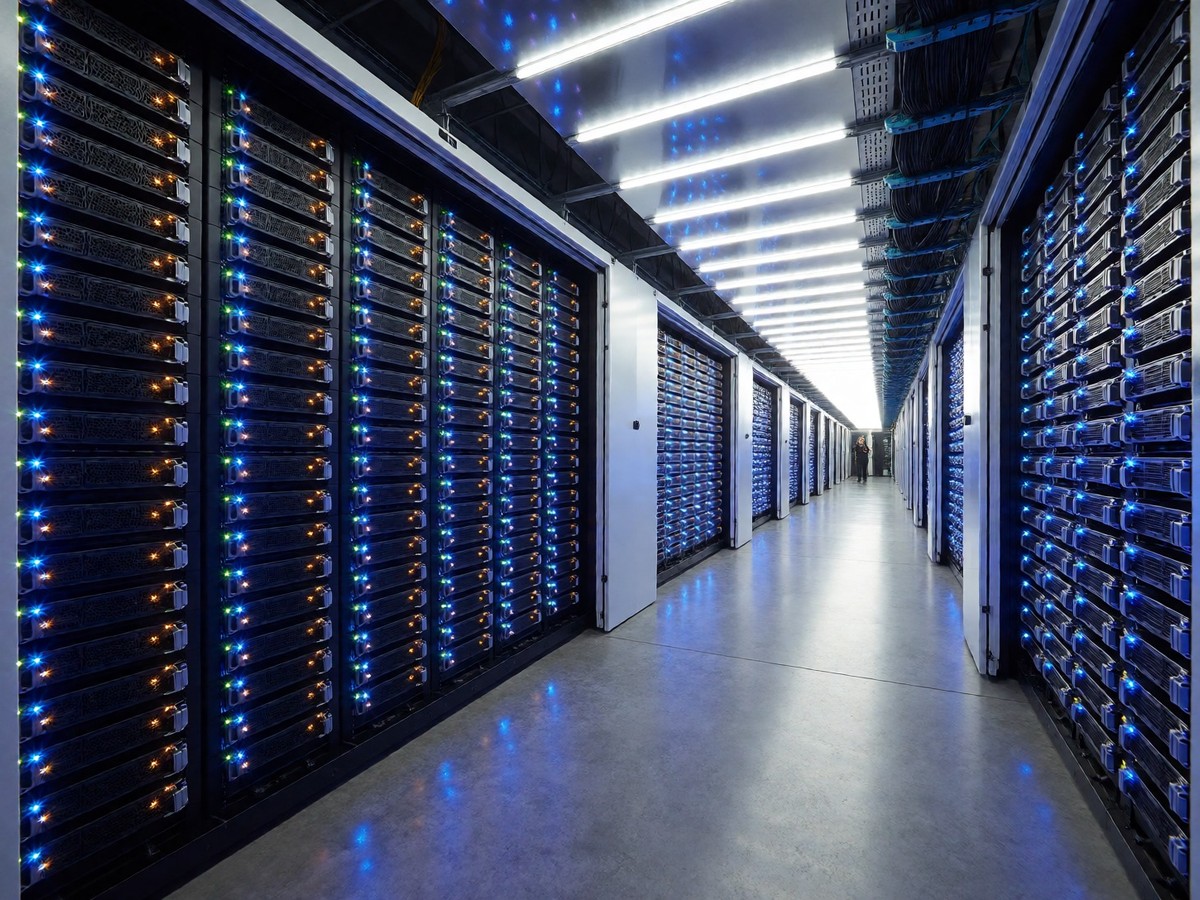
Scale AI secured $1 billion in a late-stage funding round, setting its valuation at $14 billion. Investors in this round included Nvidia, Amazon, Coatue, Tiger Global Management, Intel Capital, and AMD Ventures. The San Francisco-based company generates approximately $850 million in revenue. This growth occurs within a broader data labeling market that reached $6.12 billion in 2026. The image and video segment holds 46.8% of that market, valued at $0.86 billion. This segment grows at a compound annual rate of 27.6%. The healthcare segment is the fastest-growing application area, holding an 18.3% market share and growing at 28.4% annually. Unstructured data, including text and video, accounts for 80% of all data generated worldwide. Surge AI also maintains a strong position, with revenue passing $1 billion in 2024 and a $25 billion valuation. In September 2026, Snorkel AI raised $350 million at a $3.5 billion valuation. Encord raised $60 million in Series C funding in early 2026. The global data labeling market grows at a compound annual rate of 33.2% according to some estimates. This expansion relies on auto-labeling and pre-labeling technologies that reduce manual effort for projects involving millions of data points. The demand for specialized labeling is high in autonomous vehicles, where annotating road signs and pedestrians improves navigation. In retail, labeling product images supports visual search and personalized recommendations. The North American market dominates this sector with a 38.4% share, valued at $0.7 billion. The Asia-Pacific region is the fastest-growing region, recording a CAGR of 29.4%.
AI economics and margin gaps
AI companies face different economic pressures than traditional SaaS providers. While SaaS companies maintain gross margins between 60% and 80%, AI products often see lower figures. ICONIQ reported that AI product gross margins averaged 45% in 2025. These margins may reach 59% in 2027. Companies spend 25% or more of their revenue on cloud resources to handle computation. Human support and model maintenance also consume 10% to 15% of revenue. You should understand that these costs are structural, rather than temporary. The discrepancy exists because AI involves variable costs for every prompt. Bessemer’s 2025 report classifies AI companies as "Supernovas" with 25% margins or "Shooting Stars" with 60% margins. The discrepancy stems from the fact that AI products require continuous model upkeep as data drifts. High-growth companies trade profit for distribution to capture market share. The gap between AI and SaaS margins persists because usage that does not match the price reduces profitability. As users run more prompts, compute costs rise while revenue remains flat. This makes scaling difficult for companies that do not implement usage-aware pricing.
Defense contracts and the Anthropic dispute
The Department of Defense signed agreements with seven companies: SpaceX, OpenAI, Google, NVIDIA, Reflection, Microsoft, and Amazon Web Services. These companies build prototypes to improve military advantage or decision making. OpenAI’s agreement includes red lines against using technology for mass domestic surveillance or directing autonomous weapons. OpenAI engineers work in the loop to ensure these red lines are not crossed.
The Department of Defense designated Anthropic a supply chain risk in March after the company refused to remove ethical guardrails that prevented its Claude models from being used in certain military applications across all lawful uses. This decision followed the company’s refusal to remove usage restrictions from its Claude models. The government argued that mission requirements, not corporate ethics statements, dictate how these tools deploy. Anthropic filed a lawsuit in the Northern District of California to challenge this designation. Google faced a different struggle when 3000 employees protested Project Maven. This program used machine vision to interpret video imagery from US Government drones to detect vehicles and track motion. The Pentagon’s Joint Warfighting Cloud Capability program relies on these commercial partnerships. The Pentagon uses 1.3 million personnel on its official AI platform, GenAI.mil. The conflict between Anthropic and the Pentagon involves a debate over whether AI companies can maintain ethical boundaries while selling to the government. Anthropic’s original lawsuit argues that penalties violate procurement law and unfairly punish the company for maintaining safety standards. Will the legal battle over AI ethics and military contracts force companies to choose between profit and principles?
| Entity | Metric/Status | Value/Detail |
|---|---|---|
| Scale AI | Recent Valuation | $14 billion |
| Scale AI | Reported Revenue | ~$850 million |
| Data Labeling Market | 2026 Value | $6.12 billion |
| Anthropic | Government Status | Supply chain risk |
| OpenAI | Contract Type | Classified deployment |