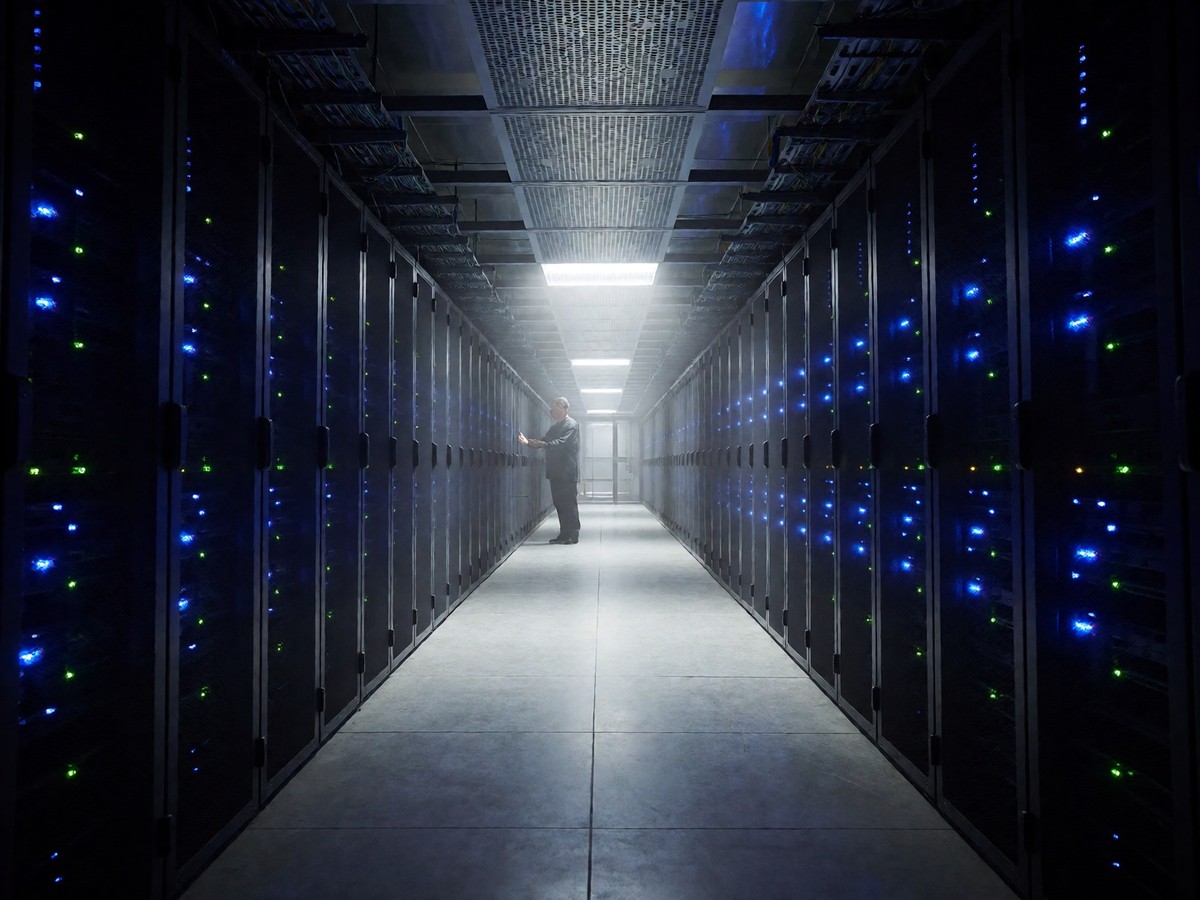
CoreWeave generated $2.1 billion in revenue in Q1 2026, which marks a 112% increase over the $1.0 billion produced in Q1 2025. This quarterly figure exceeds the $1.08 billion forecast for Q2 2025. The company maintains a revenue backlog of $99.4 billion as of March 31, 2026. This total includes $98.8 billion in remaining performance obligations from clients such as Meta, which signed a $21 billion commitment in March, and Jane Street, which added $6 billion in Q1 alone. These commitments provide visibility that differs from the on-demand model used by providers like Runpod. While Runpod earns an A grade for its balance of price and reliability, CoreWeave focuses on large-scale clusters for AI labs. Revenue grew from $16 million in 2022 to $1.9 billion in 2024, marking an eightfold increase in the prior year. The company brought 41 data centers online as of Q3 2025, claiming near-100% utilization in most sites. These operations utilize over 250,000 Nvidia GPUs across 32 data centers. The massive scale of these operations aligns with the $23 billion valuation range reported for its November funding round. To fund this growth, the company secured an $8.5 billion investment-grade term loan in Q1.
Diversifying away from Microsoft
Customer concentration in Microsoft fell during the first quarter of 2026. In Q1 2025, Microsoft accounted for 72% of revenue, but that figure dropped to 45% in Q1 2026. A second customer now represents 20% of the company’s revenue. In 2023, Microsoft provided $81 million in revenue, which grew to $1.2 billion in 2024. The expansion of the OpenAI partnership to $22.4 billion in supply agreements helps mitigate the risk of Microsoft shifting its infrastructure strategy. This move provides training capacity for advanced next-generation models. You know that Lambda Labs remains a strong competitor for H100 and H200 GPUs, but CoreWeave’s scale targets different workloads. Lambda Labs offers H100 instances at $2.49 per hour, while CoreWeave focuses on dedicated clusters for large enterprises. The company also secured new agreements with Meta and a multi-year deal with Anthropic to support Claude model development. These contracts reflect the growing variety of companies scaling workloads on the infrastructure. Will the growing variety of contract holders prevent another massive concentration risk?
| Provider | Price | Availability | Reliability | UX | No Hidden Costs | Overall |
|---|---|---|---|---|---|---|
| CoreWeave | B | A | A | B | B | B+ |
| Lambda Labs | 7/10 | 7/10 | 9/10 | 8/10 | 8/10 | A- |
| Runpod | 9/10 | 8/10 | 7/10 | 9/10 | 9/10 | A |
Data center delays and interest costs
The massive debt load reached $35.1 billion by June 30, 2026, which is a sharp increase from the $21.4 billion recorded at the end of 2025, creating a heavy burden for the company as it scales its operations. Interest costs alone reached $640 million in the second quarter of 2026. In Q1 2026, the company reported a net loss of $740 million. This loss includes $536 million in interest expenses. The company also faced $1.15 billion in depreciation and amortization in Q1 2026. In the first half of 2026, the company sold $3.0 billion more in shares, including $2 billion to NVIDIA and $1 billion to Jane Street. In Texas, heavy rains and wind in Denton caused a 60-day delay at a construction site, stalling the 260 megawatts of computing power intended for OpenAI. This delay directly impacts the revenue ramp for the company. The market valuation has shifted as the LTM EV/EBITDA dropped to 23.9x while the LTM P/S compressed to 8.04x, and approximately $7.5 billion of the total debt is due within the next year.