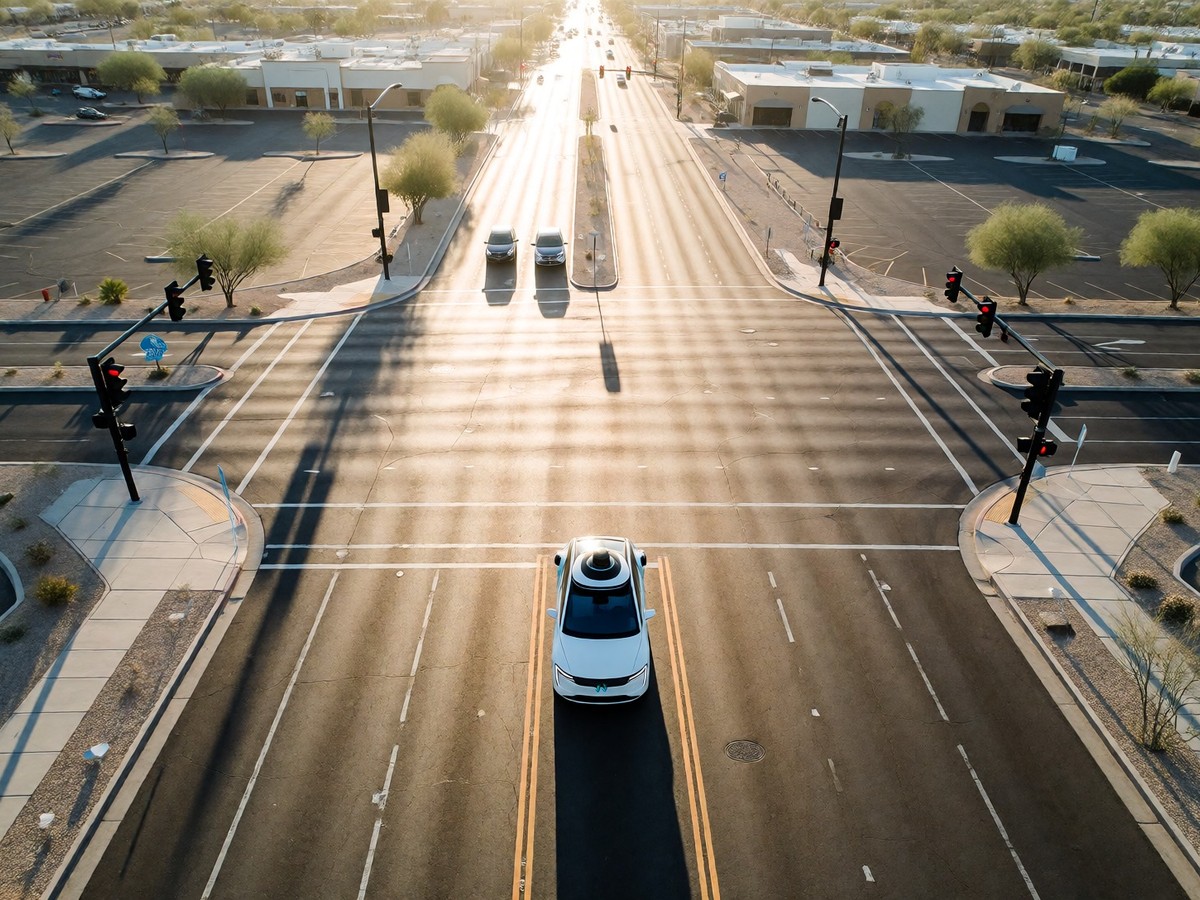
Waymo vehicles caused 202 crashes in Arizona between 2021 and 2024, including 31 collisions that resulted in injuries. These incidents occurred as the company prepared to scale its operations, which reached 15 million rides in 2025. While the company secured $16 billion in recent funding to expand into cities like London and Tokyo, the technical and legal realities of autonomous driving create significant friction.
Safety data and operational friction
Waymo claims its vehicles involve 81 percent fewer injury crashes than human drivers and 88 percent fewer property damage claims. The Insurance Institute for Highway Safety released a study titled "Rise of the machines: crash experiences of highly automated vehicles and human drivers" stating that Waymo vehicles in San Francisco, Phoenix, Los Angeles, and Austin had 68% fewer crashes per vehicle mile traveled than human drivers. However, local drivers report different experiences on the road.
In Scottsdale, a Waymo crossed a double yellow line and struck Jaafar Yaseen’s car at a slow speed. Scottsdale police faulted the Waymo for the collision. Joel Caspers reported that a Waymo rear-ended his car in 2021 while he was stopped at a red light, an impact that totaled his vehicle. In that instance, an officer did not issue a citation because the vehicle was in autonomous mode and no person sat inside. In June, a Phoenix police officer pulled over a Waymo for crossing into oncoming traffic but spoke with rider support instead of writing a ticket.
The company faces specific technical vulnerabilities. A May 2025 recall covered more than 1,200 vehicles to improve software for detecting and avoiding roadway barriers. A 2024 recall addressed a collision with a wooden utility pole in Phoenix. These errors demonstrate that software glitches and sensor failures remain active risks.
| Metric | Waymo | Tesla (Autopilot/FSD) |
|---|---|---|
| Primary Automation Level | Level 4 | Level 2 |
| Total Incidents (NHTSA) | 2,029 | 3,550 |
| Fatalities | 2 | 57 |
| Injury Rate | 98.4% | 5.7% |
| Average Speed | 13 mph | 42 mph |
Liability and the insurance gap
The absence of a human driver shifts the question of fault from a motorist to the manufacturer, software developer, or operator. When a Level 4 vehicle malfunctions, the blame moves away from a driver to the entities responsible for the code or the hardware. This creates a complex environment for insurance providers who lack sufficient data for risk modeling.
In Georgia, all vehicles must carry minimum liability insurance of $25,000 for bodily injury per person and $25,000 for property damage. If an autonomous vehicle operates without driver input, liability may shift to the manufacturer or software developer. This creates a conflict for insurers who must decide if they will use product liability insurance or if they will move toward consolidated programs. Vertically integrated companies like Waymo often lean toward self-insuring.
You should understand that the regulatory environment varies by state. California requires approval from both the CPUC and the DMV, whereas Arizona uses a more permissive approach. In Nevada, regulators approved 7,100 robotaxis for one county in a single meeting, including 1,000 for Waymo. This highlights the tension between the number of permits and the actual number of vehicles on the road.
How will companies resolve the massive financial exposure if software errors cause widespread collisions?
The race for market dominance
Waymo is competing against Tesla and Amazon’s Zoox to capture the ride-hailing market. Tesla uses a camera-only system, while Waymo utilizes a multi-sensor suite including LiDAR, radar, and cameras. One analyst, Jed Dorsheimer, noted that Waymo vehicles "stick out like a sore thumb" because of their external hardware. In Austin, Dorsheimer reported that the Tesla Robotaxi felt more human-like during operation, whereas the Waymo ride felt more "robotic" due to the sounds of spinning lidar sensors.
Waymo’s expansion strategy involves planting flags in many markets, though the company plans to end its exclusivity in Austin and Atlanta in January 2028. The company aims to reach 1 million rides per week by the end of next year. Tesla focuses on the cost curve, with analysts forecasting a bill of materials of $25 to $30 for its Cybercab, compared to $60 to $100 for Waymo’s Gen-6 hardware. Waymo’s high per-vehicle cost remains a primary obstacle to reaching the same scale as Tesla.
The company’s $126 billion valuation relies on its ability to manage these technical errors and regulatory gates. If software failures or sensor inaccuracies lead to more frequent accidents, the cost of insurance and the difficulty of securing deployment permits will slow the company’s ability to scale.