Physical Intelligence and the $\pi$0 architecture
Physical Intelligence, which writes its name as pi, holds a $5.6 billion valuation after raising $600 million in November 2025. The company, headquartered in San Francisco, builds vision-language-action (VLA) models to control various robot bodies. Notable investors including Jeff Bezos, OpenAI, Thrive Capital, and Lux Capital support the startup. The $\pi$0 model uses a 3 billion parameter PaliGemma backbone and a 300 million parameter Action Expert. This architecture employs Conditional Flow Matching to predict sequences of 50 future actions at a 50Hz control frequency. The training process used over 10,000 hours of data from seven robot types and 68 tasks. The architecture uses a block-wise causal attention mask to manage information flow between the VLM expert and the Action Expert. Block 1 processes images and language tokens, while Block 2 handles robot state tokens and Block 3 manages noisy action tokens. The model learns to transform noise into valid action sequences by predicting a target vector field. During training, the developers use a non-uniform sampling strategy based on the Beta(1.5, 1.0) distribution to focus on high-noise scenarios where tau is near zero. A single high-quality manipulation demonstration, such as a robot picking up a coffee cup and placing it in a specific location, takes between 30 and 120 seconds to collect, plus the necessary setup time for the engineer.
The Pi API beta iteration loop
The Pi API is clearly the best option for developers seeking to test whether a pretrained policy adapts faster than a hand-built policy stack. This API, launched October 13, 2026, provides managed infrastructure for robotics developers. The service manages fine-tuning compute and the serving layer. Developers follow a four-step workflow: upload data, fine-tune a pi model, run the model through a hosted inference gateway, and use failures to decide which data to collect next. Almond used this API to train its Axol dual-arm robot to deburr spacers in four days. This platform converts foundation models from research assets into a managed build-and-evaluate loop. The API removes the need for teams to manage dataset conversion, distributed training, or inference serving. You already know that robot training data remains the primary bottleneck, so notice how this API targets the iteration loop.
| Feature | Pi API Beta Specification |
|---|---|
| Deployment Mode | Cloud-hosted inference |
| Model Versions | $\pi$0, $\pi$0.5, $\pi$0.7 |
| Access Method | Waitlist |
| Training Data | 10,000+ hours |
The openpi GitHub repository provides an alternative for teams that need to run offline or inspect the code. This repository includes base models for fine-tuning like pi0_base, pi0_fast_base, and pi05_base. These models were trained on diverse datasets, including the Open X-Embodiment (OXE) collection. The repository also contains checkpoints for the DROID robot, the ALOHA dual-arm system, and the LIBERO simulation benchmark. Users run these models on Ubuntu 22.04. Running a model for inference requires more than 8 GB of GPU memory, such as an RTX 4090, while full fine-tuning requires more than 70 GB of GPU memory like an A100 80GB.
Deployment constraints in industrial environments
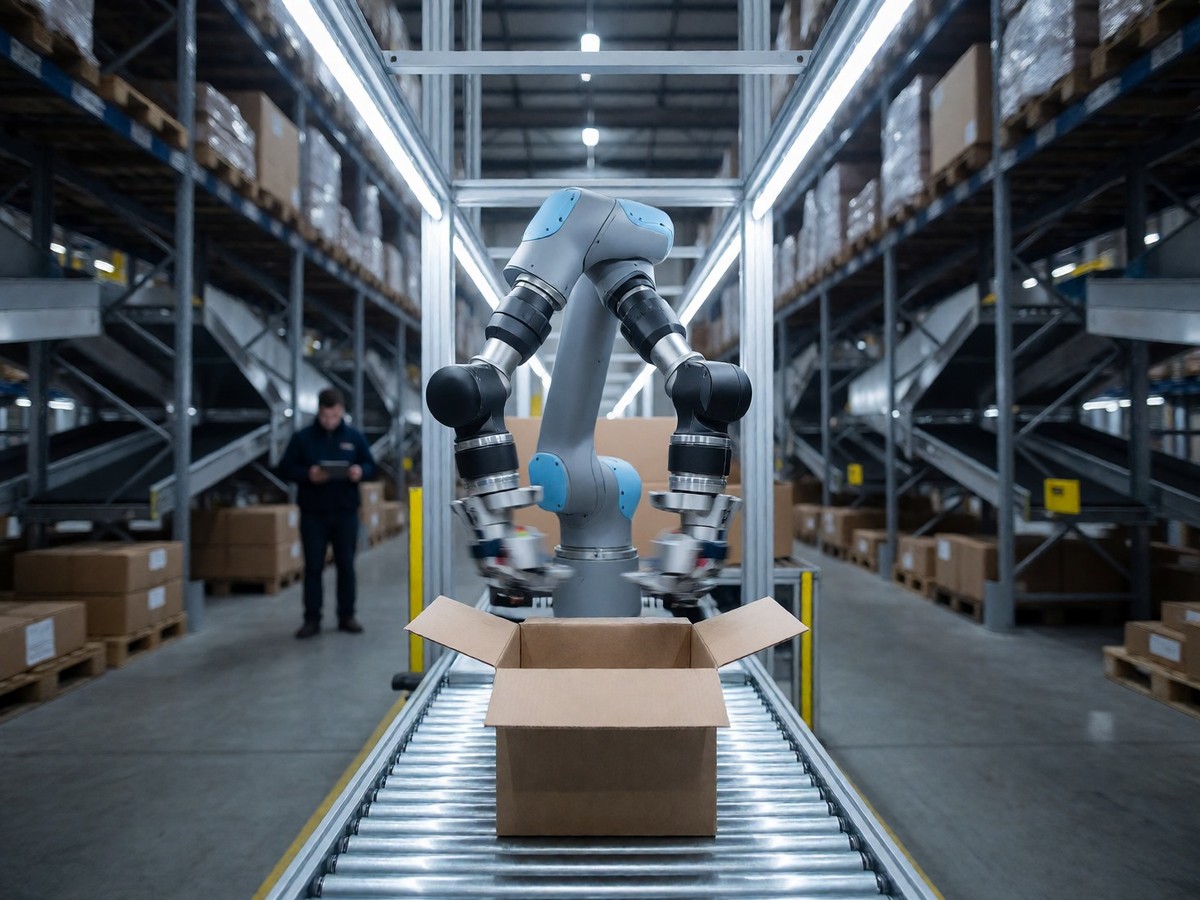
Warehouse automation startups like Ultra use these models for e-commerce order packaging. Actor uses the models to operate autonomous wheel loaders in commercial settings. While these applications show breadth, cloud-hosted inference creates dependencies on network stability. Early deployments in Japan, Switzerland, and the United States experienced network connectivity problems. The company provides the models as a service, which means Physical Intelligence controls model updates and versioning. This introduces version drift for companies using the models for production. The API might compress policy development without compressing the rest of the robotics company. If a robot requires fast contact-rich manipulation, can a cloud round trip maintain the necessary control frequency?