Texas Governor Greg Abbott ordered the Public Utility Commission and ERCOT to audit all data centers in the state’s interconnection queue. He directed the authorities to verify electricity and water use before any new facilities connect to the grid. ERCOT currently considers approximately 474 gigawatts of requests to connect to the Texas grid. This load is more than five times the record peak electricity demand for ERCOT. Approximately 90 percent of these new power requests come from data centers. The delay to the first set of projects to navigate the state’s new large load interconnection process may push back other ERCOT planning efforts, including the grid operator’s long-term load forecast and reliability assessment, according to officials at the Public Utility Commission of Texas. Abbott said the audit is necessary because some data centers failed to comply with the PUC’s survey regarding water and power usage. There are about 300 data centers of 75 megawatts or larger navigating the Batch Zero process.
OpenAI, Oracle, and SoftBank aim to build 10 gigawatts of AI infrastructure in the U.S. over four years. This $500 billion commitment includes an existing plan for 7 gigawatts of capacity. The project includes five new U.S. sites announced in September 2025. These sites include locations in Shackelford County, Dona Ana County, Milam County, Lordstown, and an undisclosed Midwest location. The partnership with Oracle includes an agreement to develop 4.5 gigawatts of additional capacity. Together, these developments will bring the total Stargate capacity to over 5 gigawatts. This investment includes the deployment of over 2 million chips. The initiative includes support from the White House to drive innovation and national competitiveness.
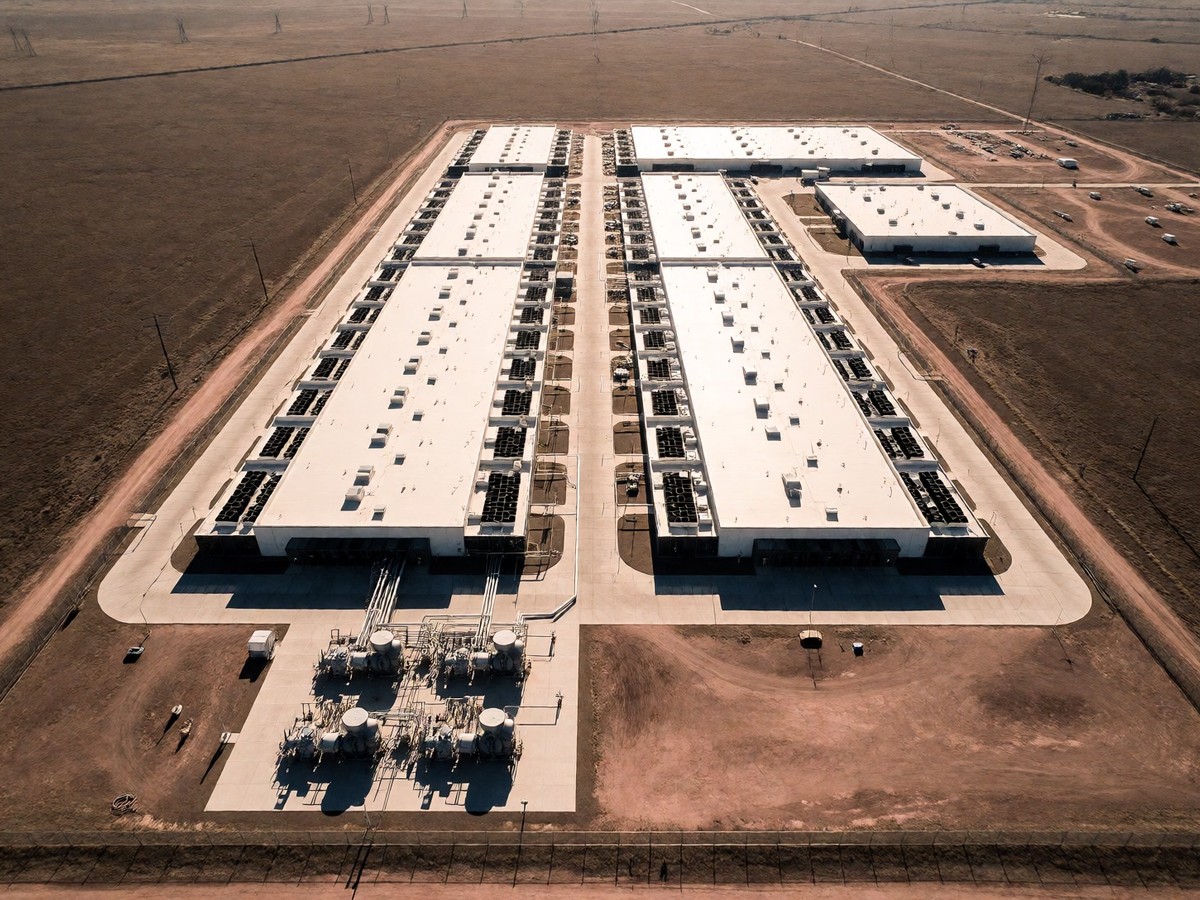
The Stargate flagship site in Abilene, Texas, operates at 0.3 gigawatts of capacity. This site uses a mix of grid power, local wind power, and on-site natural gas. OpenAI originally planned to expand the Abilene site to 2.1 gigawatts. The company reversed this decision and directed that capacity to other locations. Microsoft now partners with the developer Crusoe for the adjacent 900 megawatt site. Crusoe began building the first two buildings in Abilene in September 2024. The company announced that these buildings were operational 12 months later. However, the third and fourth buildings missed their March 2026 completion target. The buildings in Abilene house Nvidia Blackwell chips. Oracle began delivering the first Nvidia GB200 racks in June.
The Texas audit could delay 49.8 gigawatts of new data center electricity demand. This amount is nearly 20 percent of the U.S. data center development pipeline. BloombergNEF says that if 100 percent of the delayed capacity involves AI compute, revenue at risk reaches $15 billion. Abbott’s directive follows complaints that some data centers failed to comply with the PUC’s survey regarding water and power usage. ERCOT will attempt to complete its audit of hundreds of data center proposals by December 10. The grid operator has 17 large loads, mostly data centers, that are scheduled to come online later this year. These projects have a total peak demand of 6.6 gigawatts and will ramp up over five years. ERCOT will also perform a community impact review on data centers and crypto facilities of 25 megawatts and above.
| Site Location | Current Capacity (GW) | Projected Capacity (GW) | Power Source |
|---|---|---|---|
| Abilene, Texas | 0.3 | 1.2 | On-site gas, Grid |
| Shackelford County, Texas | 0 | 2.0 | On-site gas |
| Dona Ana County, New Mexico | 0 | 2.2 | On-site gas |
| Milam County, Texas | 0 | 1.2 | On-site (unknown type) |
| Port Washington, Wisconsin | 0 | 1.3 | Grid |
| Saline Township, Michigan | 0 | 1.4 | Grid |
| Lordstown, Ohio | 0 | <0.3 | Grid |
Developers use behind-the-meter power plants to bypass long grid connection queues. Crusoe bought GE Vernova’s aeroderivative turbines, which normally power passenger airplanes, to avoid seven-year lead times for combined-cycle turbines. This strategy of building its own power plants fails to meet the speed and cost targets its developers promised. Crusoe’s data centers cost $19.2 billion per gigawatt when including gas plants. This price is more than double the $9 to $11 billion per gigawatt cost for a typical powered shell. In Shackelford, Texas, Vantage Data Centers ordered 670 reciprocating engines to generate 2.58 gigawatts of power. Amazon is building a natural gas plant in West Texas that could become the single largest source of greenhouse gas emissions in the United States. This facility is not connected to the public grid. In contrast, the decision to use aeroderivative turbines aims to reduce lead times to months rather than seven years.
The Stargate project expects to create over 100,000 jobs in the U.S. across construction and operations. The five new sites will create 25,000 onsite jobs. The buildout includes specialized roles for electricians, equipment operators, and technicians from over 20 states. Stargate’s total planned capacity of 7 gigawatts matches the power demand of many large cities. The expansion includes partnerships to deliver 4.5 gigawatts of capacity from Oracle. SoftBank provides energy expertise and innovative data center design. You know the massive energy needs of these models, but the gap between data center announcements and grid connection reality in Texas is widening. The project in Abilene includes four operational buildings.
Texas residents oppose data center construction in rural areas due to concerns about energy, water, and land use. Many people also protest the transmission lines required to carry power across West Texas. This opposition forced state leaders to pause data center projects and transmission line builds. ERCOT warns that West Texas faces rolling blackouts if new transmission lines do not arrive. The oil and gas industry says it cannot expand production without these lines. Proponents of the lines argue the debate over transmission should stay separate from data center regulation. House Bill 5066 passed in 2023 and cut the time the PUC has to consider applications from 365 days to 180 days. This change reduced the time landowners have to weigh in on planned transmission lines. Residents argue this process violates their property rights. A bipartisan group of 30 representatives called on the PUC to deny the transmission line applications. The final decision remains with the PUC, which consists of five members appointed by Governor Abbott. Will the Texas legislature intervene in the regulatory standoff before the 2027 session begins?