Wayve secured $1.2 billion in its Series D funding round in February 2026. This investment brings the London-headquartered startup to an $8.6 billion post-money valuation. Eclipse, Balderton Capital, and SoftBank Vision Fund 2 led the round. The company now holds $2.8 billion in total capital across four funding rounds. This latest raise follows a $1.05 billion Series C in 2024. Strategic backers including Microsoft, Nvidia, and Uber participated in the transaction. Three major automakers, Mercedes-Benz, Nissan, and Stellantis, also invested in the company. The British Business Bank contributed £25 million to the round. New institutional investors include Ontario Teachers’ Pension Plan, Baillie Gifford, Schroders Capital, and Icehouse Ventures. Wayve’s Series B in January 2022 brought in $232 million from Eclipse Ventures, with support from 8VC, Accel, Acequia Capital, AIX Ventures, AlleyCorp, Balderton Capital, Bessemer Venture Partners, Bling Capital, Catapult Capital, Change Ventures, Contrarian Ventures, Dreamers VC, FJ Labs, Khosla Ventures, Kima Ventures, L Catterton, Modern Venture Partners, Moxxie Ventures, NEO, Andrew Schoen, Greg Papadopoulos, Paradigm, Pareto Holdings, Pioneer Square Labs, Point Nine Capital, Sapphire Ventures, Scalebridge Capital, Scribble Ventures, Staenberg Venture Partners, Tapas Capital, TriplePoint, TWO Small Fish, Adrian Aoun, Ameet Ranadive, Amit Mital, Arash Ferdowsi, BOB Young, Bradley Horowitz, Charlie Songhurst, Evan Moore, Gokul Rajaram, James Blouzman, Joshua Schachter, Kevin LIN, Kevin Weil, Mantas Mikuckas, Mark Hager, Markus Villig, Martin Henk, Martin Villig, Nicolas Debock, OTT Kaukver, Pete Koomen, Ragnar Sass, Rohini Pandhi, Scott Belsky, SIR Stuart, Steve Chen, Thomas Plantenga, Varsha RAO, Pieter Abbeel, Richard Branson, Rosemary Leith, Yann Lecun, D1 Capital Partners, Linse Capital, Compound, Moore Strategic Ventures, and Yuval Shaked.
The end-to-end AI architecture
The Wayve AI Driver platform uses an end-to-end neural network to process sensor data. This architecture replaces the hand-coded modules used in traditional autonomous systems. The system learns from data to drive in new environments without the need for high-definition maps. Wayve demonstrated this capability in over 500 cities across Europe, North America, and Japan throughout 2025. This method avoids the massive costs of mapping every intersection for every new geography. The platform works with various hardware and sensor configurations, which makes it compatible with different vehicle types. This approach avoids the cost of location-specific engineering. The company aims to provide a general-purpose intelligence for all types of vehicles. Wayve focuses on embodied AI, which involves models that perceive and act in physical environments. This approach aims to solve the generalization problem that defeated previous generations of autonomous vehicle companies.
Uber’s $300 million milestone agreement
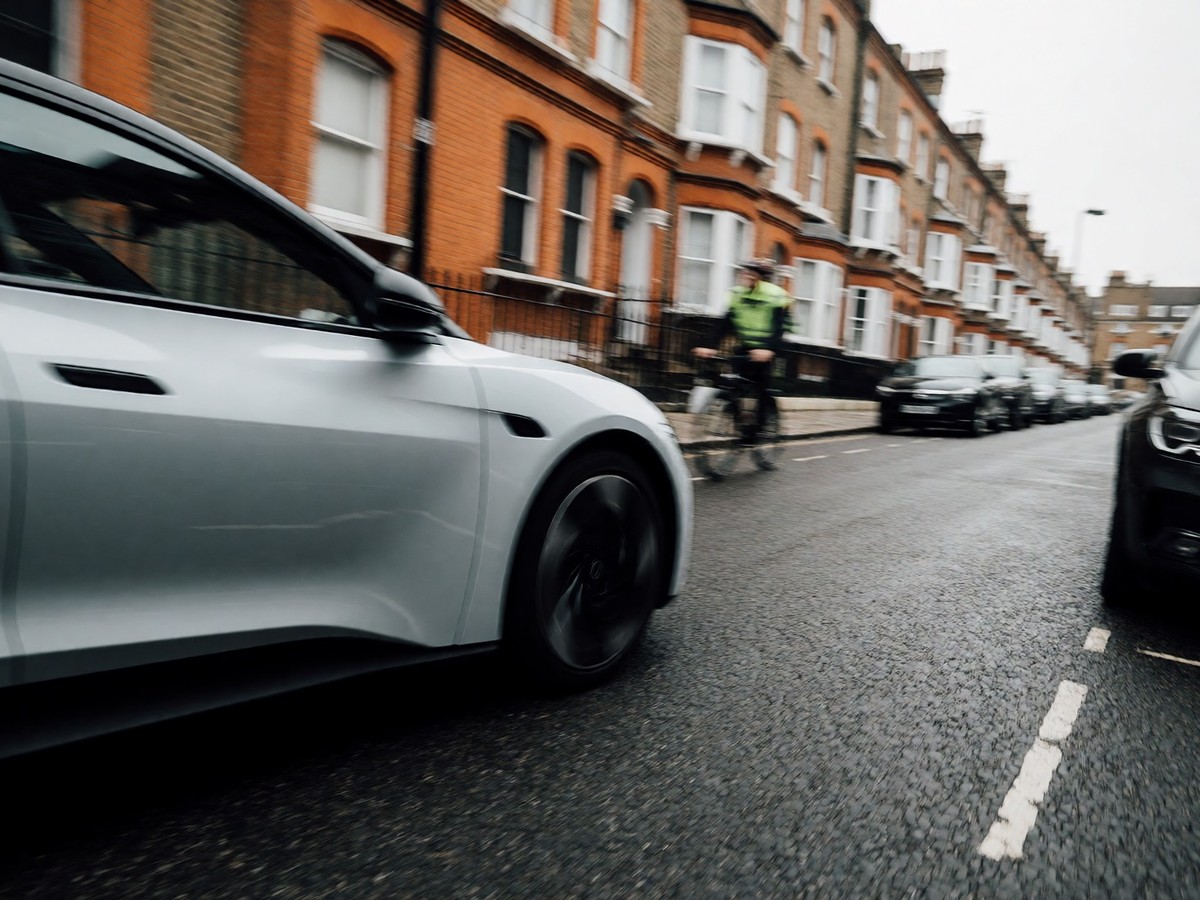
Uber pledged $300 million in milestone-based capital to Wayve. This money supports the global deployment of Wayve-powered robotaxis. Wayve and Uber plan to launch commercial robotaxi trials in London in 2026. London presents a difficult environment because of its narrow lanes and aggressive cyclists. Uber already holds a 19.7% equity stake in Aurora through its holding company, Neben Holdings. The company also manages fleet operations for WeRide in Madrid. This partnership extends Uber’s involvement in the autonomous sector beyond its previous work with companies like Otto. Uber also maintains relationships with several other autonomous firms. In 2024, Uber and GM’s Cruise announced a partnership to bring Cruise robotaxis to the Uber app in 2025, but GM pulled the plug on Cruise’s robotaxi business in December 2024.
Licensing for global automakers
Wayve sells its AI Driver as a software platform for automakers. This model allows manufacturers to create brand-specific driving models by customizing the foundational AI. In 2027, Wayve expects to ship AI Driver technology for consumer vehicles. These vehicles will provide L2+ "hands-off" capability. This initial consumer offering allows the vehicle to steer, navigate, and respond to traffic under driver supervision. Nissan already utilizes Wayve technology to power self-driving Nissan Leaf EVs in Tokyo. This licensing strategy helps automakers integrate autonomy into existing vehicle architectures. You should observe that this model avoids the need for companies to build their own massive software stacks from scratch. The strategy focuses on providing the core intelligence needed to operate vehicles in open environments.
A comparison of autonomous technologies
Waymo is the leader in the US robotaxi segment. The company completed over 400,000 paid rides per week across six cities in early 2026. Its fleet includes over 3,000 robotaxis. Waymo targets one million weekly rides by the end of 2026. The Waymo vehicle uses a five-sensor suite containing laser scanners, radar, sonar, cameras, and infrared detectors. A recent patent from Waymo describes a single machine learning model that fuses all five sensor inputs. This model predicts the future location of the vehicle and other road users. In contrast, Tesla uses a vision-only approach for its Full Self-Driving system. Tesla launched a robotaxi service in Austin in June 2025. The Cybercab, which lacks a steering wheel and pedals, joined the Austin fleet in September 2026.
| Entity | Primary Technology | Key Partner(s) | Target Deployment |
|---|---|---|---|
| Wayve | End-to-end AI | Uber, Nissan, Mercedes-Benz | 2026 London Trials |
| Waymo | 5-Sensor Fusion | Alphabet, Toyota | 1M weekly rides (2026) |
| Tesla | Vision-only | Tesla | Austin (2025/2026) |
| Nuro | Level 4 Software | Lucid, Uber | Late 2026 |
| Baidu | Sensor-heavy | Uber | Europe/Asia (2025/2026) |
The autonomous industry correction
The autonomous vehicle industry faced significant setbacks in recent years. Argo AI collapsed in 2022. Apple ended its self-driving car project. GM’s Cruise unit faced a major crisis in 2023 after a robotaxi struck a pedestrian, leading to an overhaul of the business. GM eventually pulled the plug on Cruise’s robotaxi operations entirely in December 2024. These events led many to think the technology was overhyped. However, Wayve’s $8.6 billion valuation suggests that investors are reallocating capital rather than retreating. They are moving money away from rules-based, map-dependent models. They are instead investing in AI-native architectures that can scale globally. The bet is that foundation model techniques will solve the generalization problem. This shift follows a period where capital moved toward software infrastructure.
The commercial expansion roadmap
Wayve plans to expand to over 10 international markets. The company aims to transition from L2+ driver assistance to higher levels of autonomy. Mercedes-Benz, Nissan, and Stellantis are already working on integration. In 2025, Nuro announced a partnership with Lucid and Uber to deploy 20,000 autonomous Lucid vehicles on the Uber platform over six years. The first commercial robotaxi service using these vehicles targets late 2026. Baidu and Uber also plan to start testing Apollo Go robotaxis in London in the first half of 2026. Motional, a subsidiary of Hyundai, added Hyundai Ioniq 5 vehicles to the Uber app in Las Vegas in March 2026. These vehicles still require a human safety monitor. Will Wayve’s model overcome the latency issues of sensor fusion?
The scale of fleet deployment
Waymo is scaling its operations at a rapid pace. The company completed 15 million rides in 2025. Waymo operates in cities including Los Angeles, San Francisco, Phoenix, and Austin. The company targets one million weekly rides by the end of 2026. Waymo’s vehicles use a specialized sensor suite to build a digital map of the surroundings every 0.1 to 0.25 seconds. This frequency allows the system to account for recent movements in the environment. Wayve’s expansion into hundreds of cities relies on its ability to drive without HD maps. This capability reduces the time required to enter a new market. Wayve’s commercial robotaxi trials with Uber in London will test this in a dense urban setting. The success of these trials will determine if the end-to-end approach can handle the world’s most complex streets.