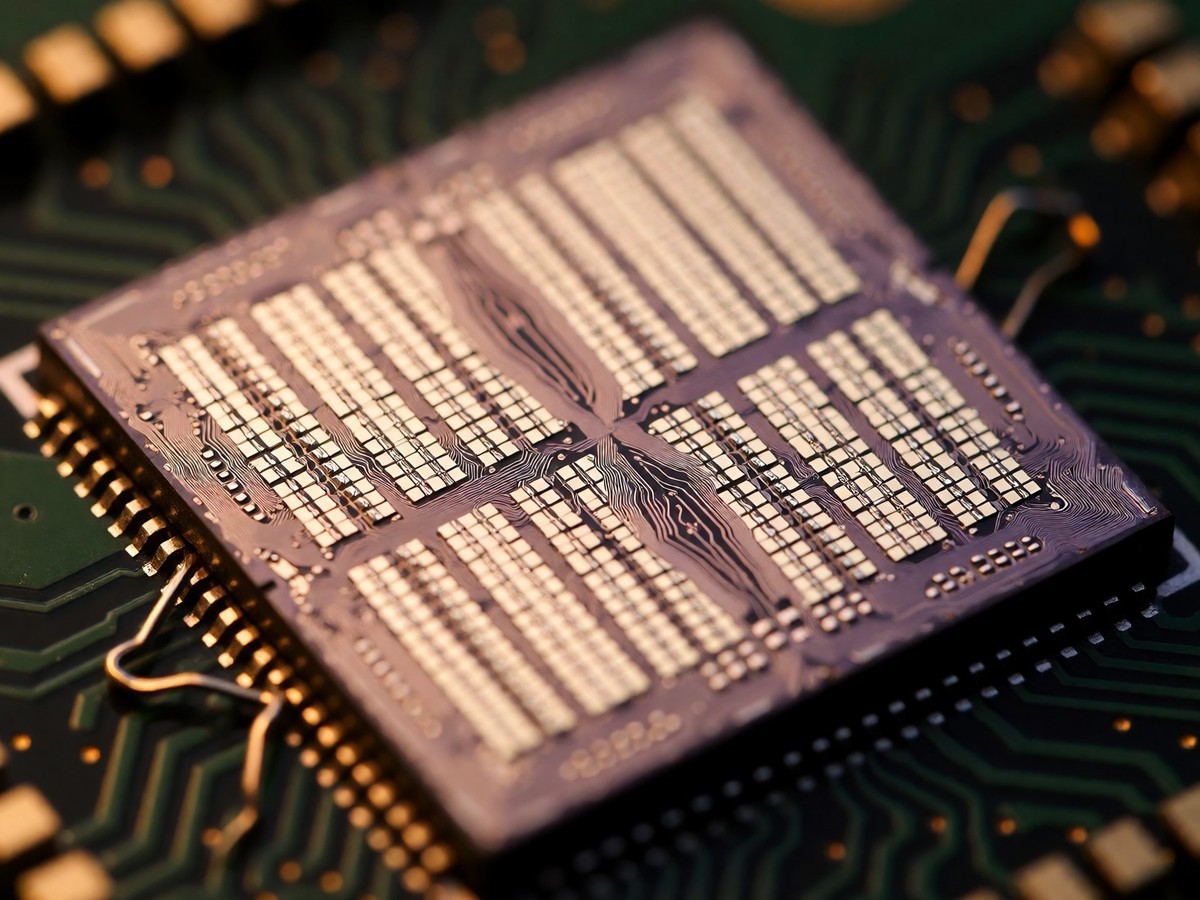
Groq claims 10x speed advantages over H100 clusters when running Llama 2 70B at 300 tokens per second. This speed gap impacts Meta’s Llama 4 deployment. Llama 4 Scout is a 17 billion active parameter model with 16 experts. It fits on a single NVIDIA H100 GPU using Int4 quantization and provides a 10M context window. Llama 4 Scout outperforms Gemma 3, Gemini 2.0 Flash-Lite, and Mistral 3.1. Llama 4 Maverick is a 17 billion active parameter model with 128 experts. It delivers an ELO of 1417 on LMArena and competes with DeepSeek v3.1. Llama 4 Maverick has 400 billion total parameters and fits on a single H100 host. These models use distillation from Llama 4 Behemoth, a 288 billion active parameter model with 16 experts. Llama 4 Behemoth outperforms GPT-4.5 and Claude Sonnet 3.7 on several STEM benchmarks. Meta trained Llama 4 on 30 trillion tokens, including 10x more multilingual tokens than Llama 3. During training, Llama 4 Behemoth achieved 390 TFLOPs/GPU using FP8. The LPU architecture eliminates memory bandwidth bottlenecks by keeping weights in 230MB of on-chip SRAM. This differs from Nvidia H100 GPUs which rely on external HBM. Groq’s LPU v1 delivers 750 TOPS at INT8 precision and 188 TeraFLOPS at FP16 precision. It maintains 80 TB/s of internal bandwidth using 5,120 Vector ALUs and a 900 MHz clock.
Latency myths and hardware scale
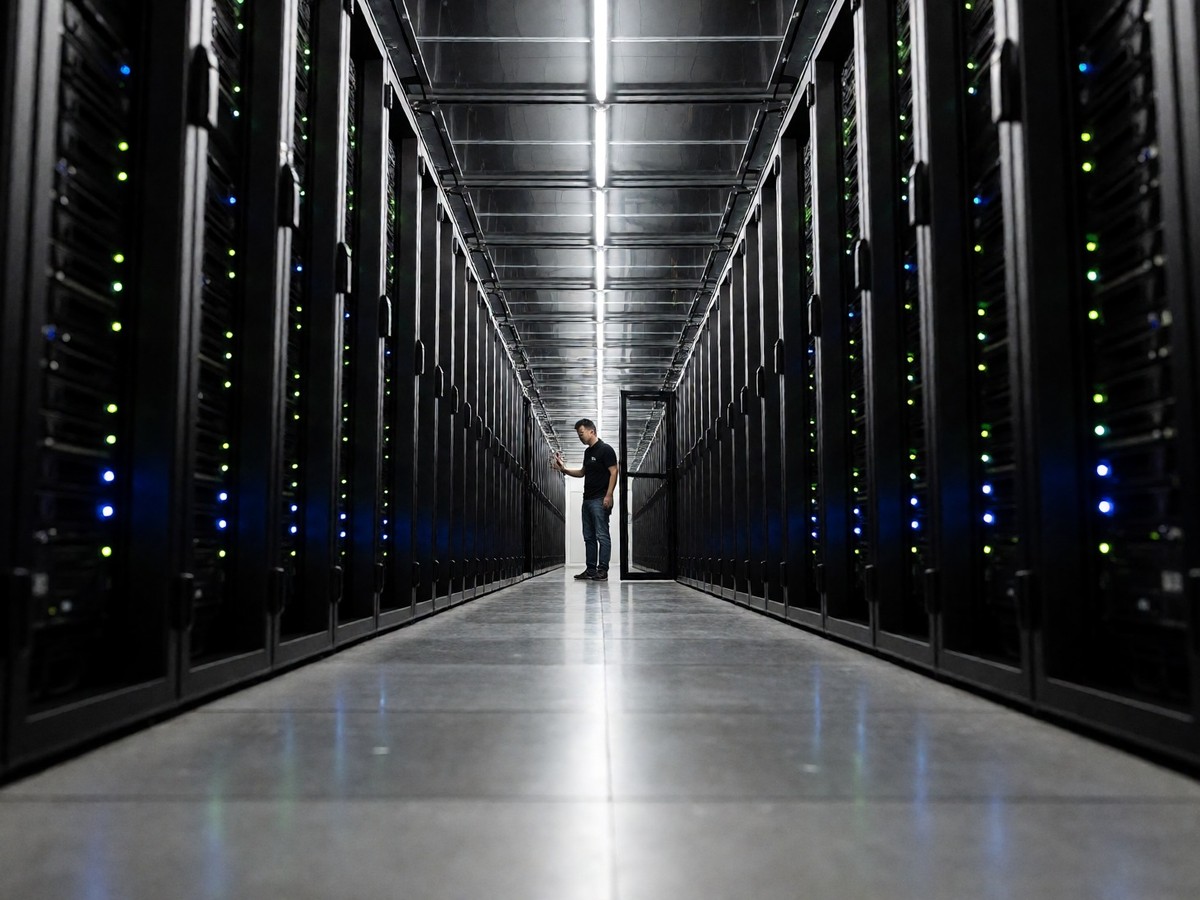
The discrepancy between benchmark speeds and real-world latency often frustrates developers. High tokens per second figures do not account for the time a user waits before the first word appears. Groq achieves sub-200ms TTFT for Llama 3.1 8B, yet the network round-trip adds 20 to 50ms of delay. Large system prompts also increase prefill compute, which slows the initial response. You should watch the Llama 4 Maverick deployment closely to see if this pattern persists. The LPU architecture produces each token as fast as the hardware’s memory bandwidth allows, delivering TTFT and throughput numbers that GPU-based providers cannot match for many supported models without significant and costly engineering investment. To serve a single Mixtral 8x7B model, Groq must connect 576 chips across 8 racks of 9 servers. This scale makes it impossible to run diverse fine-tuned models or local on-premise deployments. Cerebras matches Groq’s TTFT profile using its CS-2 wafer-scale engine, while Fireworks AI and Together AI use H100 clusters with continuous batching and speculative decoding. Groq maintains a 727 tokens per second advantage for Mixtral 8x7B over GPU alternatives. Groq also runs Whisper Large V3 at 189x real-time. Llama 3 70B on Groq hits 800 tokens per second, while Llama 3 8B hits 2,100 tokens per second. The LPU v2 relies on a Samsung 4nm process to improve performance.
The cost of fast inference
My verdict: Groq excels at low-latency interaction but fails at general-purpose model flexibility and cost-effective scaling. The hardware cost for Groq runs 40x higher than H100 deployments for equivalent throughput. Groq’s limited model catalog makes it unsuitable for diverse workloads.
| Metric | Groq LPU (Llama 3.1 8B) | NVIDIA H100 (Cloud) |
|---|---|---|
| Tokens per second | 560 | 280-450 |
| TTFT | <200ms | 200-800ms |
| Weight Storage | 230MB On-chip SRAM | External HBM |
GroqCloud pricing for Llama 4 Scout sits at $0.11 per million input tokens and $0.34 per million output tokens. Llama 3 70B costs $0.59 per million input tokens and $0.79 per million output tokens. GMI Cloud provides H200 instances at $2.60 per hour with 4.80 TB/s memory bandwidth for sustained high-throughput workloads. GMI Cloud serverless achieves 300-800ms TTFT for models like Gemini 3.5 Flash, which costs $1.50 per million input tokens and $9.00 per million output tokens. GPT-5.4-mini on GMI Cloud costs $0.40 per million input tokens and $2.50 per million output tokens. While Groq serves 1.9 million developers, including Dropbox, Volkswagen, and Riot Games, its horizontal scaling requirements remain high. Groq delivers 300 tokens per second for Llama 2 70B. Can Groq effectively scale to 1T parameter models without becoming prohibitively expensive?