Scaling factory AI with Blackhole and RISC-V
Tenstorrent licenses its TT-Ascalon RISC-V CPU and Tensix AI core technology to companies like Samsung and LG for smart factory deployments. Samsung Foundry manufactures these next generation AI chiplets using the 4nm SF4X process. The company secured $1.5 billion in Series E funding at a $6.2 billion post-money valuation to expand its AI computing systems globally. Samsung Catalyst Fund and LG Electronics participated in earlier funding rounds to support this growth. Hyundai Motor Group also uses Tenstorrent technology to develop advanced semiconductors for vehicles. The 2025 acquisition of Blue Cheetah Analog Design added die-to-die interconnect and analog mixed-signal expertise to the company’s in-house capabilities.
| Product | Price | Memory | Key Specs |
|---|---|---|---|
| p100a | $999 | 28GB GDDR6 | 120 Tensix cores |
| p150 | $1,399 | 32GB GDDR6 | 512 GB/s bandwidth, four 800G QSFP-DD ports |
| TT-QuietBox 2 | $9,999 | DDR5 | Four Blackhole processors, liquid-cooled |
| Galaxy Server | $110,000 | – | 32 chips per Galaxy |
| Supercluster | $440,000 | – | Four Galaxies per quad |
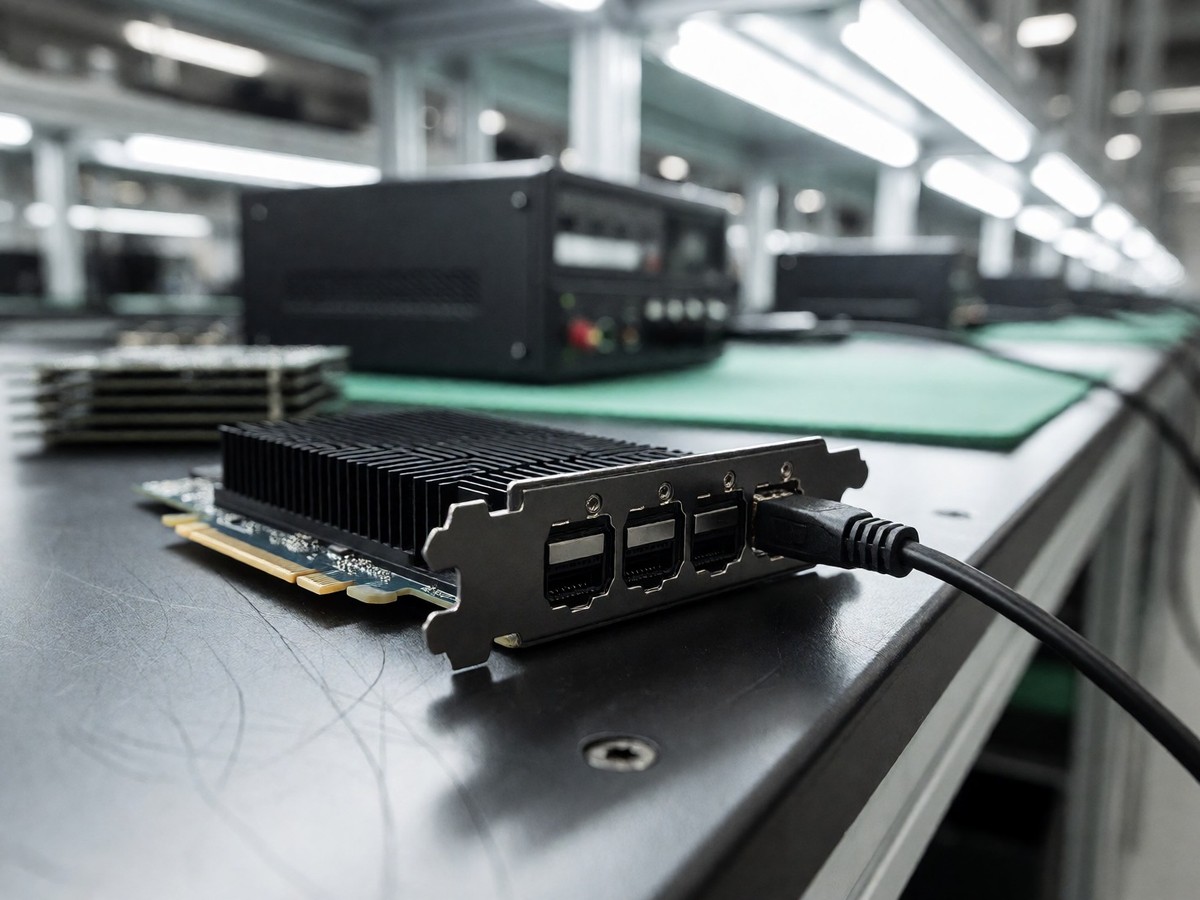
The p150 is clearly the cheapest way to buy 32 GB of accelerator memory with a card-to-card fabric, but its 512 GB/s memory bandwidth caps single-stream decode speed well below current NVIDIA cards. The p150 adds four 800G QSFP-DD ports on the card to pool memory and share work across chips. This configuration allows the card to act as a node in a larger mesh rather than a standalone accelerator. The p150 provides 120 enabled Tensix cores and 32 GB of GDDR6 memory with 512 GB/s of bandwidth. Can Samsung integrate these chiplets into every smart factory line?
Open source software drives adoption
Tenstorrent builds an open source software stack to reduce friction for developers. This stack includes TT-Forge, a MLIR-based compiler in public beta, and TT-NN, a neural network operation library with more than 200 operations. TT-Forge accepts models from PyTorch, JAX, ONNX, TensorFlow, and OpenXLA. Developers use the TT-Metalium C++ API to access RISC-V processors, the on-chip network, and the matrix and vector engines directly. This software allows users to run open-weight models up to 120B parameters on a TT-QuietBox 2 workstation. The TT-QuietBox 2 contains an AMD Ryzen CPU, DDR5 memory, and NVMe storage in a liquid-cooled box. You should check the model bring-up tables before you commit to a specific hardware configuration.
The company uses its low-end product ladder to seed developer adoption. A developer who buys a $999 card can start porting models, filing bugs, and contributing to the open-source stack, which creates usage signals that can later convert into Galaxy deployments or IP deals. This strategy moves users from transactional card purchases to large Galaxy server orders. Tenstorrent captures economics through hardware quality and IP licensing rather than software subscription fees. The company distributes the software-enablement burden to the community through GitHub, Discord, and a bounty program for open-source contributions.
Competing against established silicon giants
Tenstorrent competes against NVIDIA, AMD, and custom silicon programs from AWS and Google. NVIDIA remains the toughest competitor because it controls the hardware, networking, and software ecosystems simultaneously. The NVIDIA Vera Rubin platform uses NVLink and SuperNICs to provide an end-to-end reference architecture. Tenstorrent targets buyers who want to avoid CUDA lock-in, proprietary interconnects, or premium pricing, but this argument only works if the buyer values control and portability enough to accept lower ecosystem maturity and more integration work.
The company faces significant risk from Qualcomm, which reportedly entered talks to acquire Tenstorrent for between $8 billion and $10 billion in June 2026. This discussion creates uncertainty for enterprise buyers evaluating long-term platform commitments. In response to specialized pressure, Tenstorrent argues for general-purpose superiority across video generation and LLM prefill. Cerebras claims it can deliver speeds up to 3,000 tokens per second on its inference platform for very large models. Groq competes on low-latency inference through GroqCloud and on-prem GroqRack, while SambaNova targets enterprise and sovereign deployments with a turnkey, rack-oriented platform.
The scale-out fabric for Galaxy servers is built directly into the system. Thirty-two chips form a Galaxy, four Galaxies form a quad, and quads connect into superclusters with a cabled all-to-all topology and no external Ethernet switches. Tenstorrent expands into regions like Cyprus, the GCC through Infinia, the UAE through AIREV, and Japan through UnsungFields. Hyundai Motor Group uses Tenstorrent technology to develop advanced semiconductors for vehicles.