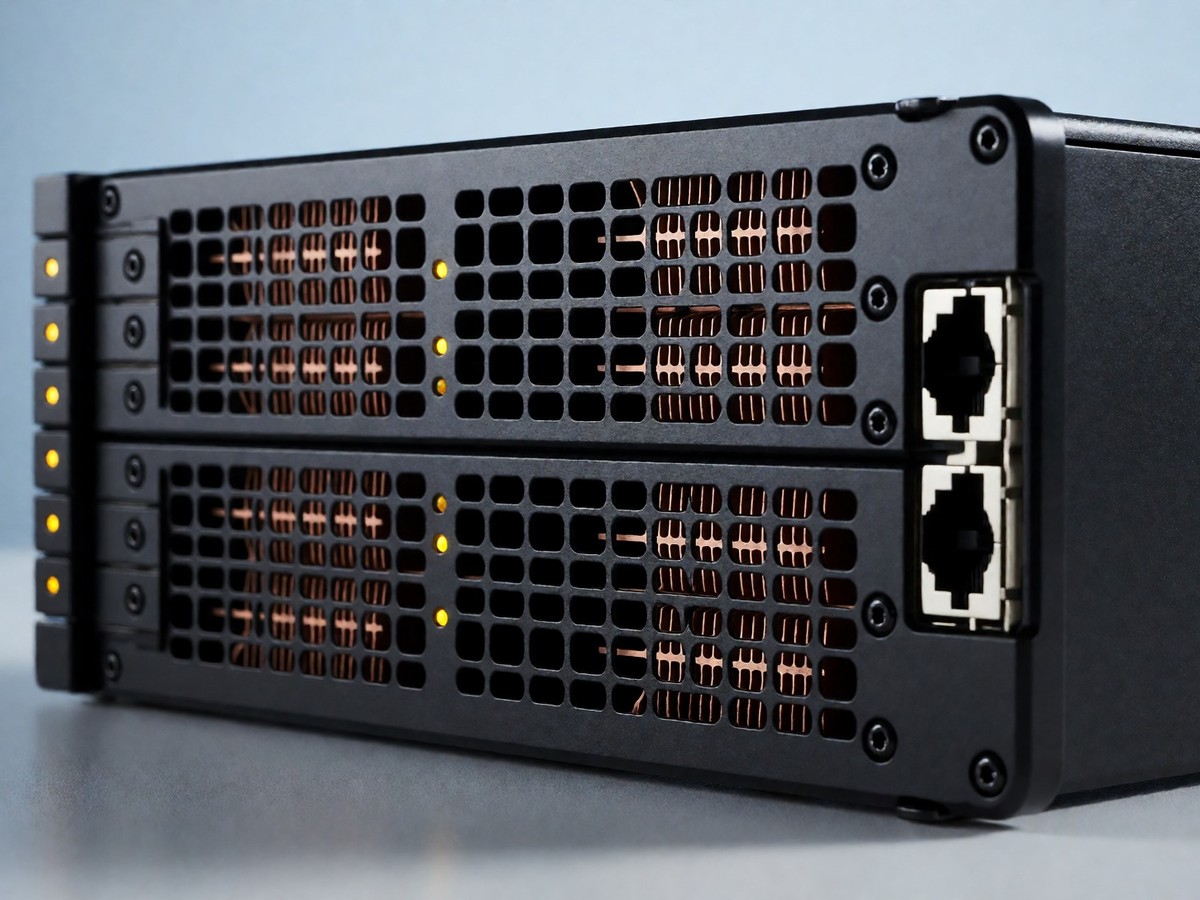
Lightmatter’s Passage photonic interconnect, valued at $4.2 billion, replaces traditional copper cables with light-based links in hyperscale data centers. The technology targets the specific bottleneck where electrical signals degrade over distance, a problem that intensifies as AI models grow larger and require more data transfer between chips. I view this shift as essential for maintaining performance in Microsoft Azure and Meta AI infrastructure, where latency kills efficiency. The system uses 3D optical chiplet packaging to integrate photonics directly into the compute fabric, eliminating the need for separate transceivers. This integration reduces power consumption by removing the energy-intensive process of converting electrical signals to optical and back again. The $4.2B valuation reflects investor confidence in solving the "interconnect wall" that limits scaling beyond current architectures. For beginners, the core concept is simple: light moves faster and carries more data than electrons moving through copper wires. However, the implementation requires precise alignment of waveguides and modulators within the chip package. Lightmatter achieves this by embedding the optical components in a 3D stack alongside standard silicon logic. This approach differs from older co-packaged optics that added bulk to the board. Here, the photonic layer sits directly on or near the processor die, minimizing signal loss. The result is a denser, cooler, and faster network backbone for large-scale AI training clusters.
| Component | Traditional Copper | Lightmatter Passage |
|---|---|---|
| Signal Medium | Electrical current | Photons (light) |
| Power Draw | High (signal conversion) | Low (direct transmission) |
| Distance Limit | Short (copper traces) | Long (fiber/waveguide) |
| Packaging | 2D PCB layout | 3D Optical Chiplet |
| Latency Impact | Increases with length | Minimal degradation |
The deployment timeline aligns with the current surge in AI demand, specifically for workloads that exceed the capacity of single-node systems. Microsoft Azure and Meta AI are the primary customers driving this adoption, seeking to expand their GPU clusters without hitting thermal or bandwidth ceilings. I find the focus on 3D packaging particularly interesting because it solves the physical space constraint inside server racks. Standard 2D layouts run out of room for additional connections as chip density increases. By stacking layers vertically, Lightmatter fits more optical channels into the same footprint. This vertical integration also improves reliability, as there are fewer external connectors prone to failure. The $4.2B figure includes not just the hardware but the software stack required to manage these complex optical networks. Managing thousands of light paths requires sophisticated control algorithms to route data efficiently. These algorithms must account for variable wavelengths and potential interference between adjacent channels. I would skip any solution that does not include this software layer, as hardware alone cannot handle the dynamic routing needs of modern AI inference. The challenge remains in manufacturing yield; producing consistent photonic structures at scale is difficult. Defects in the waveguide etching can cause signal loss that breaks the entire link. Lightmatter addresses this with advanced testing protocols during fabrication, though the cost per chip remains higher than standard silicon. This premium price is offset by the reduction in cooling costs and increased throughput. For a reader already familiar with basic networking, the key takeaway is that Passage changes the fundamental unit of data movement from bits in copper to photons in glass. It is a clear win for performance, but the complexity of managing the optical layer is non-trivial. Does the software overhead justify the hardware savings? That question remains open as real-world deployments mature. The technology clearly works in lab conditions, but field performance under sustained load will determine its long-term viability. I recommend monitoring the next quarterly reports from Azure and Meta for specific metrics on power usage effectiveness. Those numbers will tell you if the photonic advantage holds up in production environments. Until then, treat the $4.2B valuation as a bet on the future of data center physics.