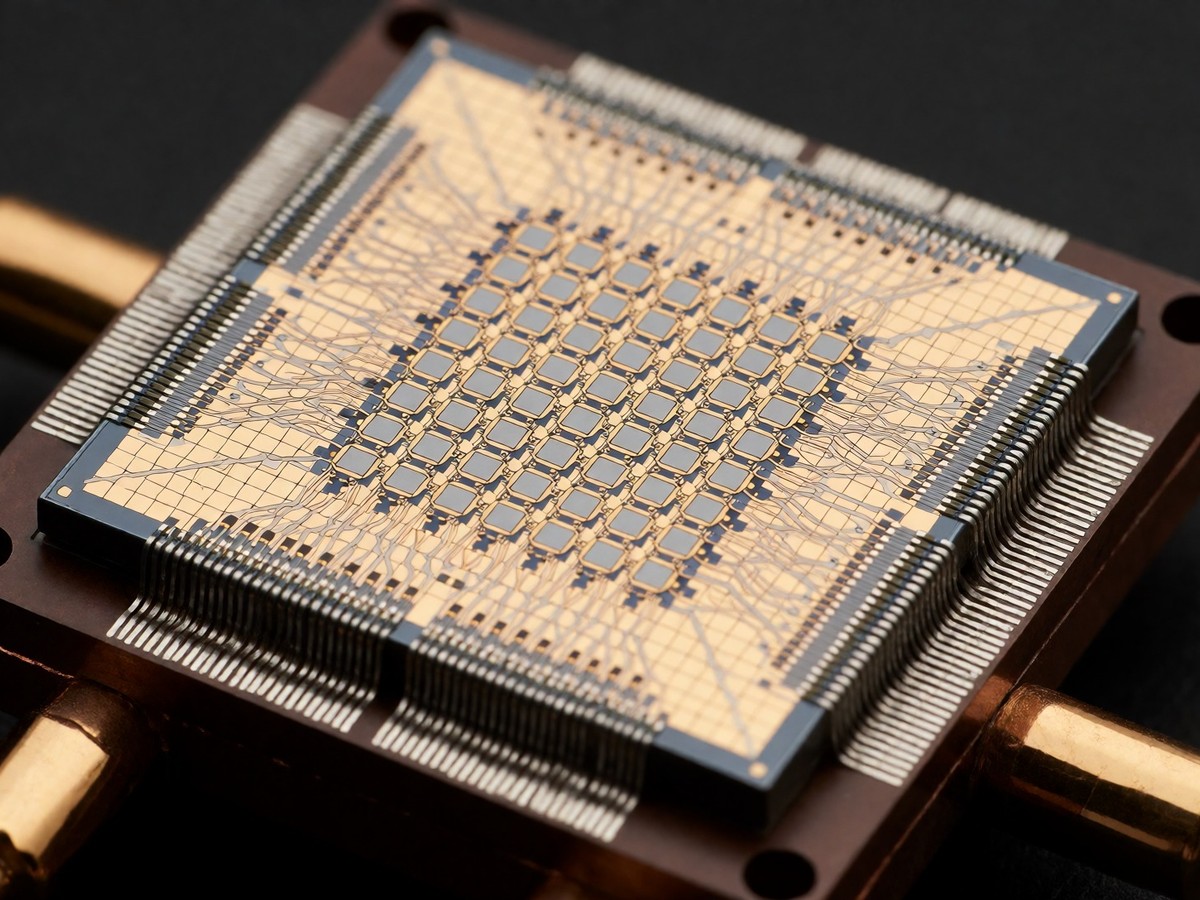
Axelera AI provides the Metis AI processing unit to handle high-performance computer vision at the edge. The Eindhoven-based company, which employs over 180 people including more than 55 PhDs, raised over $450 million in total funding. This total includes a $68 million Series B round in June 2024. The company maintains R&D offices in Belgium, Switzerland, Italy, and the UK. The Metis platform uses a quad-core architecture based on proprietary RISC-V technology and Digital In-Memory Computing (D-IMC). This SRAM-based D-IMC engine uses crossbar arrays of memory devices to perform matrix-vector multiplications in parallel without moving data between memory and compute elements. This architecture reaches 15 TOPS/W at INT8 precision. I find the hardware efficiency for vision tasks to be the strongest aspect of this platform.
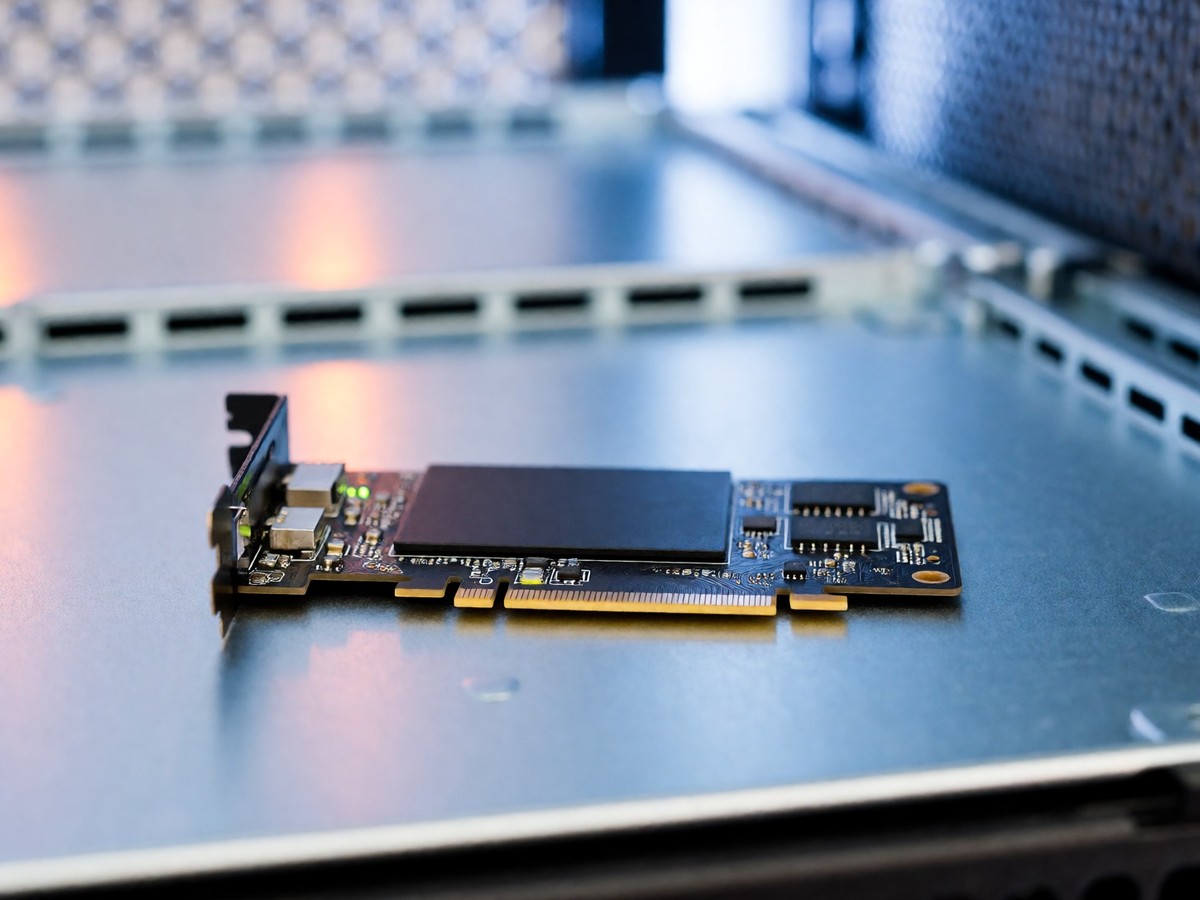
The four cores integrate into a system on a chip comprising a RISC-V controller, PCIe interface, LPDDR4X controller, and a security complex connected via a high speed network on chip. This network on chip also connects the cores to a multi-level shared memory hierarchy of more than 52 megabytes of on-chip, high speed memories. The Metis M.2 card contains a single AIPU chip, while the PCIe card holds four chips to deliver up to 856 TOPS. Each core executes all layers of a standard neural network without external interactions, providing 53.5 TOPS per core for a compound throughput of 214 TOPS.
| Specification | Metis AIPU Value |
|---|---|
| Architecture | Quad-core RISC-V |
| Total Throughput | 214 TOPS |
| Per-core Throughput | 53.5 TOPS |
| Energy Efficiency | 15 TOPS/W (INT8) |
| Precision | INT8 |
Quantization simplifies the deployment pipeline
The Voyager SDK removes the friction typical of new AI hardware integration. New chip integration often requires weeks of work to debug new compilers, runtimes, and preprocessing quirks. The integration with Ultralytics YOLO allows developers to export models with a single command, which compiles and quantizes the model to int8 without the need for any retraining or fundamental changes to the existing architecture. You can validate accuracy using the same tools you already trust. The Voyager SDK simplifies the optimization of applications to take full advantage of the Metis AIPU. A developer can run a full pose estimation and tracking pipeline using only 15 lines of Python using the Voyager SDK. This toolkit handles preprocessing, inference, postprocessing, and tracking in one pipeline builder. The software includes application templates for image classification, segmentation, object detection, and tracking. Users can also select from the Model Zoo library of neural networks. Advanced quantization tools ensure high prediction accuracy without compromising performance. The SDK includes an integrated compiler, a runtime stack, and optimization tools to help users import their own models. You should know that the process for deploying custom weights for LLMs from HuggingFace remains undocumented, which hinders users wanting to run fine-tuned multi-modal models.
Real-world scaling for multi-stream security
Axelera reported over 600 customers and contracts worth tens of millions of dollars to Reuters in September 2026. The Metis hardware supports simultaneous inference on multiple cameras and the parallel use of independent neural networks. The hardware delivers enough power to run four 4K cameras with advanced tiling and segmentation for situational awareness. This capacity enables real-time AI processing. For various industries, the platform supports surveillance in buildings, robotics for gesture recognition, and industrial fault detection.
The Metis M.2 card features a PCIe Gen3 x4 interface and 1 GB of dedicated DRAM memory. The PCIe version provides up to 3,200 FPS for ResNet-50 and offers memory configurations of 4 GB or 16 GB. The M.2 card shows typical application performance between 5 and 9 W, while the PCIe version requires 8 to 15 W. The hardware includes security features such as Secure Boot and Root of Trust.
The hardware works for many industries. Retailers use the system for customer behavior and inventory monitoring, while the medical field uses it for real-time diagnosis and imaging analysis. The platform also supports agritech for crop analysis and drones for navigation and object detection. You might consider using these modules in Raspberry Pi 5 clusters to manage distributed vision tasks. How will the software stack handle the increasing demand for generative AI in purely offline environments?